
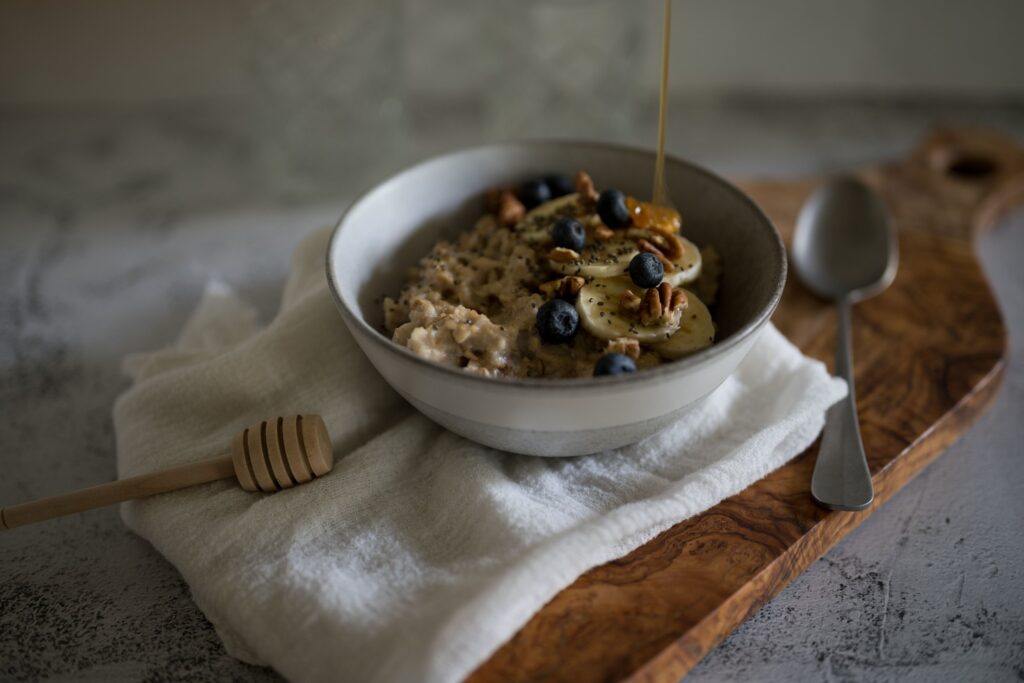
Looking for protein oatmeal that actually keeps you full past mid-morning? Start with the add-ins. Plain oats sit around 5 g of protein. Stack milk, Greek yogurt, egg whites, peanut butter, chia, or powder, and the same bowl climbs into the teens, twenties, or forties.
Quick answer: how the bowl climbs
Baseline oats (water): 5.3 g protein, 153 cal
Oatmeal cooked in nonfat milk: 13.6 g protein, 237 cal
Greek yogurt swirl oats: 25.1 g protein, 303 cal
Protein powder oats: 38.6 g protein, 349 cal
Numbers are for the exact portions shown, from USDA data. Fruit, sweetener, and oil aren’t included.
Every number comes from USDA FoodData Central.[1] This is an add-ins guide with example bowls, not a meal plan.
Takeaway: the oats are the base. The add-ins decide the protein.
Protein Oatmeal Add-Ins at a Glance
Use this table to build any protein oatmeal recipe. Portions are the ones behind every bowl below.
| Add-in | Portion | Protein (g) | Cal | Fiber (g) |
|---|---|---|---|---|
| Rolled oats, dry (base) | 1/2 cup (40.5 g) | 5.3 | 153 | 4.1 |
| Milk, nonfat (skim) | 1 cup | 8.3 | 83 | 0.0 |
| Milk, lowfat 1% | 1 cup | 8.2 | 102 | 0.0 |
| Milk, reduced fat 2% | 1 cup | 8.1 | 122 | 0.0 |
| Milk, whole 3.25% | 1 cup | 7.7 | 149 | 0.0 |
| Soymilk, fortified | 1 cup | 6.3 | 104 | 0.5 |
| Almond milk, unsweetened (contrast) | 1 cup | 1.0 | 39 | 0.5 |
| Greek yogurt, plain, nonfat | 1/2 cup | 11.5 | 67 | 0.0 |
| Greek yogurt, plain, nonfat | 1/4 cup | 5.8 | 33 | 0.0 |
| Egg white, raw | 2 large | 7.2 | 34 | 0.0 |
| Egg white, raw | 1 large | 3.6 | 17 | 0.0 |
| Cottage cheese, lowfat 1% | 1/2 cup | 14.0 | 81 | 0.0 |
| Whey protein powder (generic FDC) | 1 scoop / 32 g | 25.0 | 113 | 1.0 |
| Chia seeds, dried | 1 tbsp | 2.0 | 58 | 4.1 |
| Peanut butter, smooth | 1 tbsp | 3.6 | 96 | 0.8 |
| Peanut butter, smooth | 2 tbsp | 7.1 | 191 | 1.6 |
| Hemp seeds, hulled | 1 tbsp | 3.2 | 55 | 0.4 |
Fruit, sweetener, oil, and salt aren’t included.[1] Greek yogurt and chia use the same household portions as our other USDA packages. The whey scoop is generic USDA powder at 25.0 g protein per 32 g; brands vary, so check your label. Almond milk is here as a contrast, not a protein play.
Takeaway: milk, yogurt, cottage cheese, egg whites, and powder move the needle. Chia and peanut butter add smaller bumps plus fiber or richness.




Get Dishco on iPhone

How to Make Protein Oatmeal
If you’re asking how to make protein oats on the stove, use this order so the texture stays creamy.
- 1. Measure 1/2 cup dry rolled oats (40.5 g). That’s the base in every bowl here (5.3 g protein). Weigh it once if your scoop runs heavy.
- 2. Cook in milk, not water. One cup of nonfat milk adds 8.3 g of protein before you touch another add-in. Stir often on medium heat so the milk doesn’t scorch.
- 3. Add egg whites while the oats simmer, if you’re using them. Stream them in while you stir until opaque. Fully cooked in, they don’t taste like eggs; dumped in without stirring, they turn rubbery.
- 4. Kill the heat before powder or yogurt. Stir whey or Greek yogurt in off heat so powder doesn’t clump and yogurt stays smooth. A cold splash of milk helps chalky powder.
- 5. Finish with chia, peanut butter, cottage cheese, or hemp. Mash or blend cottage cheese if you want it smoother; it won’t fully disappear. Peanut butter melts cleaner while the oats are still hot.
Texture fixes (when the bowl fights you)
- Too thick: splash in the same milk off heat. Chia keeps absorbing, so wait before adding more oats.
- Too thin: simmer another minute, or rest covered briefly. Powder and yogurt thicken as they cool.
- Clumpy powder: pot was too hot, or the scoop went in as a pile. Off heat, whisk in a spoon of cold milk. Brands vary; check your label.
- Watery swirl: yogurt hit hot oats. Kill the heat first, then fold it in.
- Gluey oats: heat was too high. Lower the burner next time; a splash of milk helps, but won’t fully undo glue.
That’s the whole method. Microwave works in a pinch; keep the same add-in order.
Takeaway: cook in milk, then add powder or yogurt off heat.
High Protein Oatmeal Bowls
These high protein oatmeal examples stack the table above. Baseline water oats land at 5.3 g protein and 153 cal. Everything below starts from dry oats plus a protein add-in.
Oatmeal Cooked in Milk (13.6 g protein, 237 to 256 cal, 4.1 g fiber)
Portions: 1/2 cup dry oats + 1 cup nonfat milk (237 cal) or 1% milk (256 cal).
Same 13.6 g protein either way. Nonfat saves a few cal; 1% is a little richer. This is the smallest marketed step up from water oats.
Greek Yogurt Swirl Oats (25.1 g protein, 303 cal, 4.1 g fiber)
Portions: 1/2 cup dry oats, 1 cup nonfat milk, 1/2 cup nonfat plain Greek yogurt (11.5 g protein).
Cook the oats in milk, kill the heat, and swirl in the yogurt. Swap: add 1 tbsp chia for 27.1 g protein, 361 cal, and 8.2 g fiber.
Egg White Oats (20.8 g protein, 271 cal, 4.1 g fiber)
Portions: 1/2 cup dry oats, 1 cup nonfat milk, 2 large egg whites (7.2 g protein).
Stir the whites into simmering oats until opaque. Swap: add one more white for 24.4 g protein and 288 cal.
Peanut Butter Oats (17.2 g protein, 332 cal, 4.9 g fiber)
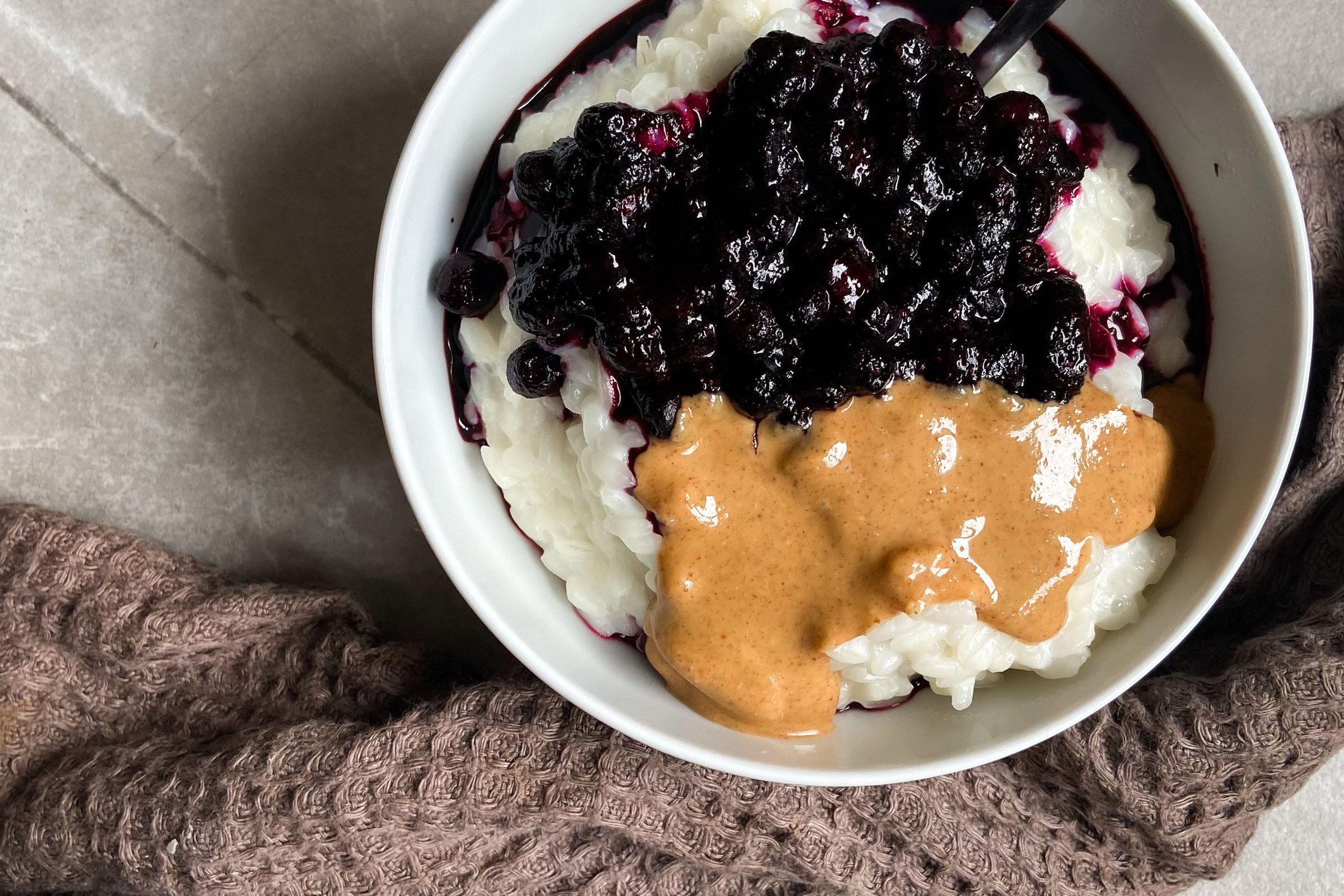
Portions: 1/2 cup dry oats, 1 cup nonfat milk, 1 tbsp peanut butter (3.6 g protein).
Stir the peanut butter in while the oats are still hot so it melts. Swap: use 2 tbsp for 20.7 g protein, 427 cal, and 5.7 g fiber.
Protein Powder Oats (38.6 g protein, 349 cal, 5.1 g fiber)
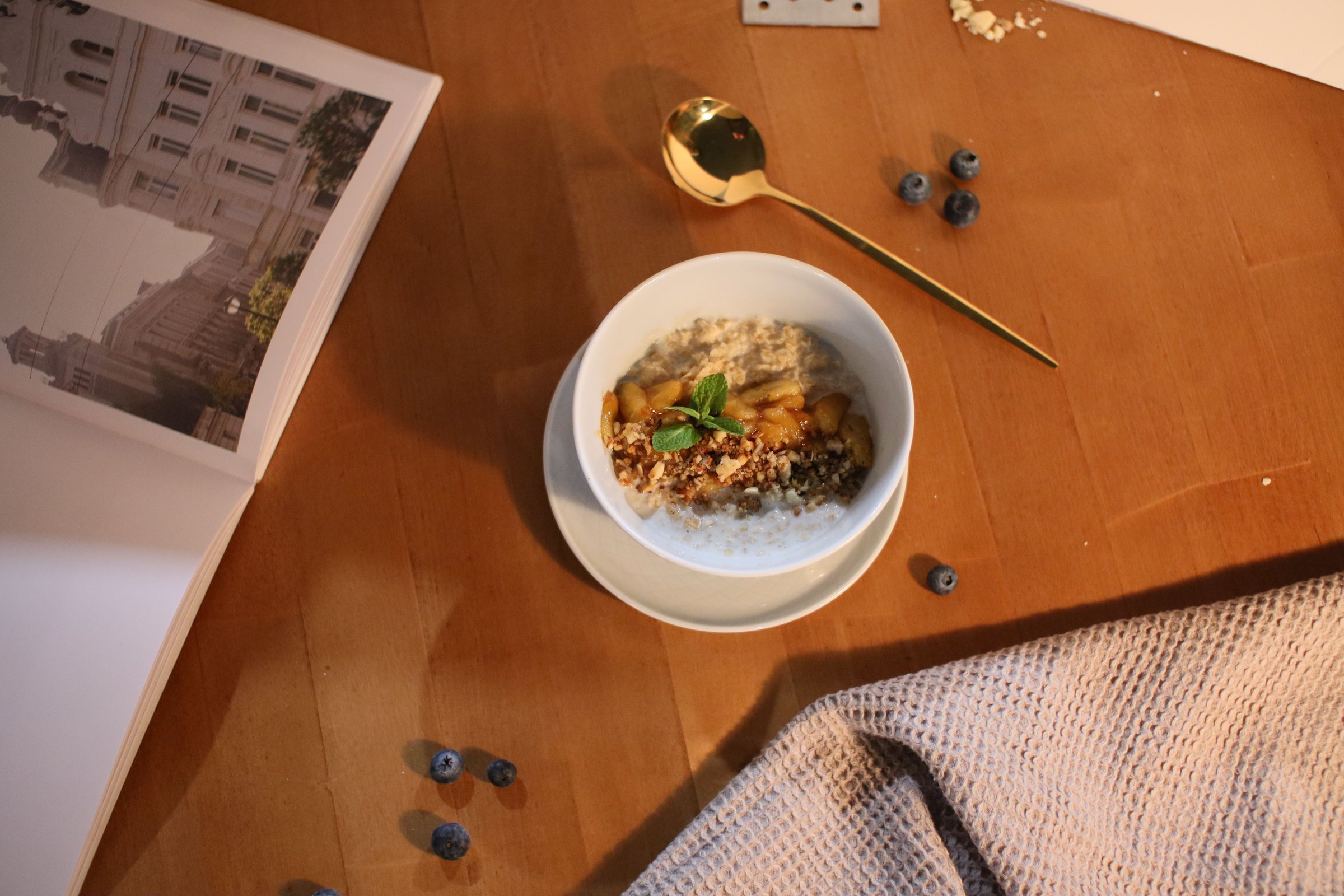
Portions: 1/2 cup dry oats, 1 cup nonfat milk, 1 scoop (32 g) generic whey protein powder (25.0 g protein).
This is oatmeal with protein powder done simply. Cook the oats in milk, take the pot off heat, then stir in the powder until smooth. Brands vary; check your label. Swap: skip the milk and cook in water for 30.3 g protein and 266 cal.
Chia Greek Yogurt Oats (27.1 g protein, 362 cal, 8.2 g fiber)
Portions: 1/2 cup dry oats, 1 cup nonfat milk, 1/2 cup nonfat Greek yogurt, 1 tbsp chia seeds (2.0 g protein, 4.1 g fiber).
Chia doubles the fiber versus yogurt swirl alone. For more fiber-forward meals, see high fiber meals. For fiber at breakfast beyond oats, try these high fiber breakfast ideas.
Cottage Cheese Oats (27.6 g protein, 318 cal, 4.1 g fiber)
Portions: 1/2 cup dry oats, 1 cup nonfat milk, 1/2 cup 1% cottage cheese (14.0 g protein).
Mash or blend the cottage cheese before stirring it in for a smoother bowl.
Loaded Protein Oatmeal (46.3 g protein, 441 cal, 9.2 g fiber)
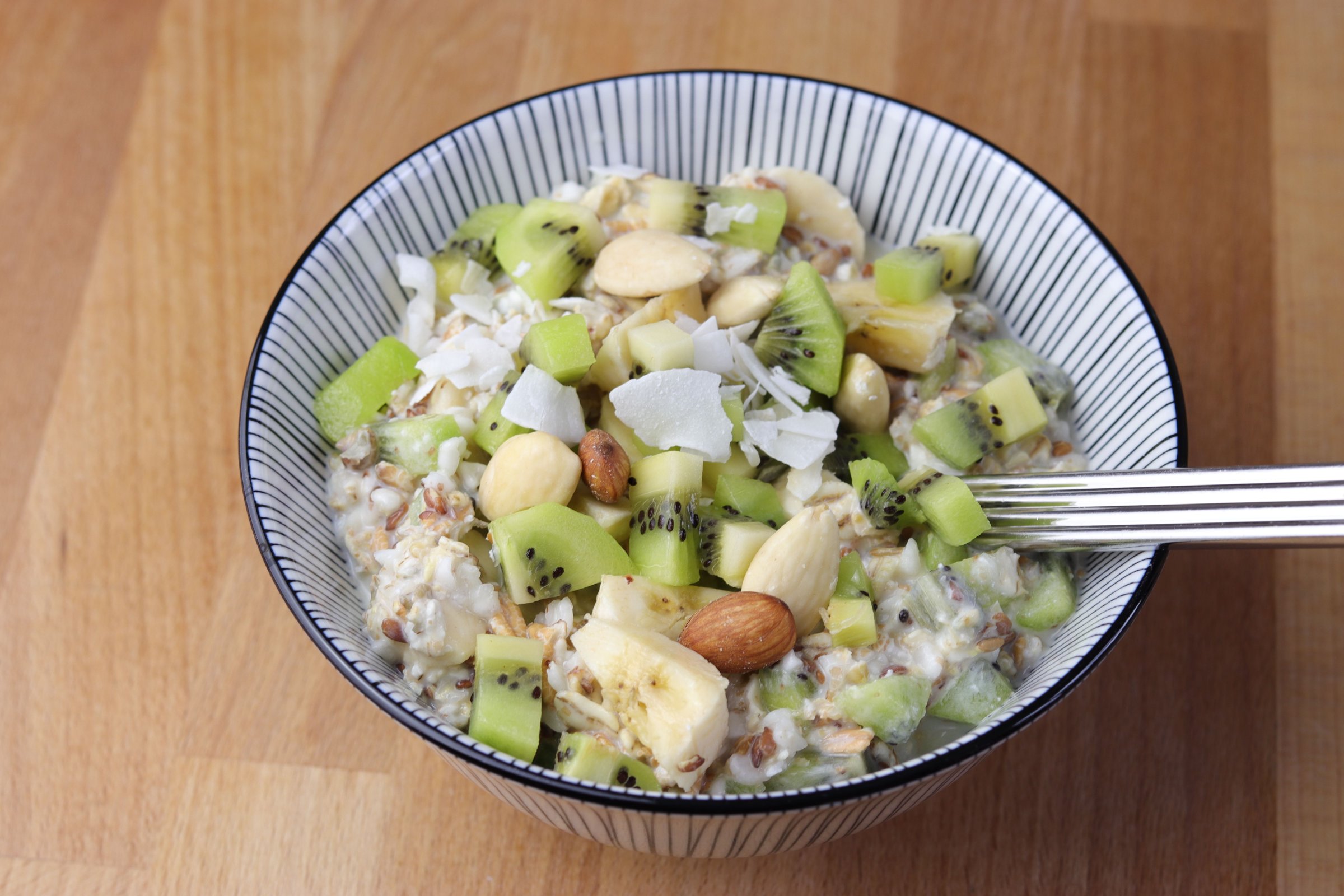
Portions: 1/2 cup dry oats, 1 cup nonfat milk, 1/4 cup nonfat Greek yogurt (5.8 g protein), 1 scoop whey powder (25.0 g protein), 1 tbsp chia.
Powder, yogurt, and chia stacked on milk oats. It’s the top of the list and still one bowl.
Takeaway: milk gets you to ~14 g. Yogurt or cottage cheese clears 25 g. Powder pushes past 38 g.
Build Your Own Protein Oatmeal
Use this formula when you want a high protein oatmeal recipe that isn’t one of the bowls above:
- 1. 1/2 cup dry oats (5.3 g protein)
- 2. 1 cup dairy milk or soymilk (about 6 to 8 g)
- 3. One high-protein add-in: Greek yogurt, egg whites, cottage cheese, or powder
- 4. Optional finish: chia, peanut butter, or hemp
Pick the strong add-in for the job. Powder is the fastest jump (25.0 g per generic scoop). Cottage cheese (14.0 g per 1/2 cup) or Greek yogurt (11.5 g per 1/2 cup) land in the mid-20s once milk is in the pot. Egg whites (7.2 g for 2 large) thicken the bowl for fewer cal than peanut butter. Peanut butter, chia, and hemp are finishes, not your only protein move if 25 g is the goal.
Liquid choice matters first. Nonfat and 1% milk both put the example bowl at 13.6 g protein; soymilk is close at 6.3 g per cup. Almond milk at 1.0 g per cup is the contrast row, not a protein play. If you love it, keep it, then lean on yogurt, cottage cheese, or powder so the total doesn’t stall near baseline.
Stack in cook order: liquid first, simmer add-ins next, off-heat add-ins last. That keeps powder from clumping and yogurt from splitting. One strong add-in on milk oats already clears the teens or twenties; the loaded bowl stacks powder, yogurt, and chia on purpose.
Be honest about the trade-off. Protein per 100 cal here runs from 5.2 (peanut butter oats) to 11.0 (powder oats). Peanut butter still lands at 17.2 g, but costs more cal per gram of protein than yogurt or powder. For more foods ranked that way, see high protein low calorie foods. To check a custom bowl with fruit or sweetener, use the recipe nutrition calculator. Those toppings change the total, and they aren’t in the numbers above.
Prefer jars from the fridge? High protein overnight oats are a separate method with their own guide. This page stays on stovetop add-ins.
Takeaway: oats + milk + one strong add-in covers most mornings.
Get Dishco on iPhone
Logging Oats Without the Guesswork
Weigh the dry oats once so your 1/2 cup is real. Milk cartons, yogurt cups, peanut butter jars, and many powder tubs have barcodes to scan. For a mixed bowl, a photo or saying what you stirred in works well, and a recipe from a food site can come in by pasting its link. Either way, you can see the nutrition for each part instead of guessing the whole bowl.
Takeaway: weigh the oats once. Scan or describe the add-ins.
Get Dishco on iPhone
FAQ
How much protein is in oatmeal?
A half cup of dry rolled oats has 5.3 g of protein. One cup of oatmeal cooked in water has 5.9 g.[1] The climb comes from what you cook it in and what you stir in after.
How do I add protein to oatmeal without powder?
Cook in milk (about 8 g per cup), then add Greek yogurt (11.5 g per 1/2 cup), cottage cheese (14.0 g per 1/2 cup), egg whites (7.2 g for 2 large), chia, or peanut butter.
How do I make oatmeal with protein powder?
Cook the oats first, take the pot off heat, then stir in one scoop. Generic USDA whey powder is 25.0 g protein per 32 g scoop; brands vary, so check your label.
Is it good for weight loss?
No single breakfast causes weight loss. If you’re comparing bowls, use the protein per 100 cal column: powder oats (11.0) and the loaded bowl (10.5) lead.
Can I meal prep these bowls?
Yes. Cook the oats in milk ahead, then stir yogurt or powder in fresh so the texture stays right. For a wider prep system, see meal prep for weight loss and muscle gain.
How much protein should breakfast have?
There’s no official breakfast cutoff. These bowls land between 13.6 and 46.3 g. To see how breakfast fits a full day, read how to get 100 grams of protein a day.
Are overnight oats the same as protein oatmeal?
Related, but not the same. Overnight oats are a fridge method. This page is stovetop protein oatmeal and the add-ins that raise the number.
Pick One Add-In for Tomorrow
You don’t need the loaded bowl on day one. Pick one protein oatmeal upgrade, maybe milk instead of water, or a Greek yogurt swirl, and build from there. Weigh the oats once, stir powder off heat, and leave fruit and sweetener for your own calculator pass.
Beyond breakfast, protein bowls covers lunch and dinner builds.
Editorial Sources and Fact Checking
Dishco follows clear sourcing guidelines so you can trust what you read, outlined in our editorial policy. We use trustworthy sources, including peer-reviewed research, public health guidelines, and established health institutions.
Sources
- 1 FoodData Central (SR Legacy). U.S. Department of Agriculture. 2026.