
Protein bowls are the easiest way to build a meal that actually fills you up: pick a protein, add a base, pile on vegetables, and finish with a sauce. Here are 10 high protein bowls with 20 to 45 g of protein each, covering breakfast, lunch, and dinner, plus a build formula so you can make your own and know the grams.
Quick answer: protein bowl ideas with the most protein
Greek chicken bowl: 45.5 g protein, 390 cal
Turkey taco bowl: 41.6 g protein, 489 cal
Tuna poke bowl: 40.6 g protein, 336 cal
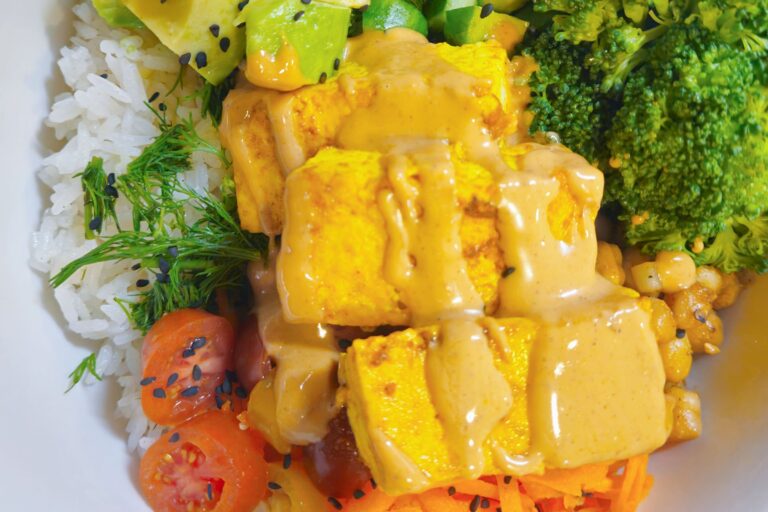
Best breakfast bowl: tofu scramble bowl, 29.1 g protein, 324 cal
Numbers are USDA FoodData Central for the portions shown. Cooking oil isn’t included.
Every number here comes from one source, so you can compare bowls fairly.[1] This is an idea list, not a meal plan.
Takeaway: the protein you pick sets the total. Everything else adds a few grams.
The Protein Bowl Formula
Every bowl here follows the same pattern: protein + base + veg + sauce. The protein anchor does most of the work. In the Greek chicken bowl, chicken supplies 35.0 of the 45.5 g. A 4 oz meat or fish anchor lands 27 to 35 g on its own.
Pick a protein anchor
| Protein | Portion | Protein (g) | Cal |
|---|---|---|---|
| Chicken breast, roasted | 4 oz | 35.0 | 186 |
| Top sirloin, lean | 4 oz | 34.6 | 207 |
| 93% lean ground turkey | 4 oz | 30.6 | 241 |
| Pork tenderloin, roasted | 4 oz | 29.6 | 162 |
| Yellowfin tuna, raw | 4 oz | 27.6 | 123 |
| Shrimp, cooked | 4 oz | 27.1 | 112 |
| Tempeh, cooked | 4 oz | 22.5 | 220 |
| Firm tofu | 1/2 cup | 21.8 | 181 |
| Edamame, shelled | 1 cup | 18.5 | 188 |
| Lentils, cooked | 1 cup | 17.9 | 230 |
| Nonfat Greek yogurt | 6 oz | 17.3 | 100 |
| Black beans, cooked | 1 cup | 15.2 | 227 |
| Scrambled eggs | 2 large | 12.2 | 182 |
For a wider ranking of dense proteins, see high protein low calorie foods.
Pick a base
| Base | Portion | Protein (g) | Cal |
|---|---|---|---|
| Quinoa, cooked | 1/2 cup | 4.1 | 111 |
| Brown rice, cooked | 1/2 cup | 2.8 | 124 |
| White rice, cooked | 1/2 cup | 2.1 | 103 |
| Sweet potato, baked | 1/2 cup | 2.0 | 90 |
| Cauliflower, cooked | 1 cup | 2.3 | 29 |
| Spinach, raw | 2 cups | 1.7 | 14 |
Bases add 2 to 4 g. Pick yours for taste and fullness, not protein.
Pick a sauce: see the sauce table below. It matters more for calories than you’d think.
Want to cook once and eat all week? Batch the parts separately, as in our guide to meal prep for weight loss and muscle gain.
Takeaway: choose the anchor first. It decides whether your bowl lands near 20 g or near 45 g.





Get Dishco on iPhone

Protein Bowls at a Glance
Here are all 10 protein bowl recipes in one table, ranked by protein.
| Bowl | Meal | Protein (g) | Cal | Protein / 100 cal | Fiber (g) |
|---|---|---|---|---|---|
| Greek chicken bowl | Lunch/dinner | 45.5 | 390 | 11.7 | 6.1 |
| Turkey taco bowl | Lunch/dinner | 41.6 | 489 | 8.5 | 9.8 |
| Tuna poke bowl | Lunch/dinner | 40.6 | 336 | 12.1 | 4.7 |
| Steak and sweet potato bowl | Lunch/dinner | 40.1 | 339 | 11.8 | 8.0 |
| Pork and greens rice bowl | Lunch/dinner | 34.7 | 287 | 12.1 | 1.8 |
| Tempeh peanut bowl (vegan) | Lunch/dinner | 29.3 | 451 | 6.5 | 3.2* |
| Tofu scramble bowl (vegan) | Breakfast | 29.1 | 324 | 9.0 | 8.3 |
| Lentil and egg bowl (vegetarian) | Lunch/dinner | 29.1 | 424 | 6.8 | 19.2 |
| Egg and black bean bowl | Breakfast | 22.4 | 396 | 5.7 | 11.5 |
| Greek yogurt berry bowl | Breakfast | 20.2 | 211 | 9.6 | 6.7 |
* Fiber not listed for tempeh in USDA’s SR Legacy data, so 3.2 g covers the other parts only.[1]
Takeaway: meat and fish bowls land 34.7 to 45.5 g. Plant and breakfast bowls land 20.2 to 29.3 g.
Breakfast Bowls
Breakfast bowls rarely make protein bowl lists, but they’re an easy win in the morning. For a stovetop breakfast bowl, see our protein oatmeal guide.
Tofu Scramble Bowl (29.1 g protein, 324 cal)
Build: 1/2 cup firm tofu (21.8 g), 1/2 cup cooked spinach (2.7 g), 1/2 cup quinoa (4.1 g), 2 tbsp salsa (0.5 g).
Crumble the tofu into a hot pan and wilt the spinach in at the end. Swap up: add 1/2 cup black beans for +7.6 g protein and +114 cal.
Egg and Black Bean Breakfast Bowl (22.4 g protein, 396 cal)
Build: 2 large scrambled eggs (12.2 g), 1/2 cup black beans (7.6 g), 1/2 cup baked sweet potato (2.0 g), 2 tbsp salsa (0.5 g).
Bake sweet potatoes ahead so mornings take five minutes. The USDA scrambled egg entry already includes a little cooking fat. Swap up: trade the sweet potato for 1/2 cup quinoa for +2.1 g and +21 cal.
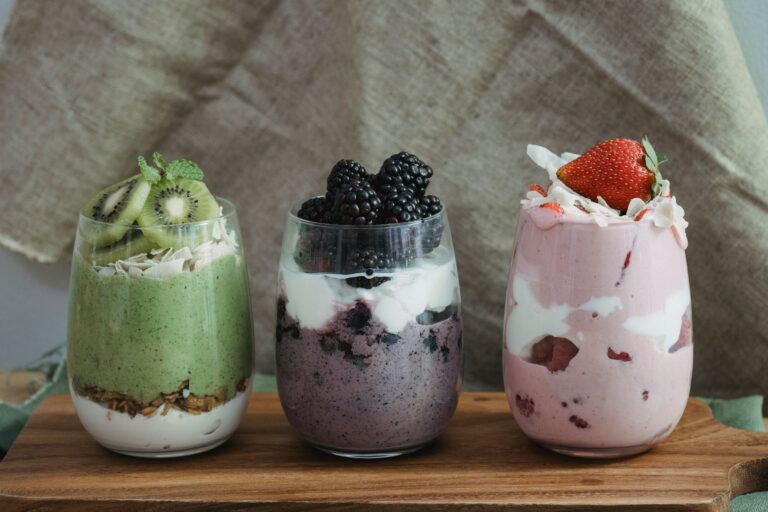
Greek Yogurt Berry Bowl (20.2 g protein, 211 cal)
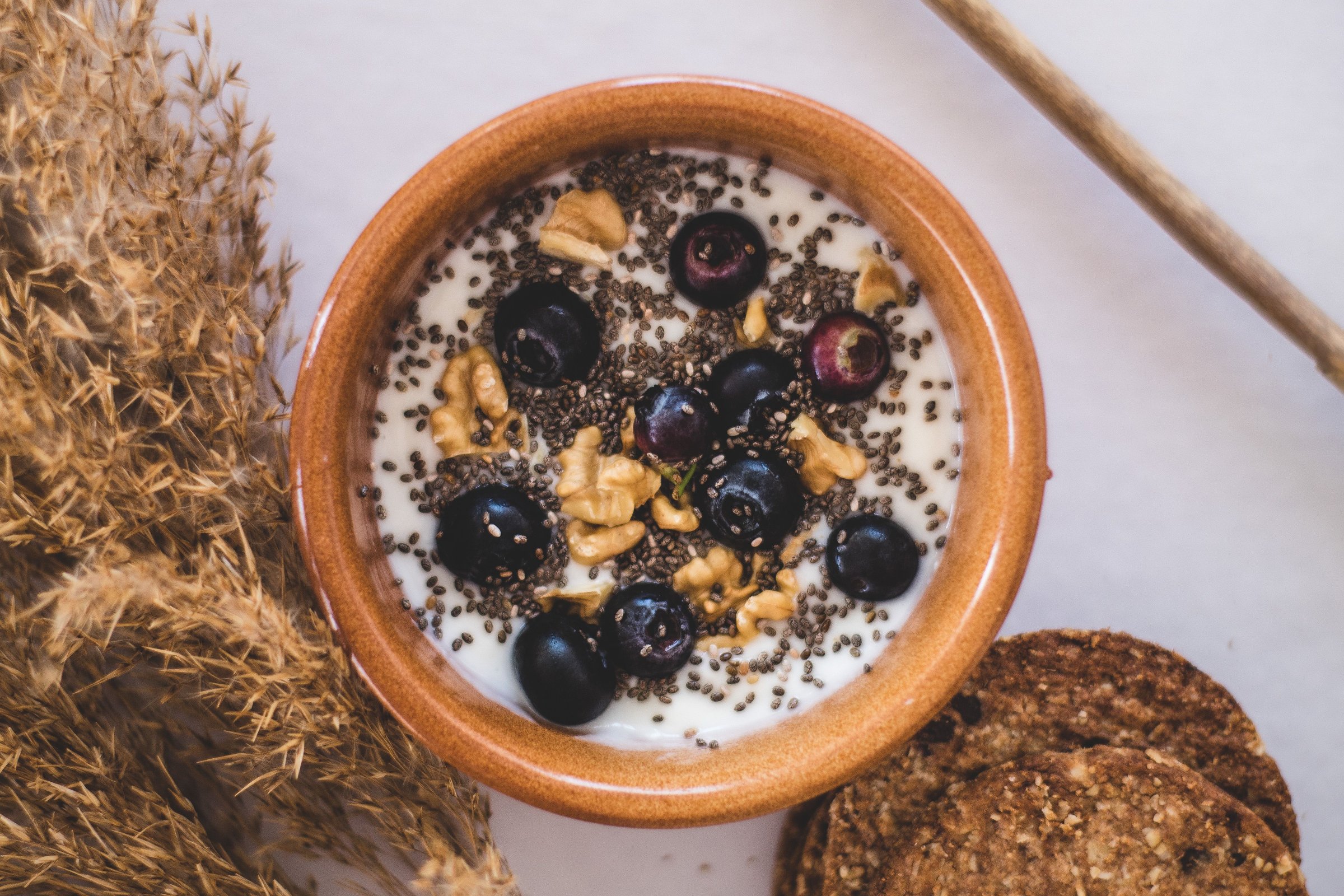
Build: 6 oz nonfat plain Greek yogurt (17.3 g), 1/2 cup blueberries (0.5 g), 1/2 oz chia seeds, about 1 1/2 tbsp (2.3 g).
No cooking at all. Swap up: stir in 1 tbsp peanut butter for +3.6 g and +96 cal.
Takeaway: tofu gets breakfast near 30 g. Yogurt is the fastest at about 20 g.
Lunch and Dinner Bowls
These are the heavy hitters, and they double as dinner bowls. For packed-lunch versions in containers, see our high protein lunch ideas. For plated weeknight versions, try these high protein dinner ideas.
Greek Chicken Bowl (45.5 g protein, 390 cal)
Build: 4 oz roasted chicken breast (35.0 g), 1/2 cup chickpeas (5.4 g), 1/2 cup cucumber (0.3 g), 1/2 cup tomato (0.8 g), 1 oz feta (4.0 g).
The top bowl on the list, and no grain needed. Chickpeas and feta add 9.4 g between them.
Turkey Taco Bowl (41.6 g protein, 489 cal)
Build: 4 oz cooked 93% lean ground turkey (30.6 g), 1/2 cup black beans (7.6 g), 1/2 cup brown rice (2.8 g), 2 tbsp salsa (0.5 g).
Brown the turkey with taco spices. It’s the most filling bowl here at 9.8 g fiber.
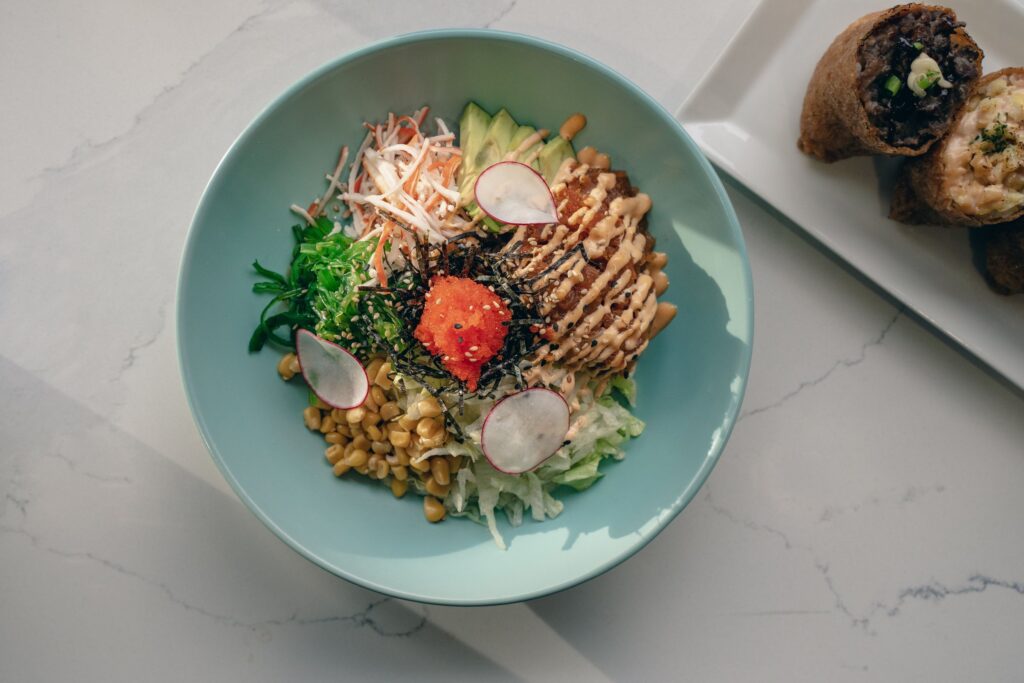
Tuna Poke Bowl (40.6 g protein, 336 cal)
Build: 4 oz raw sushi-grade yellowfin tuna (27.6 g), 1/2 cup white rice (2.1 g), 1/2 cup shelled edamame (9.2 g), 1/2 cup cucumber (0.3 g), 1 tbsp soy sauce (1.3 g).
The FDA says cooking seafood is the safest route. If you eat raw fish, it suggests fish that was previously frozen, which kills parasites but not all germs, so sear the tuna if you’d rather play it safe.[2] Edamame adds 9.2 g.
Steak and Sweet Potato Bowl (40.1 g protein, 339 cal)
Build: 4 oz lean broiled top sirloin (34.6 g), 1/2 cup baked sweet potato (2.0 g), 1 cup cooked kale (3.5 g).
Slice the steak thin across the grain. Steak carries 34.6 of the 40.1 g.
Pork and Greens Rice Bowl (34.7 g protein, 287 cal)
Build: 4 oz roasted pork tenderloin (29.6 g), 1/2 cup white rice (2.1 g), 2 cups raw spinach (1.7 g), 1 tbsp soy sauce (1.3 g).
The lightest lunch or dinner bowl here, at 287 cal. Fiber is low at 1.8 g, so add more vegetables if you want it more filling.
Lentil and Egg Bowl (29.1 g protein, 424 cal)
Build: 1 cup cooked lentils (17.9 g), 1 large hard-boiled egg (6.3 g), 1 cup cooked cauliflower (2.3 g), 1 tbsp tahini (2.6 g).
The fiber champion at 19.2 g. Serve it warm or cold.
Tempeh Peanut Bowl (29.3 g protein, 451 cal)
Build: 4 oz cooked tempeh (22.5 g), 1/2 cup brown rice (2.8 g), 1/2 cup shredded red cabbage (0.5 g), 1 tbsp peanut butter (3.6 g).
Thin the peanut butter with water and a splash of soy sauce for a drizzle. Fiber isn’t listed for tempeh, so the true total is higher than the 3.2 g shown.
Takeaway: a 4 oz anchor plus one legume or cheese add-in gets you past 40 g.
Sauces: The Hidden Calories
Most bowl roundups skip the sauce. Here’s what it costs:
| Sauce or fat | Portion | Protein (g) | Cal |
|---|---|---|---|
| Olive oil | 1 tbsp | 0.0 | 119 |
| Peanut butter | 1 tbsp | 3.6 | 96 |
| Tahini | 1 tbsp | 2.6 | 89 |
| Soy sauce | 1 tbsp | 1.3 | 8 |
| Salsa | 2 tbsp | 0.5 | 10 |
One tablespoon of olive oil is 119 cal with no protein. That’s more than 1/2 cup of white rice (103 cal), and nearly as much as 4 oz of raw tuna (123 cal). The bowl totals above don’t include cooking oil, so add it if you use it.
Peanut butter and tahini earn their spot with a few grams of protein each. Salsa and soy sauce barely move the calories.
Takeaway: measure oil and nut-butter sauces with a spoon. Salsa and soy sauce are the low-cost flavor.
Get Dishco on iPhone
Vegetarian and Vegan Protein Bowls
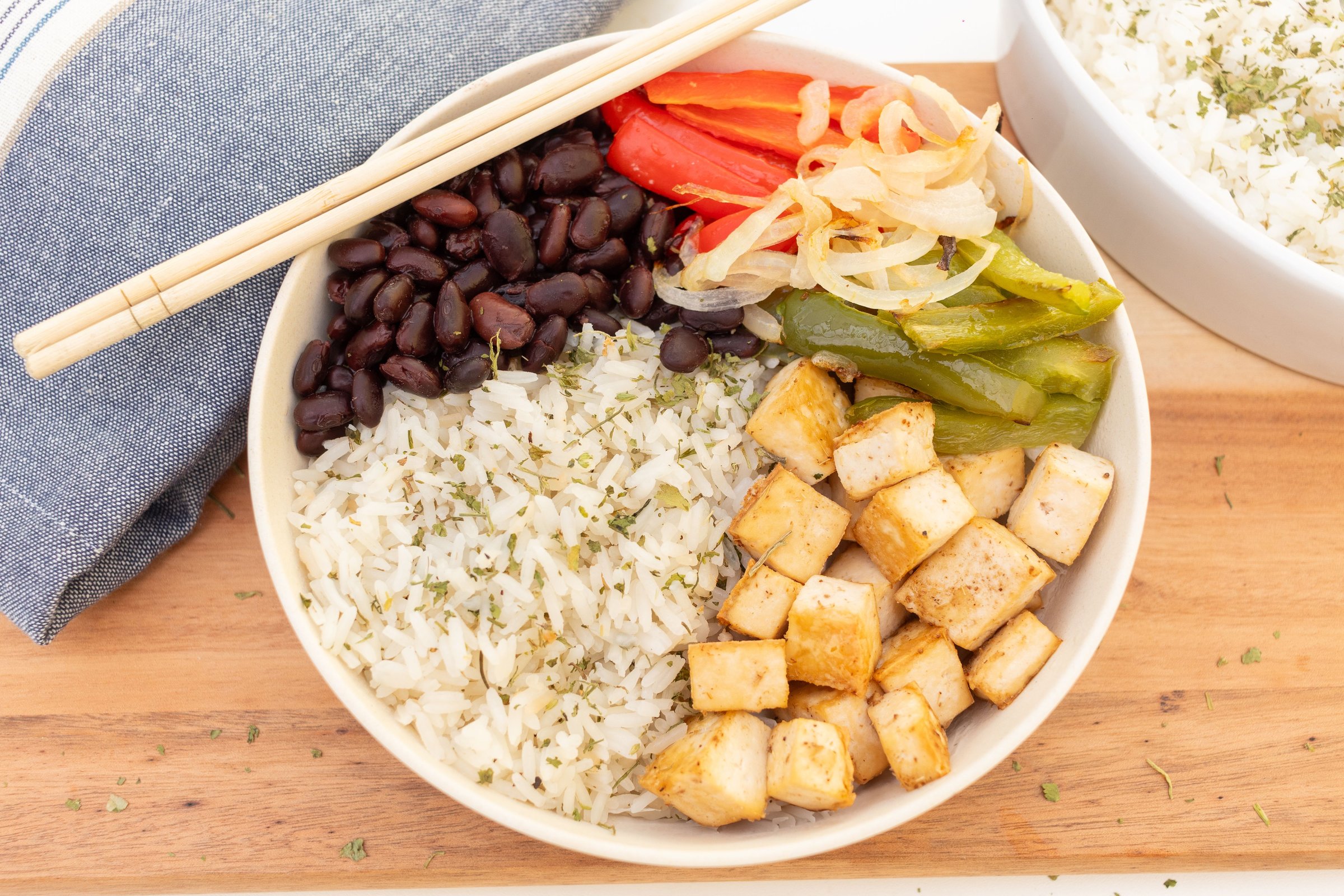
Healthy protein bowls without meat can still reach about 30 g. Here, the tempeh, tofu, and lentil bowls land at 29.1 to 29.3 g. Their protein per 100 cal is lower (6.5 to 9.0) than the meat and fish bowls (8.5 to 12.1), because plant proteins come with more carbs and fat. For meatless meals beyond bowls, see our high protein vegetarian meals.
They win on fiber. The lentil and egg bowl has 19.2 g, more than any other bowl here.
To push plant bowls higher, add a legume. A cup of edamame adds 18.5 g. For more add-ins, see our ranked list of vegetables high in protein.
Takeaway: plant bowls hit about 30 g with more fiber. Add edamame or lentils for more.
Logging Bowls Without the Guesswork
Bowls are easy to underestimate because the parts hide each other. The fix is simple: weigh or measure the protein anchor once so you know what 4 oz looks like, then log each part or save the whole bowl to reuse. For a mixed bowl, a photo or saying it out loud works well. Packaged bases like microwave rice have barcodes to scan, and a bowl from a recipe site can come in by pasting its link. Count the sauce separately, since it’s the part most people skip.
Takeaway: measure the anchor and the sauce. Those two set the numbers.
Get Dishco on iPhone
FAQ
How much protein should a protein bowl have?
There’s no official cutoff. The bowls here land at 20 to 45 g. MedlinePlus says protein should be 10% to 35% of your total calorie needs.[3] See how to get 100 grams of protein a day or set targets with the macros for weight loss calculator.
Is a protein bowl good for weight loss?
They can fit, but no single bowl causes weight loss; your whole day matters. If you’re looking for protein bowl recipes for weight loss, check the protein per 100 cal column. The tuna poke and pork bowls lead at 12.1.
What is the best base for a protein bowl?
Quinoa has the most protein of the bases here, at 4.1 g per 1/2 cup. Cauliflower and raw spinach are the lightest, at 29 and 14 cal.
Can you meal prep a protein bowl?
Yes. Store sauces separately and add them when you eat. For raw tuna, keep it refrigerated and choose previously frozen fish; cooking is safest.[2]
What goes in a vegan protein bowl?
Start with tempeh (22.5 g per 4 oz), firm tofu (21.8 g per 1/2 cup), or a cup of edamame or lentils. Add a grain, vegetables, and peanut butter or tahini. For vegan bowls, curries, and soups sized for the week, see our vegan meal prep ideas.
How do I get 30 g of protein in a bowl?
Use 4 oz of any meat or fish anchor. Those land 27.1 to 35.0 g on their own, so a base and a legume or cheese add-in get you there.
Build One Tonight
Protein bowls work because the formula is simple. Pick an anchor, a base, and a sauce you’ll actually measure, then add whatever vegetables you have. Start with one of these protein bowl ideas, then swap parts using the tables above.
To check the numbers on your own bowl, use the recipe nutrition calculator.
Editorial Sources and Fact Checking
Dishco follows clear sourcing guidelines so you can trust what you read, outlined in our editorial policy. We use trustworthy sources, including peer-reviewed research, public health guidelines, and established health institutions.
Sources
- 1 FoodData Central (SR Legacy). U.S. Department of Agriculture. 2026.
- 2 Selecting and Serving Fresh and Frozen Seafood Safely. U.S. Food and Drug Administration. 2026.
- 3 Protein in diet. MedlinePlus Medical Encyclopedia. 2026.