
Looking for breakfast meal prep that tells you the protein in each serving, not just a pile of recipes? Here are 7 easy make-ahead breakfasts with 10.6 to 29.5 g of protein each, plus fiber, cal, and a clear fridge or freezer call. You cook or assemble once, then eat over the next few days.
Quick answer: where to start
Protein leader: cottage cheese pineapple walnut box, 29.5 g protein, 250 cal (fridge)
Freezer pick: sweet potato breakfast burrito, 21.7 g protein, 10.3 g fiber, 427 cal
Lightest: veggie egg bake, 10.6 g protein, 161 cal per 1/6 of the pan (fridge or freezer)
Numbers are per serving, from USDA data. Cooking oil, butter, and cooking spray aren’t included.
Every number comes from USDA FoodData Central.[1] This is an idea list, not a meal plan. The cottage cheese box leads for protein and stays light, but it only has 1.6 g of fiber. The burrito leads for fiber. The egg bake is the lightest slice; pair it with fruit if you want a bigger plate.
Takeaway: pick by how you’ll store it. Fridge boxes, freezer burritos and sandwiches, or an egg bake you can split.
Breakfast Meal Prep at a Glance
All 7 meal prep breakfast ideas in one table, ranked by protein.
| Breakfast | Keeps | Protein (g) | Fiber (g) | Cal | Protein / 100 cal |
|---|---|---|---|---|---|
| Cottage cheese pineapple walnut box | Fridge | 29.5 | 1.6 | 250 | 11.8 |
| Blueberry almond Greek yogurt jar | Fridge | 23.8 | 5.3 | 305 | 7.8 |
| Sweet potato breakfast burrito | Freezer | 21.7 | 10.3 | 427 | 5.1 |
| Hard-boiled egg, apple, and almond box | Fridge | 19.0 | 7.9 | 412 | 4.6 |
| Egg, cheese, and spinach English muffin sandwich | Freezer | 18.7 | 4.8 | 341 | 5.5 |
| Spinach and red pepper egg muffin cups (2 cups) | Fridge or freezer | 17.4 | 2.2 | 226 | 7.7 |
| Veggie egg bake (1/6 of the pan) | Fridge or freezer | 10.6 | 2.1 | 161 | 6.6 |
Sums of the listed parts only. Oil, butter, cooking spray, salt, and spices aren’t included.[1] The egg bake is one pan divided into 6 servings. If you cut 8 slices instead, each slice is 8.0 g protein, 1.6 g fiber, and 121 cal.
The cottage cheese box leads for protein per calorie (11.8). The burrito and the egg-apple-almond box are the bigger servings, at 427 and 412 cal.
Takeaway: fridge boxes hit the highest protein. The burrito is the fiber pick. The egg bake is the light slice.





Get Dishco on iPhone

How to Meal Prep Breakfast
Good breakfast meal prep is less about a new recipe every morning and more about a safe cooling and storage routine.
Cook or bake the egg dishes and burritos first. Then divide large amounts into shallow containers so they cool faster, and refrigerate leftovers within 2 hours of cooking.[2] Label each container with the name and the day you made it, so you’re not guessing later.
USDA FSIS says leftovers can be kept in the refrigerator for 3 to 4 days or frozen for 3 to 4 months.[2] Reheat leftovers to 165° F.[2] Freeze burritos and sandwiches flat so they thaw evenly, and thaw in the refrigerator, not on the counter.
Egg casseroles and similar baked egg dishes have their own chart line, covered with those recipes below. Yogurt and cottage cheese boxes don’t get a leftover number from those pages, so keep them cold and eat them within a few days, following the dates on your tubs.
For a wider prep system that also covers lunch and dinner, see meal prep for weight loss and muscle gain.
Takeaway: cool in shallow containers, refrigerate within 2 hours, and keep cooked leftovers to 3 to 4 days in the fridge.
Egg Breakfast Meal Prep
These two are easy breakfast meal prep when you want eggs ready without scrambling every morning.
Spinach and Red Pepper Egg Muffin Cups (2 cups: 17.4 g protein, 2.2 g fiber, 226 cal)
Portions (for 2 cups): 2 large eggs (12.6 g protein), 1 cup raw spinach, 1/2 cup red bell pepper (1.6 g fiber), 2 tbsp shredded cheddar (3.2 g protein).
Whisk the eggs, stir in spinach, pepper, and cheese, and bake in a muffin tin until set. The numbers above are for two cups, which is one breakfast here. Treat them like an egg casserole for storage: after baking, 3 to 4 days in the fridge or 2 to 3 months in the freezer.[3] Reheat to 165° F.
Veggie Egg Bake (1/6 of the pan: 10.6 g protein, 2.1 g fiber, 161 cal)
Portions (full pan, then divide by 6): 6 large eggs, 1/2 cup nonfat milk, 3 cups raw spinach, 1 cup red bell pepper, 2 medium baked sweet potatoes, 1/2 cup shredded cheddar.
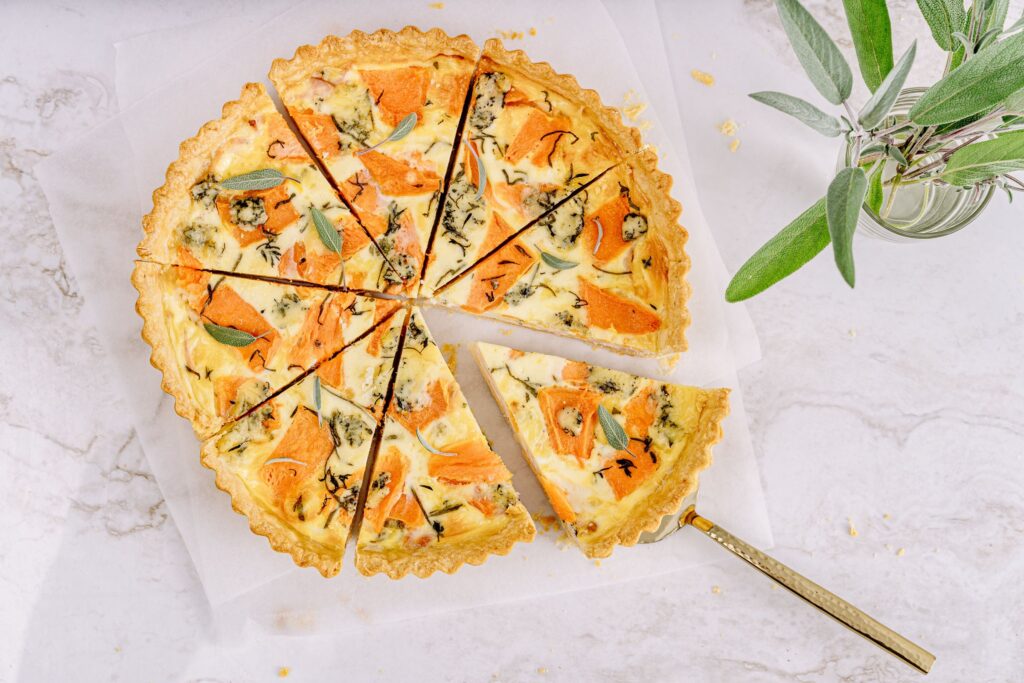
Whisk the eggs and milk, fold in the vegetables and cheese, and bake until set. Cut into 6. The photo at the top of this page is a quiche with a pastry crust; this bake has no crust. This is the lightest serving on the list, so add fruit if you want a bigger breakfast. FoodSafety.gov lists casseroles with eggs, after baking, at 3 to 4 days in the fridge or 2 to 3 months in the freezer.[3] If you cut 8 slices, each one drops to 8.0 g protein, 1.6 g fiber, and 121 cal.
Takeaway: bake once, then refrigerate or freeze the slices. Two muffin cups, or one sixth of the pan, is a serving here.
Freezer Breakfast Meal Prep
These two are built to freeze. Use the general leftovers line: 3 to 4 days in the fridge or 3 to 4 months in the freezer, and reheat to 165° F.[2]
Sweet Potato Breakfast Burrito (21.7 g protein, 10.3 g fiber, 427 cal)
Portions: 1 whole wheat tortilla (4.0 g fiber), 2 large scrambled eggs (12.2 g protein), 1/2 medium baked sweet potato (1.9 g fiber), 1/4 cup cooked black beans (3.7 g fiber, 3.8 g protein), 2 tbsp salsa.
Warm the tortilla, fill, wrap tight, and freeze flat. This is the fiber leader and one of the two bigger breakfasts, at 427 cal. Swap: skip the beans for 17.9 g protein, 6.6 g fiber, and 371 cal.
Egg, Cheese, and Spinach English Muffin Sandwich (18.7 g protein, 4.8 g fiber, 341 cal)

Portions: 1 whole-wheat English muffin (4.4 g fiber, 5.8 g protein), 1 large scrambled egg (6.1 g protein), 1 oz cheddar (6.4 g protein), 1/2 cup raw spinach.
Assemble, wrap, and freeze. Reheat until the center hits 165° F. Swap: skip the cheddar for 12.3 g protein, 4.8 g fiber, and 228 cal.
Get Dishco on iPhone
Takeaway: wrap tight, freeze flat, and reheat to 165° F. The burrito is the higher-fiber freezer option.
No-Cook Breakfast Meal Prep
No oven required. Keep these refrigerated, and add cut fruit or nuts the morning you eat if you want them crunchier. Overnight oats aren’t in this list; they have their own page at high protein overnight oats. For a warm bowl instead, see protein oatmeal.
Cottage Cheese Pineapple Walnut Box (29.5 g protein, 1.6 g fiber, 250 cal)
Portions: 1 cup lowfat 1% cottage cheese (28.0 g protein), 1/2 cup pineapple (1.2 g fiber), 1 tbsp chopped walnuts (0.5 g fiber).
The protein leader, and a light 250 cal, with very little fiber. Pack the walnuts separately if you want them crisp. There’s no leftover number for cottage cheese boxes on the storage chart, so eat within a few days and check the date on your tub.[3] Swap: skip the walnuts for 28.5 g protein, 1.2 g fiber, and 204 cal.
Blueberry Almond Greek Yogurt Jar (23.8 g protein, 5.3 g fiber, 305 cal)
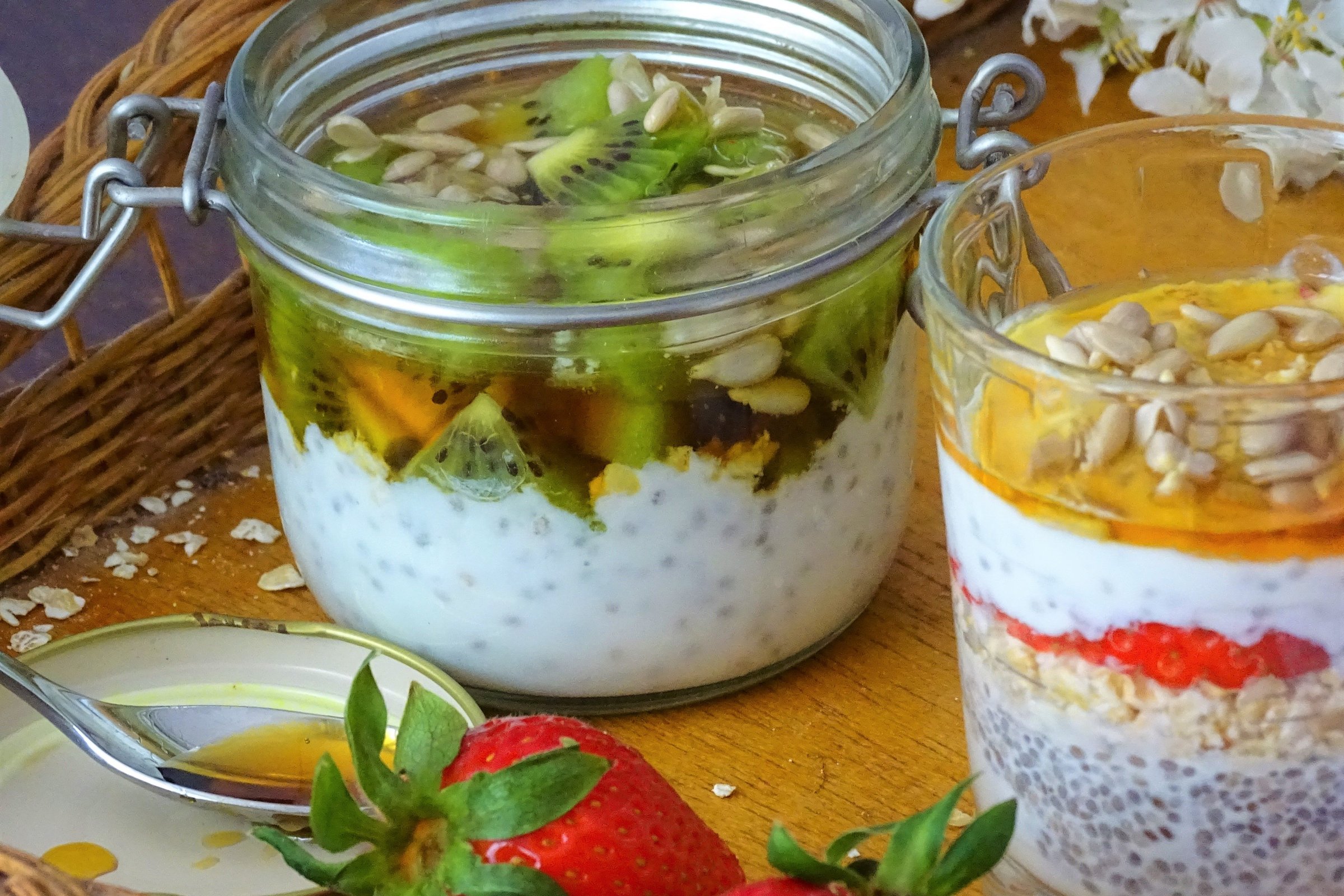
Portions: 3/4 cup nonfat plain Greek yogurt (17.3 g protein), 1/2 cup blueberries (1.8 g fiber), 1 oz almonds (5.9 g protein, 3.5 g fiber).
Stir or layer, then refrigerate. Same rule as the cottage cheese box: no leftover number on the chart, so eat within a few days and check the yogurt date.[3] Swap: skip the almonds for 17.9 g protein, 1.8 g fiber, and 142 cal.
Hard-Boiled Egg, Apple, and Almond Box (19.0 g protein, 7.9 g fiber, 412 cal)
Portions: 2 large hard-boiled eggs (12.6 g protein), 1 medium apple with skin (4.4 g fiber), 1 oz almonds (5.9 g protein, 3.5 g fiber).
Pack the eggs, then add the apple and almonds the day you eat, or keep them in their own containers. FoodSafety.gov lists hard-cooked eggs at 1 week in the fridge, and says not to freeze them.[3] This is the other bigger box, at 412 cal. Swap: use 1 egg instead of 2 for 12.7 g protein, 7.9 g fiber, and 334 cal.
Takeaway: no-cook boxes are the fastest prep. Keep yogurt and cottage cheese to a few days, and don’t freeze hard-boiled eggs.
Build Your Own Make-Ahead Breakfast
Use this formula when you want a meal prep breakfast that isn’t one of the seven above:
- 1. A protein base: eggs, Greek yogurt, or cottage cheese
- 2. A fiber add-in: beans, a whole wheat tortilla or muffin, an apple, or berries
- 3. One fruit or crunchy finish: pineapple, blueberries, or a small portion of nuts
Be honest about the trade-off. Protein per 100 cal here runs from 4.6 (egg, apple, and almond box) to 11.8 (cottage cheese box). The cottage cheese box wins that column and stays at 250 cal, but it barely has fiber. The burrito and the egg-apple box bring more fiber and more cal. No breakfast here is a weight-loss promise; the column just shows protein per 100 cal.
To see how breakfast fits a full day, read how to get 100 grams of protein a day. To check a custom burrito or bake with extras, use the recipe nutrition calculator. For lunch and dinner prep, see chicken meal prep ideas.
If fiber is the gap in your mornings, these high fiber breakfast ideas each bring 8 to 14 g, and several of them prep ahead too.
Takeaway: protein plus a fiber add-in plus fruit covers most mornings. Freeze the cooked items; keep the dairy boxes cold.
Logging Breakfast Meal Prep Without the Guesswork
Weigh the eggs, yogurt, and cottage cheese once so the servings above are real in your containers. Tortillas, English muffins, cheese sticks, and many yogurt tubs have barcodes to scan. For a mixed burrito or a snack box, a photo or saying what you packed works well, and a recipe from a food site can come in by pasting its link. Either way, you can see the nutrition for each part instead of guessing the whole box.
Takeaway: weigh the protein base once. Scan or describe the sides.
Get Dishco on iPhone
FAQ
How long does breakfast meal prep last?
It depends on the food. USDA FSIS says leftovers can be kept in the refrigerator for 3 to 4 days or frozen for 3 to 4 months.[2] FoodSafety.gov lists baked egg casseroles at 3 to 4 days in the fridge or 2 to 3 months in the freezer, and hard-cooked eggs at 1 week in the fridge, not frozen.[3] Yogurt and cottage cheese boxes should be eaten within a few days.
Can you freeze breakfast meal prep?
Yes, the burritos, English muffin sandwiches, egg muffin cups, and egg bake freeze well. Use 3 to 4 months for general leftovers, or 2 to 3 months for egg casseroles, as quality guidance.[2][3] Do not freeze hard-boiled eggs. Skip the freezer for yogurt and cottage cheese boxes.
What are good high protein make-ahead breakfasts?
The cottage cheese box (29.5 g), the yogurt jar (23.8 g), and the sweet potato burrito (21.7 g) lead this list. The egg bake is lower at 10.6 g per slice, so pair it with fruit or yogurt if you want more protein.
Can you meal prep breakfast for the week?
You can prep on the weekend, then keep fridge items for 3 to 4 days and freeze the rest. That covers a week without stretching leftover times. Egg dishes and burritos are the ones that freeze; dairy boxes stay in the fridge.
Are overnight oats good for meal prep?
Yes. They’re a fridge method, and they’re covered on their own page rather than in this list.
How do I reheat freezer breakfasts safely?
Thaw in the refrigerator when you can, then reheat leftovers to 165° F.[2] Burritos and sandwiches should be hot in the center, not just warm on the outside.
Prep Two This Weekend
You don’t need all 7 breakfast meal prep ideas at once. Prep two this weekend, maybe egg muffin cups for the freezer and a cottage cheese box for the next few fridge mornings. Cool cooked food in shallow containers, keep the 3 to 4 day fridge window, and leave cut fruit for the morning when you can.
Start with the storage that fits your week, then repeat the two that you actually eat.
Editorial Sources and Fact Checking
Dishco follows clear sourcing guidelines so you can trust what you read, outlined in our editorial policy. We use trustworthy sources, including peer-reviewed research, public health guidelines, and established health institutions.
Sources
- 1 FoodData Central (SR Legacy). U.S. Department of Agriculture. 2026.
- 2 Leftovers and Food Safety. USDA Food Safety and Inspection Service. 2026.
- 3 Cold Food Storage Chart. FoodSafety.gov. 2026.