
Looking for lunch meal prep ideas that show the real total, including the oil and the dressing? Here are 10 make-ahead lunches, from 435 to 528 cal, grouped by how they eat at noon: four you can eat cold, four to reheat, and two soups that freeze.[1] Every teaspoon of oil and every dressing is counted.
Quick answer: protein, fiber, and no-reheat options
Most protein: beef, barley, and mushroom soup, 40.1 g protein, 496 cal
Most fiber: chickpea minestrone with toast, 20.0 g fiber, 520 cal
No reheat needed: the four cold salads
Numbers are per container, from USDA data. These are ideas, not a meal plan.
Eight of the ten land between 31 and 40 g of protein. The black bean quinoa salad (20.5 g) and the minestrone (22.5 g) sit lower, on purpose.
Takeaway: measure the dressing, pack what you’ll actually eat, and read the real number. The list runs from 435 to 528 cal.
Lunch Meal Prep Ideas at a Glance
All 10 lunches, with cal, protein, carbs, fat, and fiber. To set your own numbers, use the macros for weight loss calculator.
| Lunch | Eats | Cal | Protein (g) | Carbs (g) | Fat (g) | Fiber (g) |
|---|---|---|---|---|---|---|
| Salmon, chickpea, and couscous salad | cold | 468 | 39.9 | 54.8 | 10.8 | 8.5 |
| Greek chicken orzo salad | cold | 527 | 38.8 | 43.2 | 21.8 | 4.6 |
| Tuna and white bean salad with pita | cold | 507 | 38.5 | 66.8 | 12.0 | 11.5 |
| Black bean, corn, and quinoa salad | cold | 528 | 20.5 | 70.3 | 21.6 | 17.4 |
| Pork tenderloin with sweet potato and Brussels | reheat | 492 | 39.6 | 54.9 | 14.2 | 13.4 |
| Lemon garlic shrimp with quinoa and broccoli | reheat | 435 | 37.7 | 46.5 | 12.9 | 10.7* |
| Turkey and brown rice stuffed peppers | reheat | 511 | 36.4 | 48.4 | 20.7 | 7.6 |
| Spinach ricotta stuffed shells | reheat | 491 | 31.4 | 52.3 | 17.5 | 6.3 |
| Beef, barley, and mushroom soup with toast | freeze | 496 | 40.1 | 57.5 | 12.7 | 12.8 |
| Chickpea minestrone with kale and toast | freeze | 520 | 22.5 | 88.0 | 11.1 | 20.0 |
Every oil, dressing, and sauce in the portions is counted. Salt, herbs, garlic, and hot sauce are not. Proteins are weighed cooked or drained. * SR Legacy has no fiber value for cooked shrimp; the 10.7 g shown is from the quinoa, broccoli, and pepper.
Takeaway: a 435 cal shrimp plate and a 528 cal bean salad both belong here. The honest number beats a guess.
Photos hide the spoon of oil. If you want the real total, log the container you packed.





Get Dishco on iPhone

How to Build a Lunch That Holds Up
These lunch meal prep ideas follow a fairly steady pattern: 3 to 4 oz of cooked protein, or 1/2 to 3/4 cup of beans, then 1/2 to 3/4 cup of cooked grain or pasta (or one pita, or one slice of toast), plus 1 to 2 cups of vegetables. The last step is the one most photos skip: one measured dressing.
One teaspoon of olive oil is 40 cal. Two teaspoons is 80 cal, which is what the orzo salad, tuna salad, pork, and shrimp use. A freehand 2 tablespoon pour is 239 cal, and that single swap later adds 159 cal to the orzo salad with no extra protein. The stuffed shells use no oil; the ricotta and marinara carry the fat.
Pack the dressing in a small cup, and add avocado and greens at serving so the grain doesn’t go soft. For more ways to stack a container, see these bowl formulas.
The soups are the biggest containers: the beef barley soup is 938 g, and the minestrone is 1,036 g, both with a slice of toast. The orzo salad is 456 g at almost the same energy.
Takeaway: protein, a measured grain, plenty of vegetables, and a measured spoon of dressing is the usual build. The freehand pour is what leaves the number you planned.
Meal Prep Lunches You Can Eat Cold
These four salads are ready to eat from the fridge. For more lunches built around protein, see high protein lunch ideas.
Salmon, Chickpea, and Couscous Salad (39.9 g protein, 468 cal)
Portion: 3 oz canned pink salmon, drained, 3/4 cup couscous, 1/2 cup chickpeas, cucumber, cherry tomatoes, 1 cup baby spinach, 1/4 cup nonfat Greek yogurt dressing (41 cal), 1 tsp olive oil, lemon. Dress at lunch.
Greek Chicken Orzo Salad (38.8 g protein, 527 cal, 4.6 g fiber)
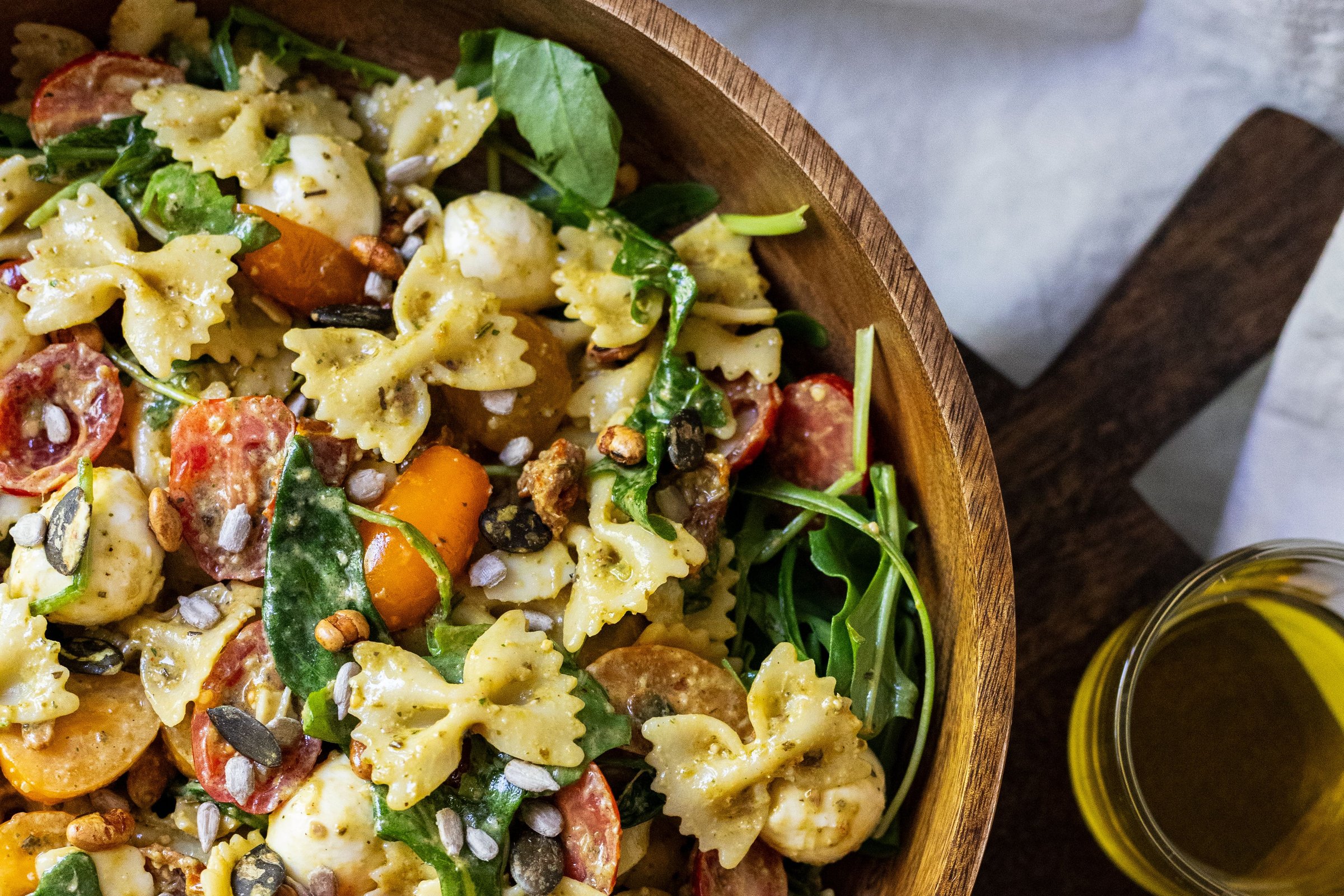
Portion: 3 oz chicken breast, 3/4 cup orzo, cucumber, tomato, red onion, 5 olives (26 cal), 1 oz feta (74 cal), 2 tsp olive oil, 1 tbsp red wine vinegar, 1 cup baby spinach. Lowest-fiber lunch, mostly from the refined orzo.
Tuna and White Bean Salad With Pita (38.5 g protein, 507 cal, 11.5 g fiber)
Portion: one 5 oz can of light tuna in water, drained (about 4 oz), 1/2 cup white beans, cucumber, tomato, red onion, 1 tsp mustard, 2 tsp olive oil, lemon, 1 large whole-wheat pita. Mix the tuna and beans, and pack the pita on the side.
Black Bean, Corn, and Quinoa Salad (20.5 g protein, 528 cal, 17.4 g fiber)
Portion: 1/2 cup quinoa, 1/2 cup black beans, 1/2 cup corn, red pepper, red onion, 1 oz feta, 1/4 avocado (80 cal, add at serving), 1 tsp olive oil, lime. Lowest-protein lunch on the list. A later swap adds 3 oz of chicken, which brings 26.4 g of protein and also 140 cal.
Takeaway: these cold lunch ideas work as no-reheat work lunches when the dressing stays in its own cup.
Lunches to Reheat
Reheat these four until the center reaches 165 F.[2] If you want a full week of chicken, see chicken meal prep ideas.
Pork Tenderloin With Sweet Potato and Brussels (39.6 g protein, 492 cal, 13.4 g fiber)
Portion: 4 oz pork tenderloin, 1 cup baked sweet potato, 1 cup Brussels sprouts, 2 tsp olive oil, 2 tsp mustard glaze. Roast the pork and vegetables on one sheet pan.
Lemon Garlic Shrimp With Quinoa and Broccoli (37.7 g protein, 435 cal)
Portion: 4 oz shrimp, 3/4 cup quinoa, 1 cup broccoli, 1/2 cup red pepper, 2 tsp olive oil, lemon. Cook the shrimp and vegetables in the 2 teaspoons of oil. USDA lists no fiber value for the shrimp.
Turkey and Brown Rice Stuffed Peppers (36.4 g protein, 511 cal)
Portion: 3 oz cooked 93% lean turkey (about a 4 oz raw portion), 1/2 cup brown rice, 1 large red pepper (2 halves), onion, 1/2 cup tomato sauce (29 cal), 1 oz part-skim mozzarella (71 cal), 1 tsp olive oil. Brown the turkey, fill the pepper halves, and bake.
Spinach Ricotta Stuffed Shells (31.4 g protein, 491 cal)
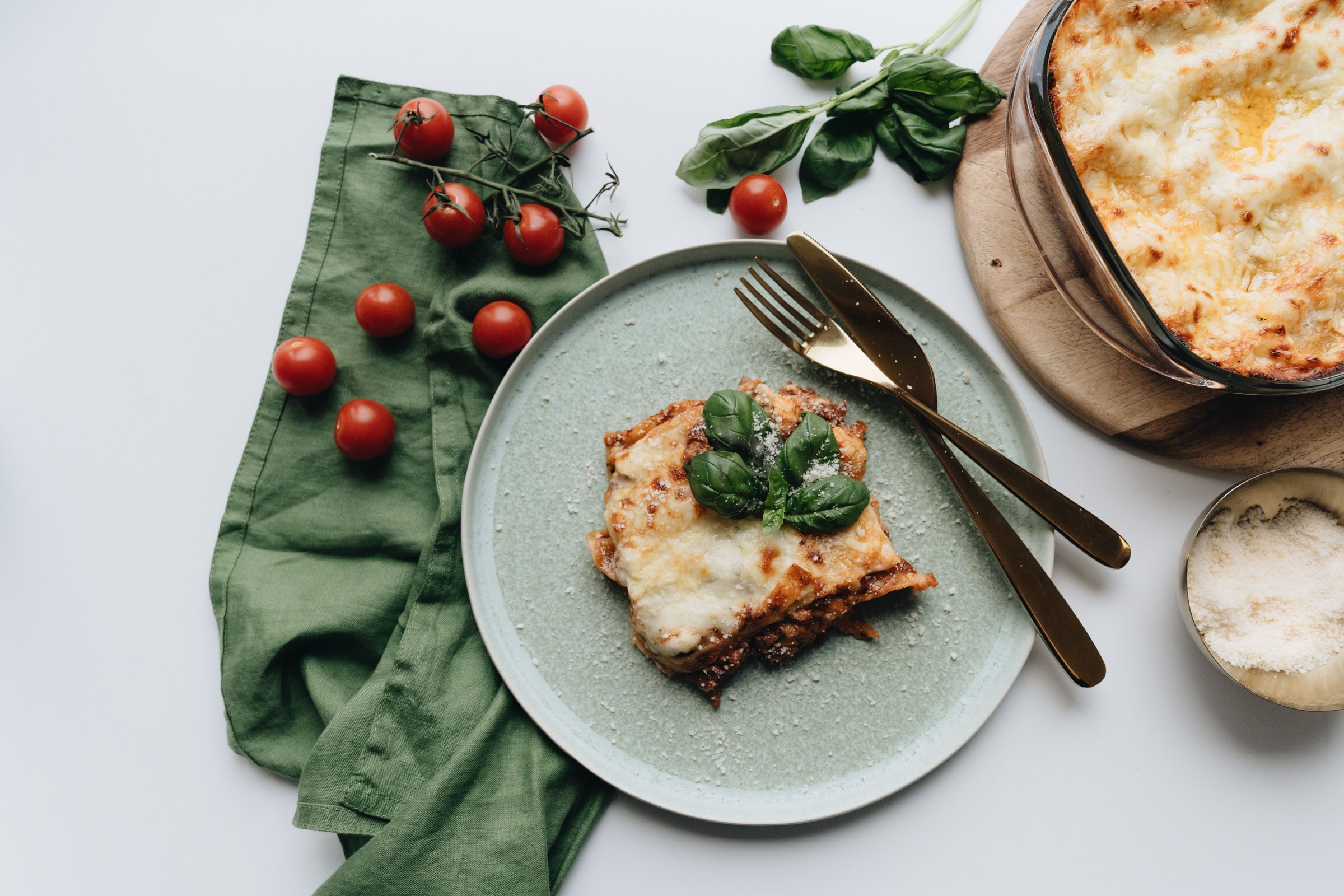
Portion: 3/4 cup cooked pasta shells, 1/2 cup part-skim ricotta, 1/2 cup spinach, 1/2 cup marinara (63 cal), 1 oz part-skim mozzarella. The one lunch with no oil. Fill the shells, cover with marinara, and bake.
Import the recipe, then check the number per container.
Get Dishco on iPhone
Takeaway: a measured 2 teaspoons of oil, or no oil in the shells, is what keeps a reheat lunch in this band.
Soups That Freeze
These two freeze in portions and reheat to a rolling boil. FoodSafety.gov lists soups and stews at 3 to 4 days in the fridge, or 2 to 3 months in the freezer.[3]
Beef, Barley, and Mushroom Soup (40.1 g protein, 496 cal, 12.8 g fiber)
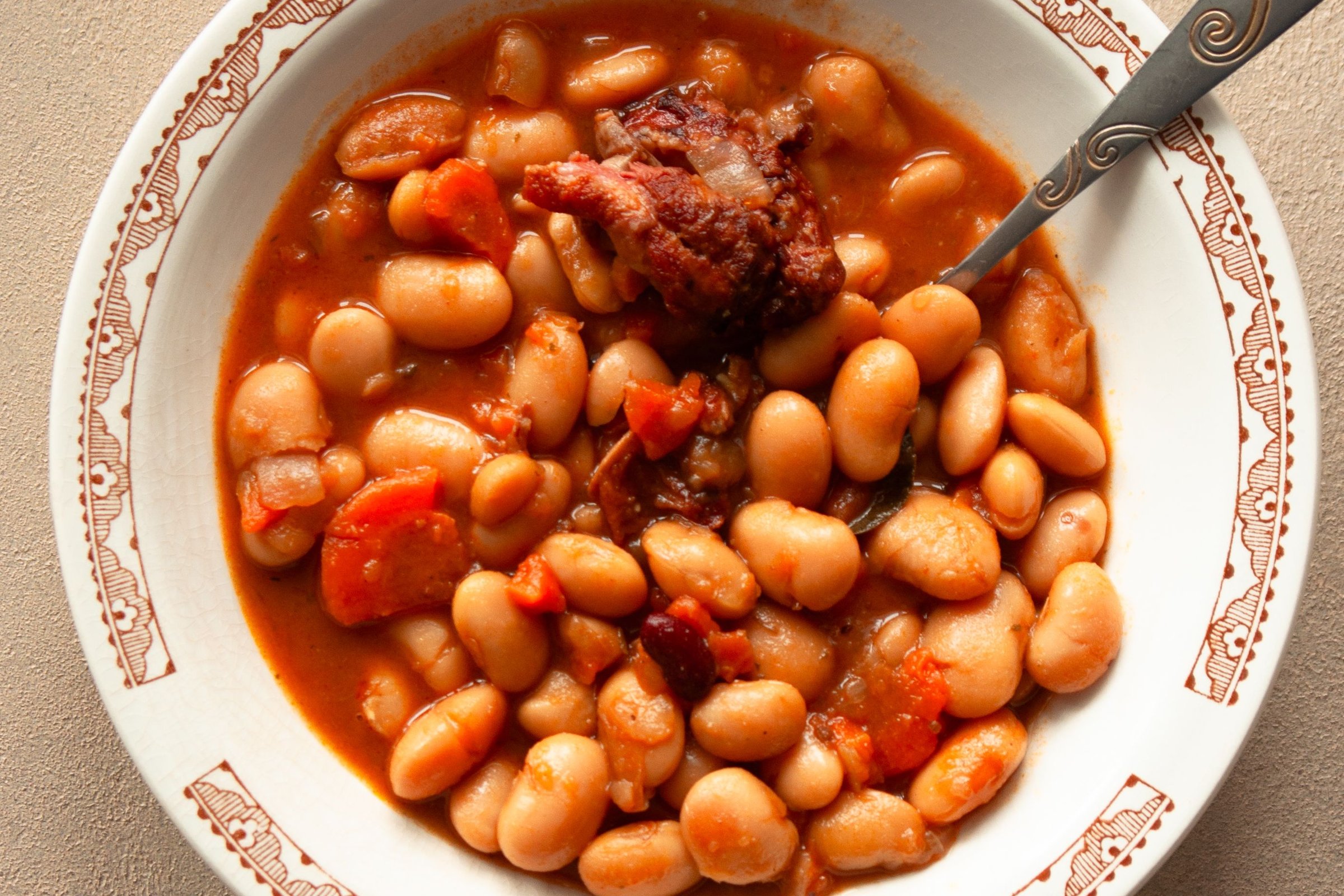
Portion: 3 oz lean sirloin, 1/2 cup pearled barley, mushrooms, carrots, celery, onion, 1/2 cup canned tomatoes, 1 1/2 cups beef broth, 1 tsp olive oil, 1 slice whole-wheat toast. Protein leader. Simmer, cool in shallow containers, and add the toast at lunch.
Chickpea Minestrone With Kale and Toast (22.5 g protein, 520 cal, 20.0 g fiber)
Portion: 3/4 cup chickpeas, 1/2 cup small pasta, zucchini, kale, carrots, celery, onion, 1/2 cup canned tomatoes, 1 1/2 cups vegetable broth, 1 tsp olive oil, 1 slice whole-wheat toast. Fiber leader, and vegan, with lower protein than the meat and fish lunches. For more high-fiber plates, see high fiber meals. For more plant-based containers, see these vegan meal prep ideas.
Takeaway: freeze the soups in portions, then bring them back to a rolling boil. The toast goes in at serving.
Easy Lunch Meal Prep in One Session
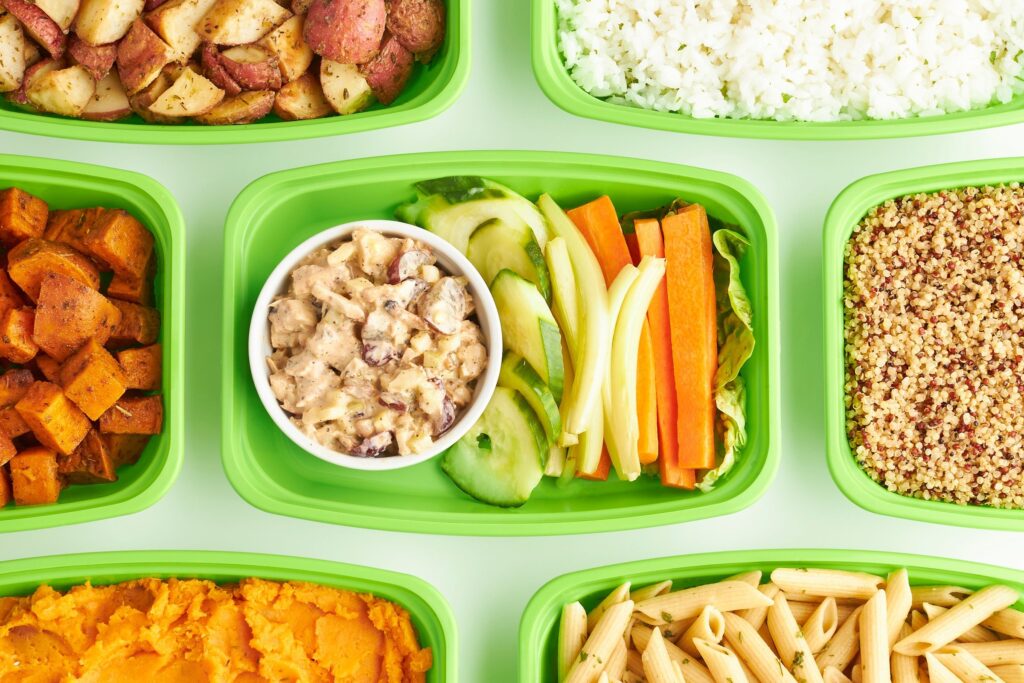
This is a prep order, not a schedule, and it works whether you cook on Sunday or midweek. Pick two or three lunches, not all ten. The photo at the top of this page is a general prep spread in reusable plastic containers, not one of these ten lunches; the creamy salad in the center isn’t a recipe here. The point is to share oven time and stove time, then let everything cool before it goes in the fridge.
Start the grains and the soup pot first, since they take the longest. Slide the sheet pan of pork and vegetables into the oven, then cook the chicken, turkey, or shrimp on the stove. Chop the raw vegetables for the cold salads while those pots are going. Cool everything in shallow containers so it comes down faster, and dress nothing until lunch. Precooked grains, canned fish, and canned beans cut the work if you want a shorter session. A rotisserie chicken or leftover cooked grain can stand in for a protein or starch you’d otherwise start from scratch.
For the full Sunday system, start with two or three of these lunches and keep the same order.
Takeaway: start the long-cooking pots first, cool in shallow containers, and leave the dressing for lunchtime.
How Long Meal Prep Lunches Last
Leftovers can be kept in the refrigerator for 3 to 4 days, or frozen for 3 to 4 months.[2] Refrigerate within 2 hours of cooking, or within 1 hour if the room is above 90 F. Divide a big pot into shallow containers so it cools faster. Reheat leftovers to 165 F, and bring soups to a rolling boil. Frozen soups can be reheated without thawing.[2]
FoodSafety.gov lists egg, chicken, ham, tuna, and macaroni salads at 3 to 4 days in the fridge, and says they do not freeze well.[3] Treat the cold salads as fridge-only. The same chart lists soups and stews, with vegetable or meat added, at 3 to 4 days in the fridge and 2 to 3 months in the freezer.[3] Freezer times are for quality; food kept at 0 F stays safe indefinitely, per that chart.
Takeaway: plan on 3 to 4 days in the fridge. Freeze the soups, not the cold salads.
Swaps That Change the Numbers
One change can slide a container well outside the 435 to 528 cal range. These four swaps are computed from the same USDA rows.
| Swap | Change | Cal | Protein (g) | Carbs (g) | Fat (g) | Fiber (g) |
|---|---|---|---|---|---|---|
| Orzo salad with 2 tbsp oil, poured freehand | +159 cal | 686 | 38.8 | 43.2 | 39.8 | 4.6 |
| Black bean quinoa salad plus 3 oz chicken | +140 cal, +26.4 g protein | 669 | 46.8 | 70.3 | 24.6 | 17.4 |
| Stuffed shells with 2% cottage cheese | -80 cal, -2.4 g protein | 412 | 29.1 | 51.3 | 10.2 | 6.3 |
| Salmon salad on extra spinach, no couscous | -118 cal, -2.8 g protein | 350 | 37.2 | 29.6 | 10.9 | 8.2 |
The freehand 2 tablespoon pour is the biggest single move, and it adds no protein.
Adding 3 oz of chicken breast to the black bean quinoa salad raises protein from 20.5 g to 46.8 g, and it also adds 140 cal, landing at 669 cal.
Swapping 2% cottage cheese for the ricotta in the stuffed shells drops the total to 412 cal and trims fat from 17.5 g to 10.2 g, with a 2.4 g dip in protein.
Replacing the couscous with 2 more cups of spinach drops the salmon salad to 350 cal and takes out about 25 g of carbs. Protein stays close, at 37.2 g.
To run your own batch, total the pot in the recipe nutrition calculator, then divide by the number of containers.
Takeaway: a freehand pour can add 159 cal with no extra protein. Measure the dressing once.
Logging What You Packed
A photo of the finished container is a good start (AI photo). If you already know what you packed, type it, or say it with voice via dictation. Packaged parts like canned tuna, beans, marinara, and pita often have a barcode to scan. When you cook a pot or a pan, paste the recipe link to import it, then divide the batch by the number of containers and adjust the oil if you poured more than a measured spoon.
Takeaway: log the container you packed, including the dressing, not the version in the photo.
Say what you actually packed.
Get Dishco on iPhone
FAQ
How long do meal prep lunches last in the fridge?
Leftovers can be kept in the refrigerator for 3 to 4 days.[2] That line covers these containers. There is no longer leftover window in the sources used here.
Can I freeze prepped lunches?
Soups and stews, with vegetable or meat added, can go in the freezer for 2 to 3 months.[3] Tuna and chicken salads do not freeze well, so keep those four cold salads in the fridge only.[3]
What are easy lunch meal prep ideas that don’t need a microwave?
The four cold salads: salmon couscous, Greek chicken orzo, tuna and white bean with pita, and black bean quinoa. Pack the dressing, avocado, and greens separately, and they’re ready to eat from the fridge.
How much protein should a prep lunch have?
Needs vary by the person and the rest of the day. The lunches here run from 20.5 g to 40.1 g of protein, and eight of the ten land between 31 and 40 g. Set your own numbers with the calculator above. This page does not set a target for you.
How do I keep lunch meal prep from getting soggy?
Keep the dressing in a small cup, and add avocado and greens at serving. Pasta and couscous will still soften a little in the fridge; that’s a texture note, not a safety line.
Can I prep breakfast the same way?
Yes, the same order works for breakfast. See breakfast meal prep for make-ahead breakfasts with their own numbers.
Pick Two for This Week
You don’t need all 10 of these lunch meal prep ideas in one stretch. Pick two for this week that you’ll actually pack: maybe a cold salad you can eat at your desk, a reheat plate from the sheet pan, or a soup you can freeze. Measure the dressing once and you’ll know your number. If a freehand pour gets away from you, go back to the swap table and start from the real total, not a guessed one you rounded in your head.
Editorial Sources and Fact Checking
Dishco follows clear sourcing guidelines so you can trust what you read, outlined in our editorial policy. We use trustworthy sources, including peer-reviewed research, public health guidelines, and established health institutions.
Sources
- 1 FoodData Central (SR Legacy). U.S. Department of Agriculture. 2026.
- 2 Leftovers and Food Safety. USDA Food Safety and Inspection Service. 2026.
- 3 Cold Food Storage Chart. FoodSafety.gov. 2026.