

Looking for high fiber meals that also keep you full until the next one? Here are 10 easy meals with 10.3 to 19.0 g of fiber and 20.1 to 42.4 g of protein each, covering breakfast, lunch, and dinner. Most high fiber recipes skip the protein number. These show both, with the exact portions behind every gram.
Quick answer: the top 3 by fiber
Split pea soup with whole wheat toast: 19.0 g fiber, 20.7 g protein, 319 cal
Chicken, quinoa, and black bean burrito bowl: 16.1 g fiber, 42.4 g protein, 534 cal
Black bean and egg breakfast burrito: 15.5 g fiber, 25.4 g protein, 513 cal
Numbers are for the exact portions shown, from USDA data. Cooking oil isn’t included. No fiber supplements or protein powder.
Every number comes from USDA FoodData Central.[1] This is an idea list, not a meal plan.
Takeaway: beans, lentils, and peas do most of the work. Eight of these ten meals use one.
How Much Fiber Is in a High Fiber Meal?
There’s no official cutoff for one meal. Most high fiber meal ideas online use 10 g as the bar, and every meal here clears it.
For context, the FDA Daily Value for dietary fiber on food labels is 28 g.[2] MedlinePlus says the recommendation for older children, adolescents, and adults is 21 to 38 grams of fiber each day.[3] So a 10 g meal covers a good share of a day. To find your own number, try the fiber calculator.
If you eat little fiber now, ease in. MedlinePlus advises adding fiber gradually over a few weeks to avoid stomach distress, and notes that water helps fiber pass through the digestive system.[3]
Takeaway: 10 g per meal is a common list bar, not a rule. Build up slowly and drink water.
High Fiber Meals at a Glance
All 10 meals with fiber and protein in one table, ranked by fiber.
| Meal | Time | Fiber (g) | Protein (g) | Cal | Fiber / 100 cal |
|---|---|---|---|---|---|
| Split pea soup with whole wheat toast (vegan) | Lunch | 19.0 | 20.7 | 319 | 6.0 |
| Chicken, quinoa, and black bean burrito bowl | Lunch | 16.1 | 42.4 | 534 | 3.0 |
| Black bean and egg breakfast burrito | Breakfast | 15.5 | 25.4 | 513 | 3.0 |
| Whole grain blend pasta with chicken, peas, and broccoli | Dinner | 15.2 | 42.3 | 480 | 3.2 |
| Lentil and tuna salad | Lunch | 13.7 | 31.9 | 276 | 5.0 |
| Shrimp, white bean, and kale skillet | Dinner | 13.4 | 37.3 | 348 | 3.8 |
| White bean avocado toast with a boiled egg | Breakfast | 12.8 | 23.9 | 443 | 2.9 |
| Raspberry chia overnight oats with Greek yogurt | Breakfast | 12.5 | 20.1 | 329 | 3.8 |
| Salmon with barley and Brussels sprouts | Dinner | 12.3 | 34.2 | 491 | 2.5 |
| Turkey and kidney bean chili | Dinner | 10.3 | 33.0 | 345 | 3.0 |
Sums of the listed parts only. Cooking oil, butter, and spices aren’t included.[1]
Split pea soup and the lentil tuna salad give the most fiber per calorie. The burritos and burrito bowl are the bigger meals at 513 to 534 cal.
Takeaway: for fiber per calorie, start with peas and lentils.






Get Dishco on iPhone

High Fiber Breakfasts
Raspberry Chia Overnight Oats With Greek Yogurt (12.5 g fiber, 20.1 g protein, 329 cal)
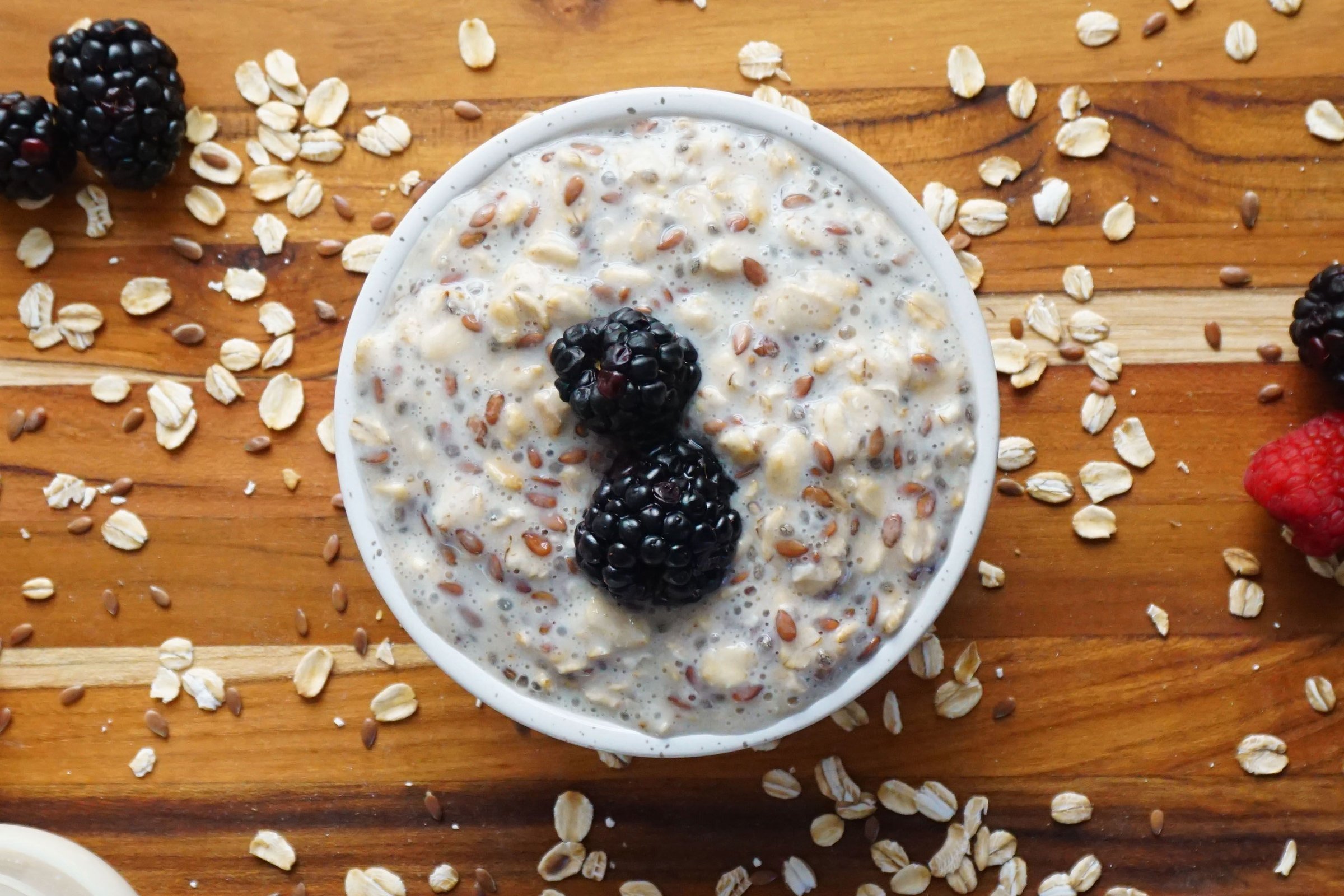
Portions: 1/2 cup dry rolled oats (4.1 g fiber), 1/2 cup nonfat plain Greek yogurt (11.5 g protein), 1/2 cup unsweetened almond milk, 1 tbsp chia seeds (4.1 g fiber), 1/2 cup raspberries (4.0 g fiber).
Stir everything in a jar and refrigerate overnight. Oats, chia, and raspberries split the fiber almost evenly. Swap: double the raspberries for +4.0 g fiber and +32 cal. For higher-protein jars with powder or cottage cheese, see our high protein overnight oats.
Black Bean and Egg Breakfast Burrito (15.5 g fiber, 25.4 g protein, 513 cal)
Portions: 1 whole wheat tortilla (4.0 g fiber), 2 large scrambled eggs (12.2 g protein), 1/2 cup black beans (7.5 g fiber), 1/4 avocado (3.4 g fiber), 2 tbsp salsa (0.7 g fiber).
Scramble the eggs, warm the beans, and roll it all up. It’s a bigger breakfast at 513 cal. Swap: skip the avocado for 12.2 g fiber, 24.4 g protein, and 433 cal.
White Bean Avocado Toast With a Boiled Egg (12.8 g fiber, 23.9 g protein, 443 cal)
Portions: 2 slices whole wheat bread (3.8 g fiber), 1/2 cup mashed white beans (5.6 g fiber), 1/4 avocado (3.4 g fiber), 1 large hard-boiled egg (6.3 g protein).
Mash the beans and avocado together with lemon and salt, spread on toast, and top with sliced egg. Swap: sprinkle on 1 tbsp chia seeds for +4.1 g fiber and +58 cal.
Takeaway: oats, chia, and beans make breakfast clear 12 g of fiber. For nine more morning options, including chia pudding, eggs with beans, and toast, see our high fiber breakfast ideas.
High Fiber Lunches
Split Pea Soup With Whole Wheat Toast (Vegan, 19.0 g fiber, 20.7 g protein, 319 cal)
Portions: 1 cup cooked split peas (16.3 g fiber, 16.3 g protein), 1/2 cup celery (0.8 g fiber), 1 slice whole wheat bread (1.9 g fiber).
Simmer split peas with celery until they break down into a thick soup. It’s the fiber leader on this list, and split peas supply 16.3 g of the 19.0 g. If you eat fully vegan, check the bread label.
Chicken, Quinoa, and Black Bean Burrito Bowl (16.1 g fiber, 42.4 g protein, 534 cal)
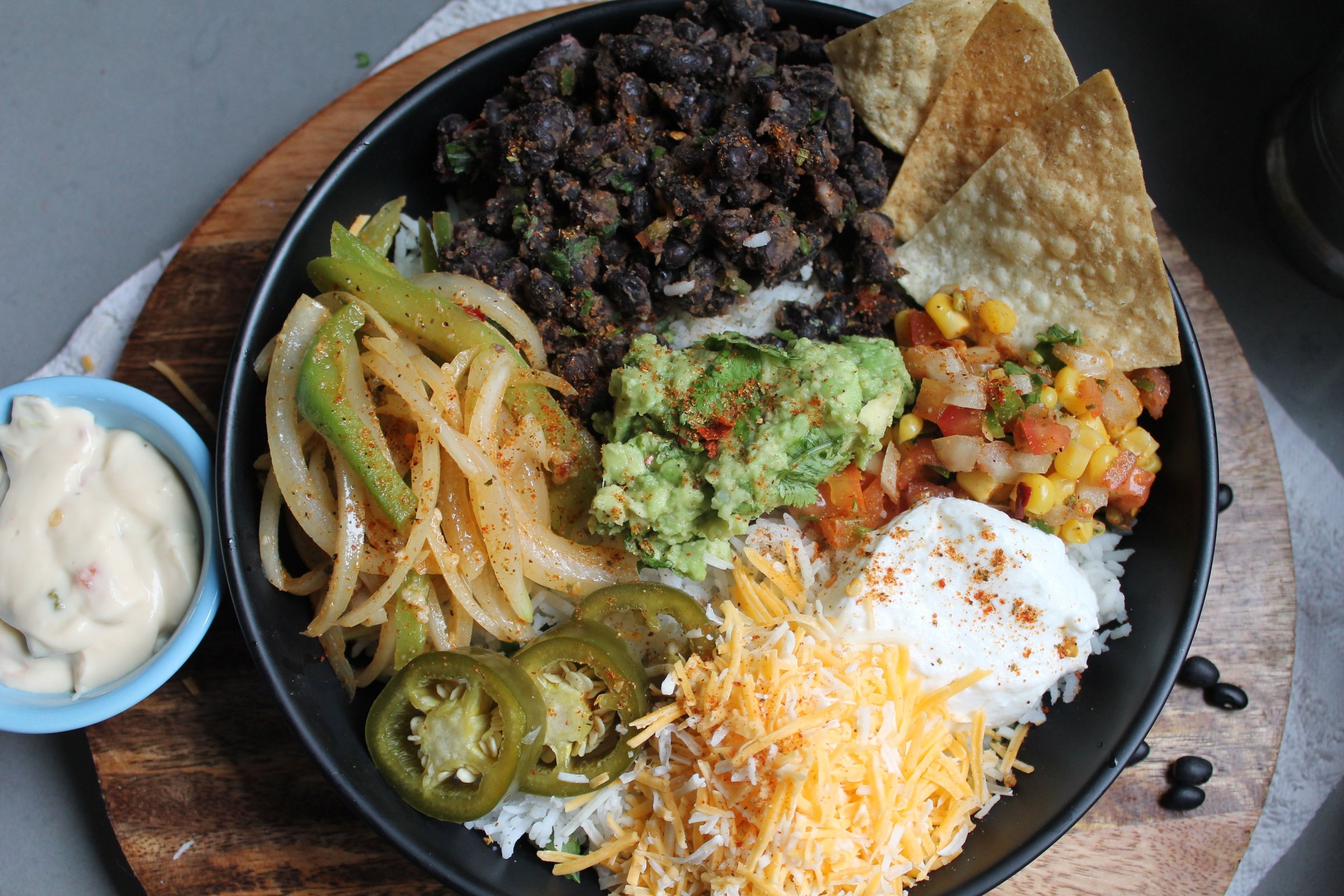
Portions: 3 oz roasted chicken breast (26.3 g protein), 1/2 cup black beans (7.5 g fiber), 1/2 cup quinoa (2.6 g fiber), 1/2 cup sweet corn (2.0 g fiber), 2 tbsp salsa (0.7 g fiber), 1/4 avocado (3.4 g fiber).
Layer it and go. The most protein of any meal here, and at 534 cal, the biggest.
Lentil and Tuna Salad (13.7 g fiber, 31.9 g protein, 276 cal)
Portions: 3/4 cup cooked lentils (11.7 g fiber), 3 oz light tuna canned in water (16.5 g protein), 1/2 cup cucumber, 1/2 cup tomato (1.1 g fiber), 1 cup raw spinach (0.7 g fiber).
Toss with lemon and herbs. The lightest meal here and second for fiber per calorie. For more packable ideas, see our high protein lunch ideas.
Takeaway: a legume in your lunch is the fastest route to 13 g or more.
Get Dishco on iPhone
High Fiber Dinners
These high fiber dinner ideas all land above 30 g of protein. For more protein-first dinners, see our high protein dinner ideas.
Whole Grain Blend Pasta With Chicken, Peas, and Broccoli (15.2 g fiber, 42.3 g protein, 480 cal)
Portions: 1 cup cooked whole grain blend pasta (6.4 g fiber), 3 oz roasted chicken breast (26.3 g protein), 1/2 cup green peas (3.6 g fiber), 1 cup broccoli (5.1 g fiber).
Add the broccoli and peas to the pasta water for the last few minutes, drain, and toss with sliced chicken.
Shrimp, White Bean, and Kale Skillet (13.4 g fiber, 37.3 g protein, 348 cal)
Portions: 3 oz cooked shrimp (20.4 g protein), 1/2 cup white beans (5.6 g fiber), 1 cup cooked kale (4.7 g fiber), 1/2 cup tomato (1.1 g fiber), 1 slice whole wheat bread (1.9 g fiber).
Wilt the kale with tomato, add beans, and finish with shrimp. USDA lists no fiber value for shrimp, so the fiber comes from the beans, kale, tomato, and bread.
Salmon With Barley and Brussels Sprouts (12.3 g fiber, 34.2 g protein, 491 cal)
Portions: 4 oz cooked salmon (25.0 g protein), 1 cup cooked pearled barley (6.0 g fiber), 1 cup Brussels sprouts (6.4 g fiber).
The one dinner here with no beans or peas. Barley and Brussels sprouts split the fiber.
Turkey and Kidney Bean Chili (10.3 g fiber, 33.0 g protein, 345 cal)
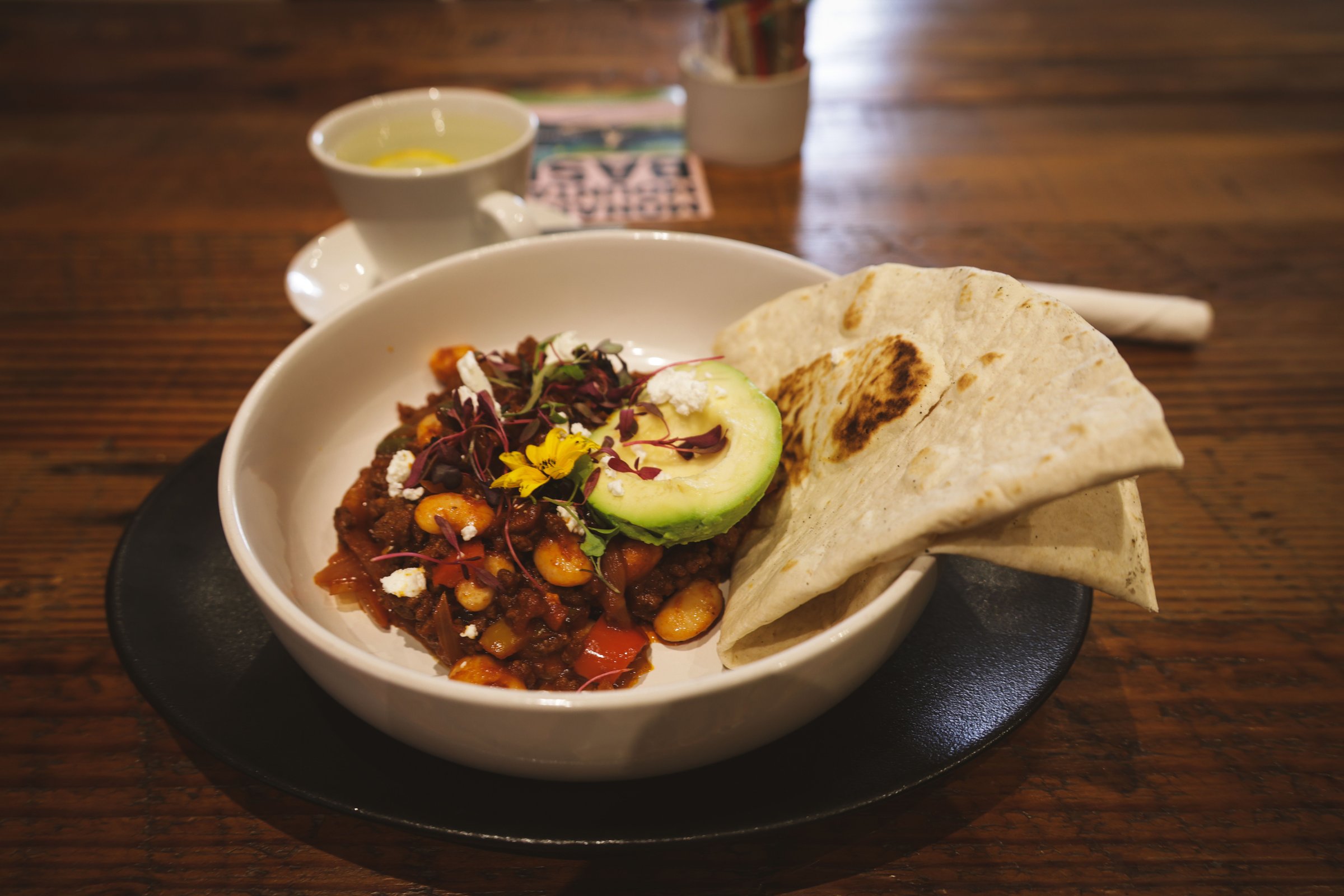
Portions: 3 oz cooked 93% lean ground turkey (23.0 g protein), 1/2 cup kidney beans (6.5 g fiber), 1 cup chopped tomato (2.2 g fiber), 1/2 cup red bell pepper (1.6 g fiber).
Brown the turkey, add everything else, and simmer. Like most high fiber recipes with beans, it makes a big batch and reheats well.
Takeaway: pair a lean protein with beans, barley, or a whole grain plus a cup of vegetables.
High Fiber, High Protein: How to Build Your Own
Every one of these high protein high fiber meals follows one pattern:
- A legume or whole grain for fiber: beans, lentils, split peas, barley, oats, or whole grain bread.
- A lean protein: chicken, fish, eggs, or Greek yogurt.
- 1 to 2 cups of vegetables: broccoli, kale, Brussels sprouts, peas, or any of these vegetables high in protein.
- Seeds or berries at breakfast: chia and raspberries each add about 4 g.
Be honest about the trade-off. Fiber per calorie here runs 2.5 to 6.0, and the meals with the most protein (burrito bowl, pasta) sit at 3.0 to 3.2.
Prefer one dish? Try our protein bowls. Meatless? See high protein vegetarian meals. To check your own creation, use the recipe nutrition calculator.
Takeaway: a legume plus a lean protein covers both numbers in one plate.
Logging Fiber Without the Guesswork
Fiber is easy to miss because it hides in the sides: the beans, the bread, the berries. Measure the legume and grain portions once so you know what 1/2 cup looks like, since those parts carry most of the fiber. Bread, tortillas, and canned beans have barcodes to scan. For a mixed plate, a photo or saying what you made works well, and a recipe from a food site can come in by pasting its link. Either way, you can see the nutrition for each part.
Takeaway: measure the beans and grains. They decide the fiber.
Get Dishco on iPhone
FAQ
What meals are highest in fiber?
Here, split pea soup (19.0 g), the chicken burrito bowl (16.1 g), and the black bean breakfast burrito (15.5 g) lead.
How do I get 10 g of fiber in one meal?
Add a legume. A cup of split peas gives 16.3 g, 3/4 cup lentils gives 11.7 g, and 1/2 cup black beans gives 7.5 g.
What are high protein high fiber meals?
Meals that pair a legume or whole grain with a lean protein. The burrito bowl (42.4 g protein, 16.1 g fiber) and pasta (42.3 g, 15.2 g) lead on protein, and both clear 15 g of fiber.
Are high fiber meals good for weight loss?
No single meal causes weight loss. If you’re looking for high protein high fiber meals for weight loss, check the fiber per 100 cal column: split pea soup (6.0) and the lentil tuna salad (5.0) lead.
Can I meal prep high fiber meals?
Yes. The chili, split pea soup, and lentil tuna salad keep well. For high protein high fiber meal prep, see our guide to meal prep for weight loss and muscle gain.
Why do I feel bloated when I add fiber?
A big jump can cause gas and bloating. MedlinePlus advises adding fiber gradually over a few weeks and drinking plenty of fluids.[3]
Do I need a fiber supplement?
Every meal here reaches 10 g or more from food alone. Ask your doctor if you’re considering a supplement.
Pick Two for This Week
You don’t need to change every meal. Pick two high fiber meals from this list, maybe overnight oats and the chili, and build up from there. Measure the beans and grains the first time, and add fiber slowly. For a hot breakfast, our protein oatmeal guide shows how milk, yogurt, and chia move the numbers.
To see where your day lands, check the fiber calculator.
Editorial Sources and Fact Checking
Dishco follows clear sourcing guidelines so you can trust what you read, outlined in our editorial policy. We use trustworthy sources, including peer-reviewed research, public health guidelines, and established health institutions.
Sources
- 1 FoodData Central (SR Legacy). U.S. Department of Agriculture. 2026.
- 2 Daily Value on the Nutrition and Supplement Facts Labels. U.S. Food and Drug Administration. 2026.
- 3 Fiber. MedlinePlus Medical Encyclopedia. 2026.