
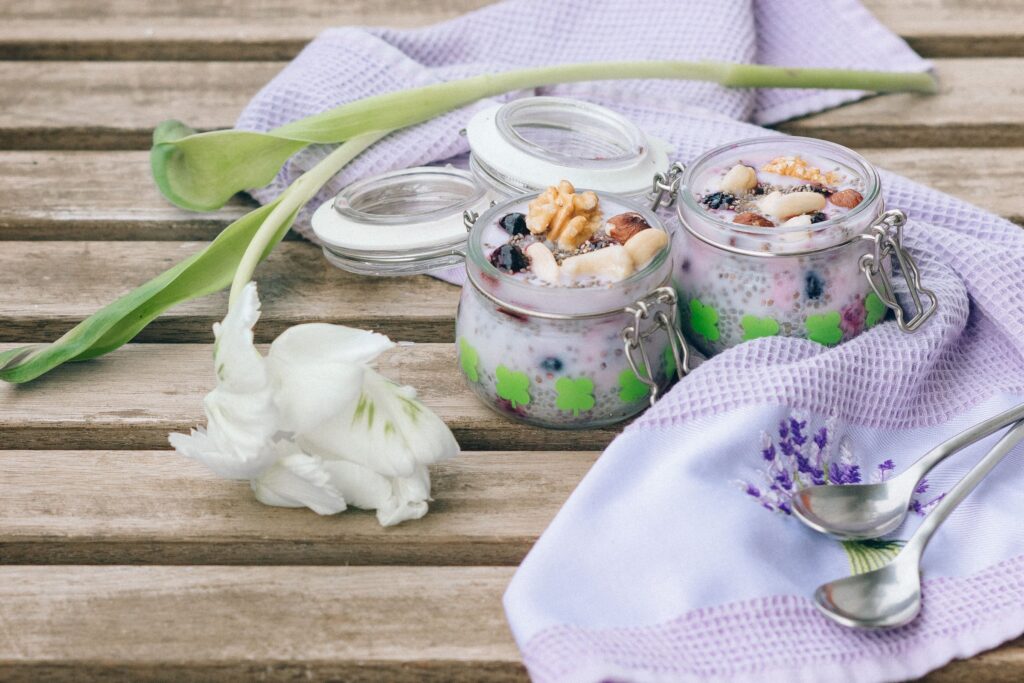
Looking for high protein overnight oats you can assemble at night and grab in the morning? Here are 7 make-ahead jars with 19.4 to 48.0 g of protein each, three with protein powder and four without. A basic milk jar shows the before, so you can see what the add-ins actually change.
Quick answer: how the jar climbs
Basic overnight oats (2% milk): 9.4 g protein, 214 cal
Blueberry Greek yogurt overnight oats: 23.5 g protein, 362 cal
Classic protein powder overnight oats: 36.4 g protein, 366 cal
Loaded protein overnight oats: 48.0 g protein, 433 cal
Numbers are for the exact portions shown, from USDA data. Sweetener and extra toppings aren’t included.
Every number comes from USDA FoodData Central.[1] This is a jar guide, not a meal plan. Soaking doesn’t change the macros; dry oats plus liquid plus add-ins are what you eat in the morning.
Takeaway: the oats are the base. Yogurt, cottage cheese, hemp, or powder decide the protein.
High Protein Overnight Oats at a Glance
All 7 jars plus the basic before, ranked by protein.
| Jar | Style | Protein (g) | Cal | Fiber (g) | Protein / 100 cal |
|---|---|---|---|---|---|
| Loaded protein overnight oats | Powder + yogurt | 48.0 | 433 | 9.2 | 11.1 |
| Chocolate protein overnight oats | Powder | 41.3 | 353 | 7.1 | 11.7 |
| Classic protein powder overnight oats | Powder | 36.4 | 366 | 9.2 | 10.0 |
| Strawberry cottage cheese overnight oats | No powder | 24.0 | 303 | 5.8 | 7.9 |
| Blueberry Greek yogurt overnight oats | No powder | 23.5 | 362 | 10.0 | 6.5 |
| Soymilk hemp overnight oats (vegan) | No powder, vegan | 20.0 | 427 | 9.5 | 4.7 |
| Peanut butter banana overnight oats | No powder | 19.4 | 386 | 6.4 | 5.0 |
| Basic overnight oats (2% milk) | Baseline | 9.4 | 214 | 4.1 | 4.4 |
Sweetener, salt, and extra toppings aren’t included.[1] Every jar starts with 1/2 cup dry rolled oats (40.5 g). Greek yogurt 1/2 cup = 113 g, chia 1 tbsp = 12 g, hemp 1 tbsp = 10 g, peanut butter 1 tbsp = 16 g, and the whey scoop is 32 g of generic USDA powder (25.0 g protein). Brands vary, so check your label. Blueberries 1/2 cup = 74 g, sliced strawberries 1/2 cup = 83 g, banana 1/2 medium = 59 g, cocoa 1 tbsp = 5.4 g.
Chocolate protein overnight oats lead for protein per calorie (11.7). The blueberry jar leads for fiber (10.0 g). The vegan soymilk hemp jar is the highest-cal no-powder option because of the hemp seeds; say that up front if cal matters to you.
Takeaway: powder jars clear 36 g. No-powder jars still clear 19 g when yogurt, cottage cheese, or hemp do the work.





Get Dishco on iPhone

How to Make Overnight Oats With Protein Powder
The base ratio for every jar here is simple: 1/2 cup dry oats + 1/2 cup milk + your protein add-in. The vegan jar uses a full cup of soymilk because there’s no dairy yogurt or cottage cheese in the mix.
- 1. Whisk powder into the milk first when you’re making overnight oats with protein powder. A smooth liquid pours into the oats without dry pockets. Dumping a scoop onto dry oats and hoping for the best is how you get chalky clumps in the morning.
- 2. Stir in the oats, then chia, cocoa, or seeds. Chia thickens as it sits, so the jar that looks loose at night will set by morning.
- 3. Add yogurt or cottage cheese last and fold until combined. Mash cottage cheese first if you want fewer curds.
- 4. Seal and refrigerate for several hours or overnight. The oats soften in the fridge; you don’t cook them.
- 5. In the morning, stir and taste. Powder thickens jars, so add a splash more milk if you want them looser. Fresh fruit on top the same day keeps berries from getting soft.
That method is the whole high protein overnight oats recipe pattern. Same steps without powder; just skip the whisk and lean on yogurt, cottage cheese, or hemp instead.
Takeaway: whisk powder into milk first, then oats. Stir and loosen with a splash of milk in the morning.
Protein Powder Overnight Oats
These three jars are overnight oats with protein powder, built from the same generic scoop (25.0 g protein per 32 g). Check your label; brands vary.
Loaded Protein Overnight Oats (48.0 g protein, 433 cal, 9.2 g fiber)
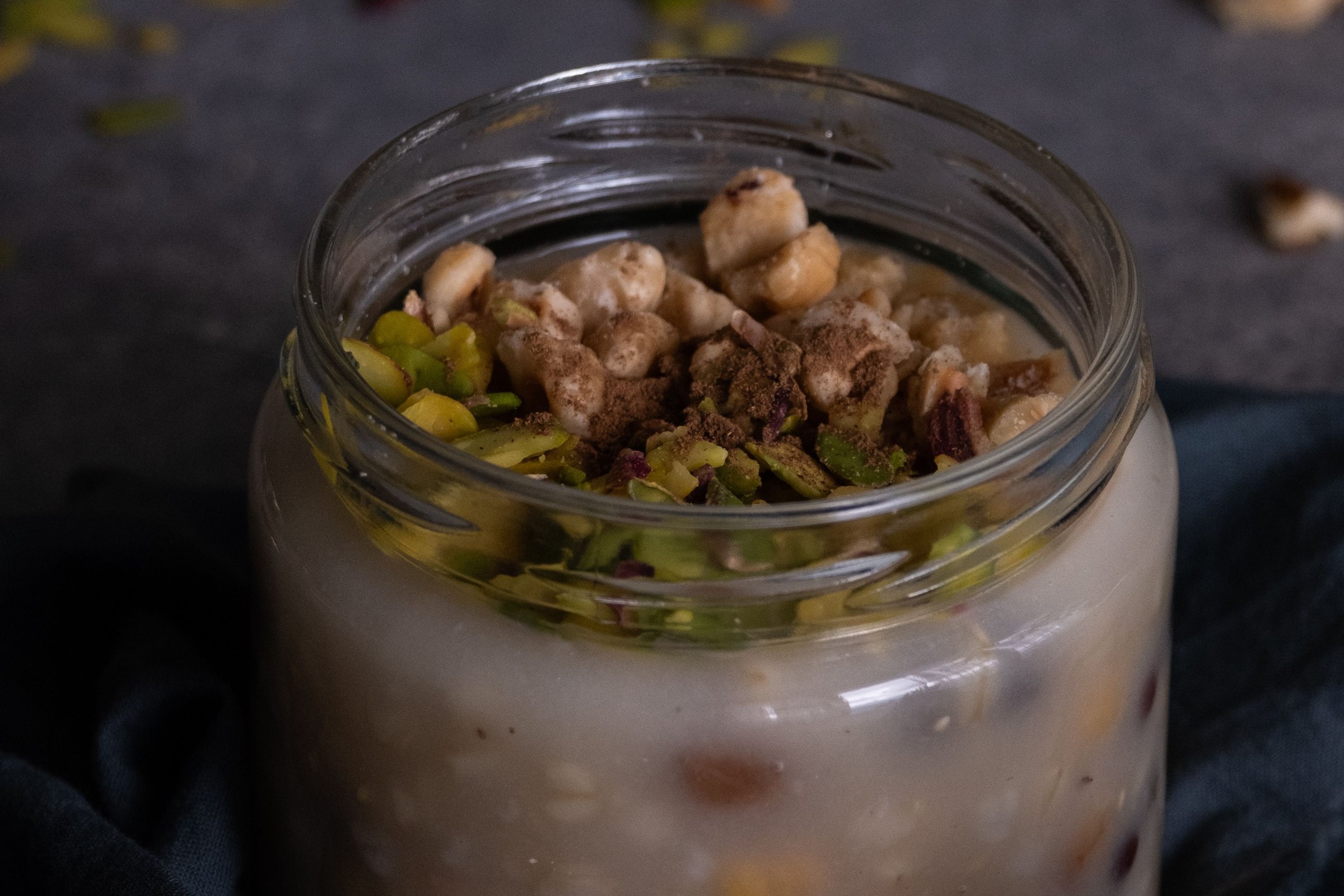
Portions: 1/2 cup dry oats, 1/2 cup nonfat milk, 1 scoop whey powder (25.0 g protein), 1/2 cup nonfat plain Greek yogurt (11.5 g protein), 1 tbsp chia.
Whisk powder into milk, stir in oats and chia, fold in yogurt, and refrigerate. It’s the top of the list: powder and yogurt stacked on purpose.
Chocolate Protein Overnight Oats (41.3 g protein, 353 cal, 7.1 g fiber)
Portions: 1/2 cup dry oats, 1/2 cup nonfat milk, 1 scoop whey powder (25.0 g protein), 1 tbsp unsweetened cocoa (1.1 g protein, 2.0 g fiber), 1/4 cup nonfat Greek yogurt (5.8 g protein).
Whisk powder and cocoa into the milk until smooth, then add oats and yogurt. Best protein per calorie on the list (11.7). Swap: skip the cocoa for 40.2 g protein, 341 cal, and 5.1 g fiber.
Classic Protein Powder Overnight Oats (36.4 g protein, 366 cal, 9.2 g fiber)
Portions: 1/2 cup dry oats, 1/2 cup nonfat milk, 1 scoop whey powder (25.0 g protein), 1 tbsp chia.
The simplest overnight oats recipe with protein powder: milk, powder, oats, chia. Swap: fold in 1/2 cup nonfat Greek yogurt for 48.0 g protein and 433 cal, which turns it into the loaded jar.
Takeaway: one scoop does most of the climb. Yogurt and chia fill in the rest.
High Protein Overnight Oats Without Protein Powder
No scoop required. These four jars use cottage cheese, Greek yogurt, hemp, or peanut butter to clear 19 g or more.
Strawberry Cottage Cheese Overnight Oats (24.0 g protein, 303 cal, 5.8 g fiber)
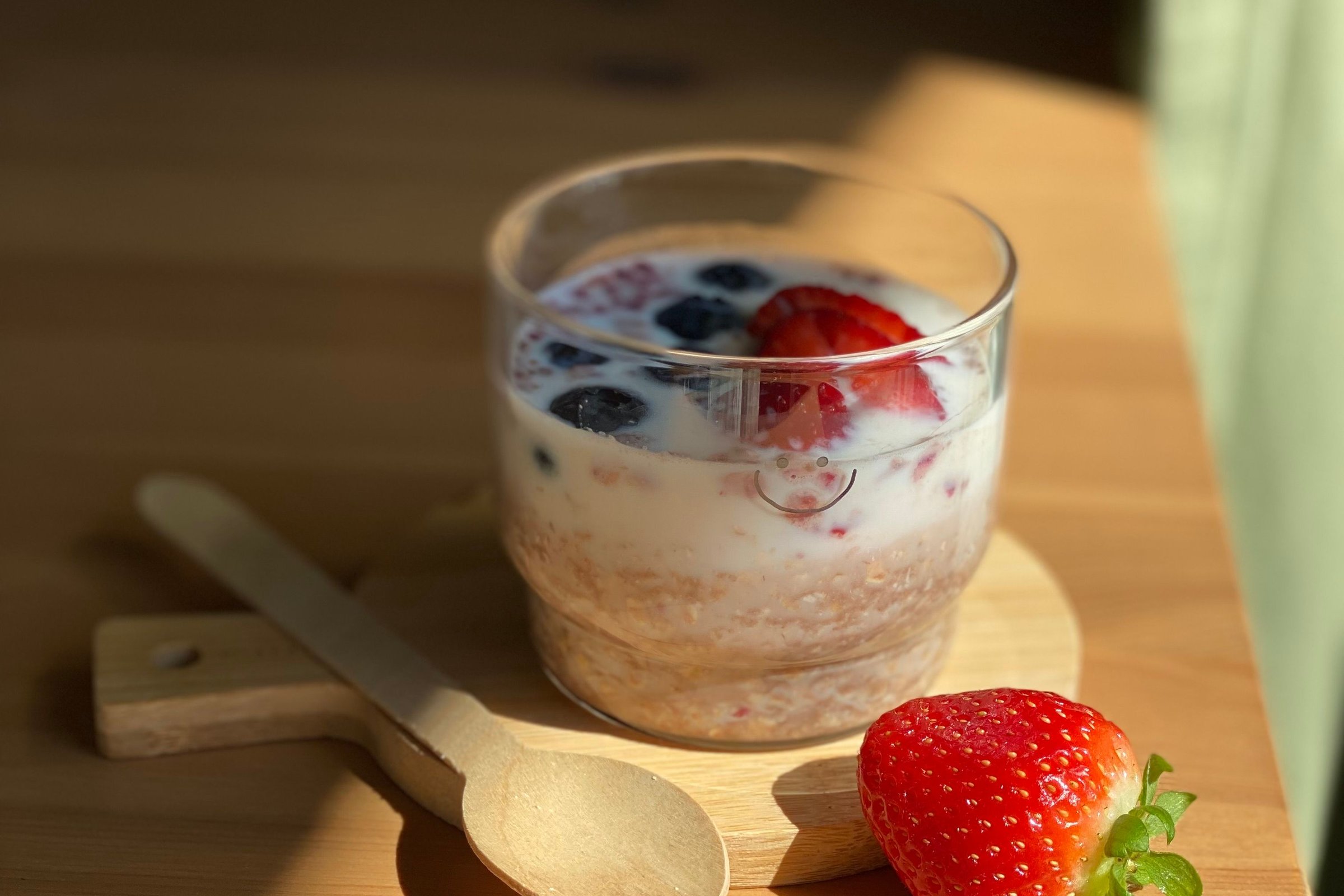
Portions: 1/2 cup dry oats, 1/2 cup nonfat milk, 1/2 cup 1% cottage cheese (14.0 g protein), 1/2 cup sliced strawberries (1.7 g fiber).
Stir oats and milk, mash or fold in the cottage cheese, and add strawberries. Fridge overnight. Lowest cal of the marketed jars.
Blueberry Greek Yogurt Overnight Oats (23.5 g protein, 362 cal, 10.0 g fiber)
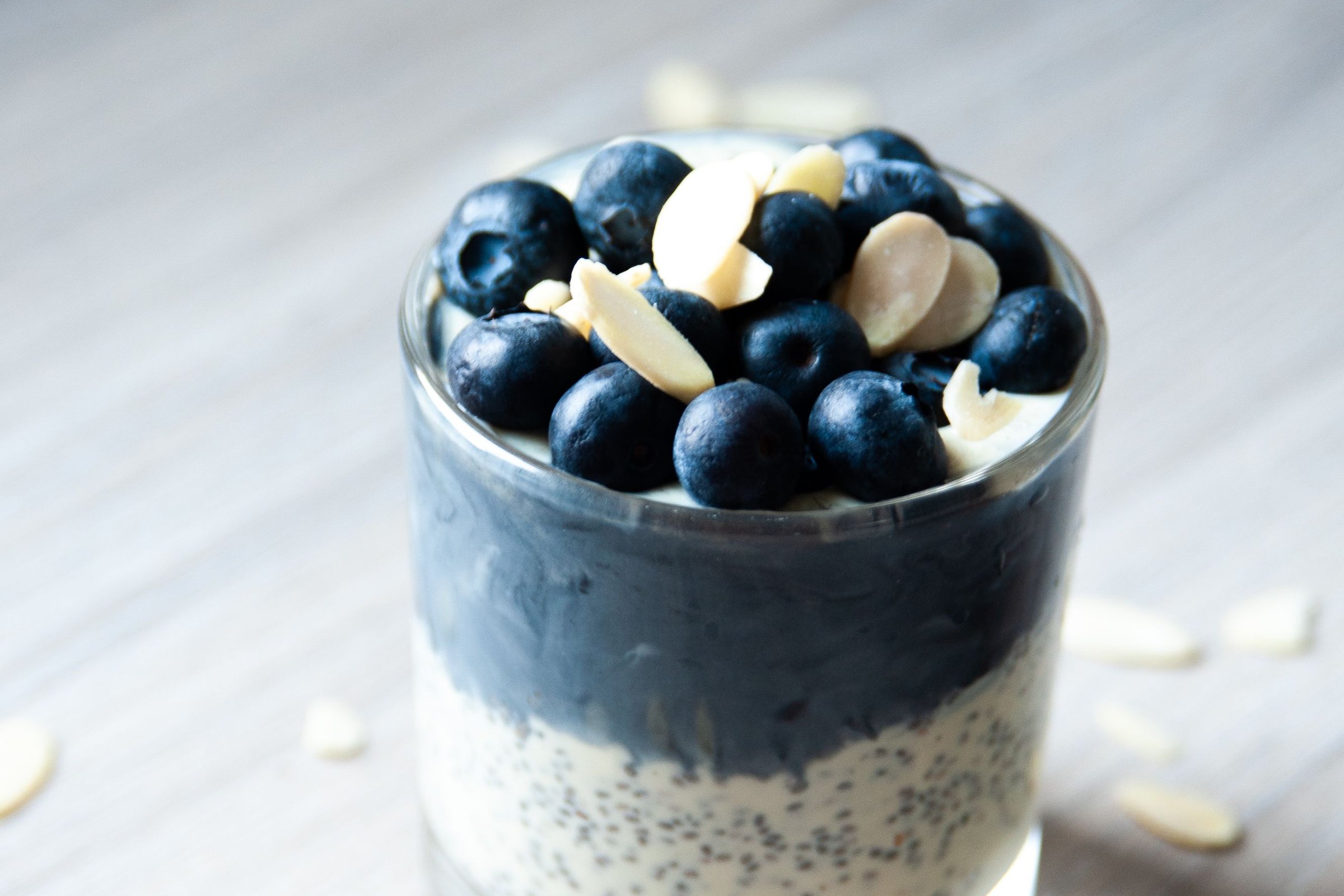
Portions: 1/2 cup dry oats, 1/2 cup nonfat milk, 1/2 cup nonfat plain Greek yogurt (11.5 g protein), 1 tbsp chia (4.1 g fiber), 1/2 cup blueberries (1.8 g fiber).
Highest fiber on the list. For more fiber-forward meals, see high fiber meals. Swap: skip the chia for 21.5 g protein, 304 cal, and 5.9 g fiber.
Soymilk Hemp Overnight Oats (Vegan, 20.0 g protein, 427 cal, 9.5 g fiber)
Portions: 1/2 cup dry oats, 1 cup fortified soymilk (6.3 g protein), 2 tbsp hemp seeds (6.3 g protein), 1 tbsp chia.
No dairy, no powder. Hemp does the protein work, which is also why this is the highest-cal no-powder jar. Stir, seal, refrigerate.
Peanut Butter Banana Overnight Oats (19.4 g protein, 386 cal, 6.4 g fiber)
Portions: 1/2 cup dry oats, 1/2 cup 1% milk, 1/4 cup nonfat Greek yogurt (5.8 g protein), 1 tbsp peanut butter (3.6 g protein), 1/2 medium banana (1.5 g fiber).
Stir peanut butter into the milk and yogurt so it distributes, then add oats and banana. Swap: skip the banana for 18.8 g protein, 334 cal, and 4.9 g fiber, and add fresh banana in the morning instead.
Takeaway: cottage cheese and Greek yogurt clear 23 g without powder. Hemp covers a vegan jar.
Build Your Own Jar
Use this formula when you want a high protein overnight oats recipe that isn’t one of the seven above:
- 1. 1/2 cup dry oats (5.3 g protein)
- 2. 1/2 cup dairy milk (about 4 g) or 1 cup soymilk if you’re skipping dairy add-ins
- 3. One strong protein add-in: powder (25.0 g per generic scoop), cottage cheese (14.0 g per 1/2 cup), Greek yogurt (11.5 g per 1/2 cup), or hemp (about 3 g per tbsp)
- 4. Optional finish: chia for fiber, cocoa for flavor, peanut butter for richness, fruit day-of for texture
Pick the strong add-in for the job. Powder is the fastest jump when you need 35 g or more. Cottage cheese or Greek yogurt land in the low-to-mid 20s without a scoop. Hemp plus soymilk covers a vegan jar, with the cal trade-off noted above. Chia, peanut butter, and fruit are finishes; they shouldn’t be your only protein move if 25 g is the goal.
Be honest about the trade-off. Protein per 100 cal here runs from 4.7 (vegan hemp) and 5.0 (peanut butter banana) up to 11.7 (chocolate powder). The powder jars win that column; the no-powder jars win on skipping the scoop. For more foods ranked that way, see high protein low calorie foods. To check a custom jar with honey, maple, or extra fruit, use the recipe nutrition calculator. Those toppings change the total, and they aren’t in the numbers above.
Want the same add-ins in a warm bowl instead? See protein oatmeal for the stovetop method. This page stays on overnight jars.
Takeaway: oats + milk + one strong add-in covers most mornings. Powder is optional.
Get Dishco on iPhone
How Long Do Overnight Oats Last?
Keep the jars refrigerated and eat them within a few days. Prep two or three at a time if that matches how fast you go through breakfast, and add soft fruit or crunchy toppings the morning you eat so texture stays better. For egg cups, freezer burritos, and other make-ahead breakfasts beyond jars, see breakfast meal prep. For a wider make-ahead system, see meal prep for weight loss and muscle gain.
Takeaway: fridge only, eat within a few days, add fruit day-of when you can.
Logging Overnight Oats Without the Guesswork
Weigh the dry oats once so your 1/2 cup is real. Milk cartons, yogurt cups, cottage cheese tubs, peanut butter jars, and many powder containers have barcodes to scan. For a mixed jar, a photo or saying what you stirred in works well, and a recipe from a food site can come in by pasting its link. Either way, you can see the nutrition for each part instead of guessing the whole jar.
Takeaway: weigh the oats once. Scan or describe the add-ins.
Get Dishco on iPhone
FAQ
How much protein is in overnight oats?
A basic jar of 1/2 cup dry oats and 1/2 cup 2% milk has 9.4 g of protein.[1] The climb comes from yogurt, cottage cheese, hemp, or powder.
Can you put protein powder in overnight oats?
Yes. Whisk the scoop into the milk first, then add oats so it doesn’t clump. Generic USDA whey powder is 25.0 g protein per 32 g scoop; brands vary, so check your label.
How do I make overnight oats high protein without powder?
Use cottage cheese (14.0 g per 1/2 cup), Greek yogurt (11.5 g per 1/2 cup), or hemp with soymilk. The no-powder jars above land between 19.4 and 24.0 g.
Are high protein overnight oats good for weight loss?
No single breakfast causes weight loss. If you’re comparing jars, use the protein per 100 cal column: chocolate powder (11.7) and loaded (11.1) lead; peanut butter banana (5.0) and the vegan hemp jar (4.7) sit lower.
How much protein should breakfast have?
There’s no official breakfast cutoff. These jars land between 19.4 and 48.0 g. To see how breakfast fits a full day, read how to get 100 grams of protein a day.
Overnight oats vs protein oatmeal?
Overnight oats are a fridge method. Protein oatmeal is the hot, stovetop version of the same add-in idea. Use this page for jars when you want a make-ahead breakfast, and the stovetop method when you want a warm bowl.
Prep Two Jars Tonight
You don’t need all 7 high protein overnight oats jars at once. Prep two tonight, maybe classic powder for a high number and blueberry Greek yogurt when you want to skip the scoop. Whisk powder into milk first, leave soft fruit for the morning, and keep the jars cold.
Start with one strong add-in. The basic jar at 9.4 g shows why the extras matter.
Editorial Sources and Fact Checking
Dishco follows clear sourcing guidelines so you can trust what you read, outlined in our editorial policy. We use trustworthy sources, including peer-reviewed research, public health guidelines, and established health institutions.
Sources
- 1 FoodData Central (SR Legacy). U.S. Department of Agriculture. 2026.