
If you’ve been wondering how to track macros without living inside a spreadsheet, the short version is this: a food scale, a label-reading habit, and an app you’ll actually open. The rest is technique you can pick up in a week or two of real meals. (Need a refresher on protein, carbs, and fat first? Read what are macros and come back.)
This guide sticks to the mechanics: weighing, raw vs cooked, serving sizes, homemade batches, and logging modes that save time. It won’t hand you a magic ratio, and it isn’t medical advice. If you’re managing a health condition or have a history with restrictive eating, loop in a qualified professional first.
Quick answer: Here’s how to track your macros in five steps:
- Pick a simple target. One protein goal or a calorie ballpark is plenty to start.
- Weigh when it matters. Grams beat cups, especially for oils, grains, and meat.
- Read the label. Check the serving size before you trust any other number.
- Log the same day. As you eat is best, not from memory three days later.
- Review weekly. Look for patterns, not a perfect score.
Set a Simple Target (Then Leave It Alone)
Tracking needs something to track against, but it doesn’t have to be complicated. Plenty of people start with one number, usually a daily protein goal or a rough calorie ballpark, and let carbs and fat land where they land for a couple of weeks. You can add detail once the habit is up to snuff.
A registered dietitian or your doctor is the gold standard for picking that number. For a friendlier starting point, Dishco’s free tools cover a few specific situations: the Ozempic protein calculator if you’re on a GLP-1 medication and want a protein ballpark, and the PCOS calorie calculator if PCOS is part of your picture. If you’re curious about macros for weight loss, that deserves its own conversation with a pro, and the weight loss percentage calculator can show progress as a share of where you started rather than a raw number on the scale.
That’s as far into targets as this guide goes. The focus here is the logging itself, because even a thoughtful target can’t help much if the numbers going in are fuzzy.
Takeaway: One starting number is enough. An accurate log matters more than a precise goal.
How to Track Macros With a Food Scale
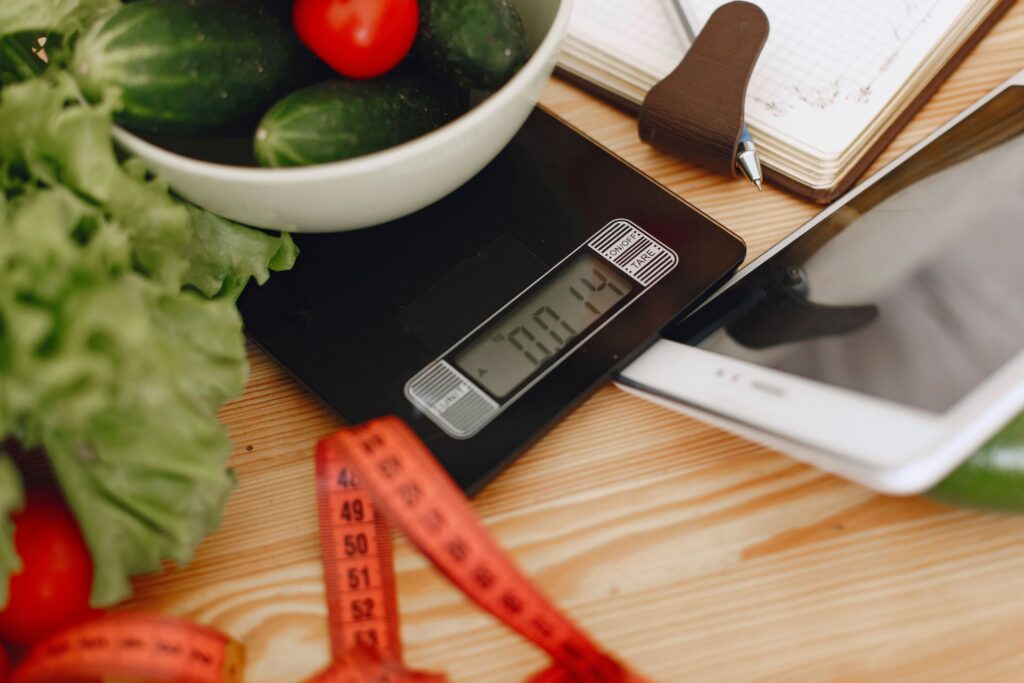
If you only buy one thing for tracking, make it a digital kitchen scale that reads in grams. A “cup” of cereal, grated cheese, or chopped chicken can swing quite a bit depending on how tightly you pack it, while 40 grams is 40 grams every time. Grams also match how most labels and food databases list foods, so there’s less converting in your head.
Here’s how the tare button fits into a normal meal:
- Set your plate, bowl, or container on the scale.
- Press tare (sometimes labeled zero) so the display reads 0.
- Add your first food, note the grams, then press tare again.
- Repeat for each food, so every ingredient gets its own weight.
That rhythm turns one mystery number into real ingredients. It also saves dishes, which (let’s be honest) has a lot to do with whether you’ll still be weighing next month.
A few beginner mistakes worth dodging:
- Forgetting to tare the bowl. Your favorite ceramic bowl is not part of breakfast.
- Eyeballing oil. Fat carries about 9 cal per gram, and a tablespoon of olive oil is roughly 120 cal, so free pours add up fast. Set the pan on the scale and tare before you pour, or use a measuring spoon.
- Weighing the peel. Weigh bananas and oranges without the peel, or pick the database entry that matches how you weighed.
Takeaway: Grams, tare between foods, and extra care with oils. That covers most of what makes a log trustworthy.
Raw vs Cooked: Pick One Convention and Stay Consistent
This is the one that trips nearly everyone up. Cooking mostly changes how much water a food holds, and that changes its weight. Meat loses water in the pan, so it weighs less and each gram carries more calories. Rice and pasta soak up water, so each cooked gram carries fewer.
USDA FoodData Central values make the gap easy to see. Raw chicken breast is roughly 120 cal per 100 g, while roasted chicken breast is roughly 165 cal per 100 g. Dry white rice is about 365 cal per 100 g, and cooked white rice is about 130. Same food, very different entries. Weigh cooked rice and log it with a dry entry, and your log overshoots by nearly three times. Weigh cooked chicken and log it with a raw entry, and you undercount.
The fix: pick one convention and stick with it. Raw weights are the most consistent, because a raw chicken breast is a raw chicken breast no matter who cooks it or for how long. Cooked weights are fair game too, as long as the database entry says cooked (or roasted, boiled, grilled) and matches what’s on your scale. Mixing the two from day to day is the real problem.
For batch cooking, weigh the ingredient raw, cook it, then weigh the whole cooked batch. Now you know what each cooked gram is worth all week.
Takeaway: Raw or cooked both work. Match the entry to how you weighed, every time.
How to Count Macros From Nutrition Labels
For packaged food, the label does most of the work if you read it in the right order. Start with serving size, not calories. That line quietly decides whether every other number applies to what you’re about to eat.
Serving size traps to watch for:
- The serving isn’t the package. A bag of chips or a bottle of juice can hold two or more servings. Check servings per container before you log the whole thing as one.
- Your portion isn’t their portion. A peanut butter label might list a serving as 2 tablespoons (32 g). Your spoon may have other ideas, so weigh it and log by grams.
- Grams beat household measures. When a label gives both a cup amount and a gram weight, use the grams.
- Every macro is per serving. Eat a serving and a half, and the protein, carbs, and fat scale up by half too.
Barcode logging is the no-brainer here. Scanning pulls the label straight into your log, so all you do is adjust the amount to match what you weighed. Give the entry a quick glance to confirm it matches the package in your hand, since recipes and serving sizes do change.
Takeaway: Serving size first, grams over cups, and a quick sanity check on every scan.






Get Dishco on iPhone

Homemade Meals and Meal Prep
Homemade food doesn’t come with a label, so you make your own. It’s a little fussy the first time, but the method works for chili, overnight oats, or a sheet-pan dinner:
- Log each ingredient as it goes in. Weigh meats, grains, oils, and sauces with the tare trick above.
- Weigh your empty pot or pan before you start. Write it down or snap a photo of the display.
- Weigh the finished dish in the pot, then subtract the pot’s weight. That’s your total cooked weight.
- Divide. Split the recipe’s total macros by the total cooked weight to get macros per gram, then weigh your portion. Or split the batch into equal containers and log one container as one serving.
Per-gram is the most accurate, because nobody scoops five perfectly equal portions. Containers are faster and totally fine for meal prep. If you cook the same recipes often, save them in whatever app you use so you only do the math once. For a quick per-serving estimate without an app, the free recipe nutrition calculator does the batch math from your ingredient list.
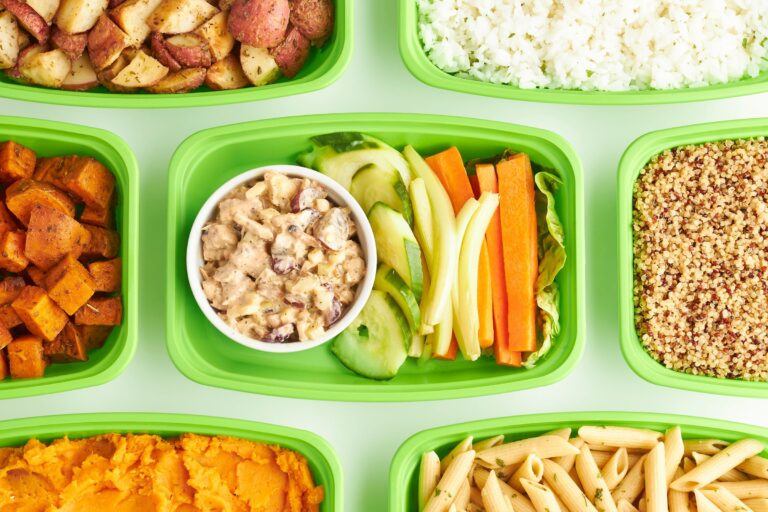
Simple staples like rice, oats, eggs, beans, and frozen vegetables are easy to weigh and log, and Dishco’s cheap healthy grocery list is a handy place to start stocking up.
Takeaway: Log ingredients as they go in, weigh the finished batch, divide. Do it once per recipe and reuse it.
Get Dishco on iPhone
Apps That Make Tracking Stick
A paper notebook works, and some people love the ritual. For most of us, an app is what keeps logging from turning into a chore, because it does the looking-up and adding for you. Once you know how to track macros by hand, an app mostly buys back time. Rather than rank apps here, it’s more useful to know which logging mode fits which moment:
- Barcode scan for anything packaged. Usually the fastest and most accurate option.
- Text logging for quick entries like “two eggs and toast.”
- Voice logging for hands-full moments at the counter.
- AI photo logging for restaurant plates and mixed meals where weighing isn’t happening. Treat it as a smart estimate and nudge portions if they look off.
Recipe import is a separate trick worth knowing about: some apps can turn a recipe link into per-serving macros, so homemade favorites don’t mean retyping every ingredient.
If you love dense data, a traditional diary-style tracker might be your speed. If logging has ever felt like homework, look for something lighter. Dishco (iOS only) logs by barcode scan, text, voice via your phone’s dictation, and AI photo scan. It also imports recipes from a link as a separate feature, and its game-style rewards make progress feel like winning. For a wider look, the MyFitnessPal alternatives guide lays out the field, including when staying put makes sense.
Takeaway: Match the logging mode to the moment. Speed is what keeps you consistent.
Consistency Beats Perfection
Perfect tracking isn’t the goal. Consistent tracking is. A log that’s roughly right every day tells you far more than a flawless one you abandon by Thursday.
So when is estimating fine?
- Restaurant meals and travel days. Pick the closest entry and move on.
- Low-calorie vegetables. A few grams off on spinach or cucumber is a pretty negligible difference.
- Days when life is loud. A rough entry beats a blank one.
And when is it worth pulling the scale back out?
- Oils, nut butters, cheese, and granola. These are calorie-dense, so small eyeballing errors add up.
- Every few weeks on staples. Re-weigh your usual cereal or oil pour to check that “usual” hasn’t drifted.
- When progress stalls and you’re not sure why. A few days of careful weighing can clear up a lot of guesswork.
The weekly review is where this pays off. Look at averages rather than single days, notice which meals run light on protein, and change one thing at a time. If protein is the usual gap, these ideas for how to get 100 grams of protein a day make it easier to close.
If tracking ever feels stressful or controlling, it’s okay to step back. Knowing how to track your macros is a skill you keep, not a contract you signed. Plenty of people log for a few weeks, learn their portions, then eat by eye with occasional check-ins.
Takeaway: Estimate when stakes are low, weigh when food is calorie-dense, and review weekly.
Get Dishco on iPhone
FAQ
What’s the difference between counting and tracking macros?
Mostly nothing. People searching how to count macros and people asking how to track them want the same thing: a reliable way to log protein, carbs, and fat. “Tracking” just hints at the longer game of reviewing patterns over weeks.
Do I need a food scale to learn how to track macros?
Not strictly, but it helps a lot at first. Labels, measuring spoons, and photo logging get you in the ballpark. A scale turns guesses into grams and trains your eye for the days you skip it.
Should I weigh food raw or cooked?
Either works if you’re consistent. Raw is the most reliable because cooking changes water weight: raw chicken breast is roughly 120 cal per 100 g, while roasted is roughly 165. Whichever you choose, pick a database entry that matches.
How often should I track macros?
Daily logging with a weekly review is a common rhythm while you’re learning. Later, many people track a few days a week or check in when something changes. Pick the cadence you can keep.
Do I need to know how to calculate macros before I start?
No. You can start logging with a simple protein or calorie goal and refine it later. Setting targets is a separate question from tracking mechanics, and a qualified professional can help personalize numbers if you want them.
Start Small, Stay Consistent
That’s really how to track macros without letting it take over your life: a scale for the foods that matter, labels read from the serving size down, one raw-or-cooked rule, homemade batches done once, and a logging mode that fits the moment. If a whole day feels like a lot, start with one meal. Weigh breakfast this week, add lunch next week, and let the habit build. The numbers get easier and your eye gets sharper. Before long you’ll know roughly what a tablespoon of peanut butter looks like without the scale, and honestly, that’s a small win worth celebrating.