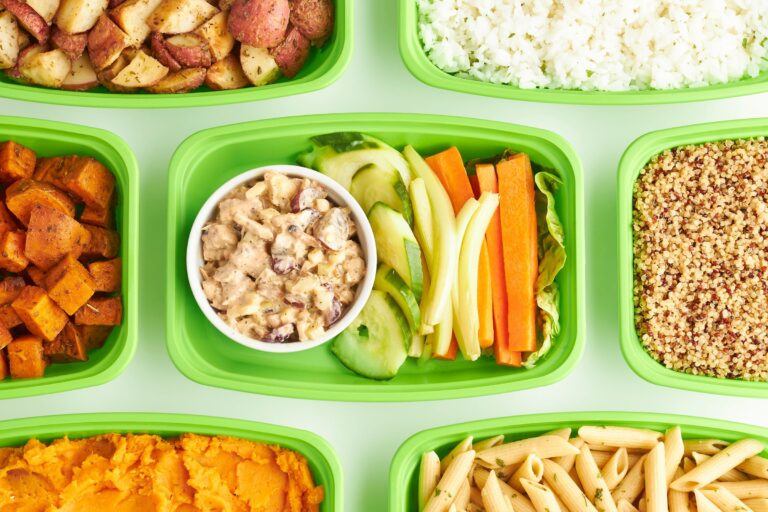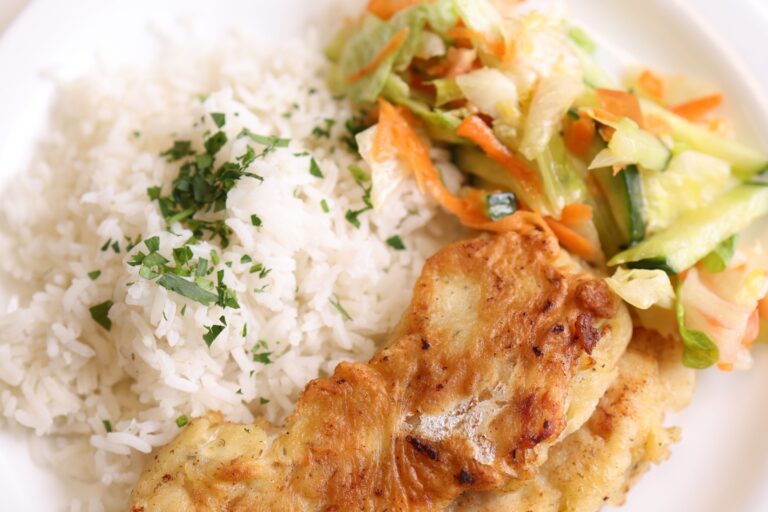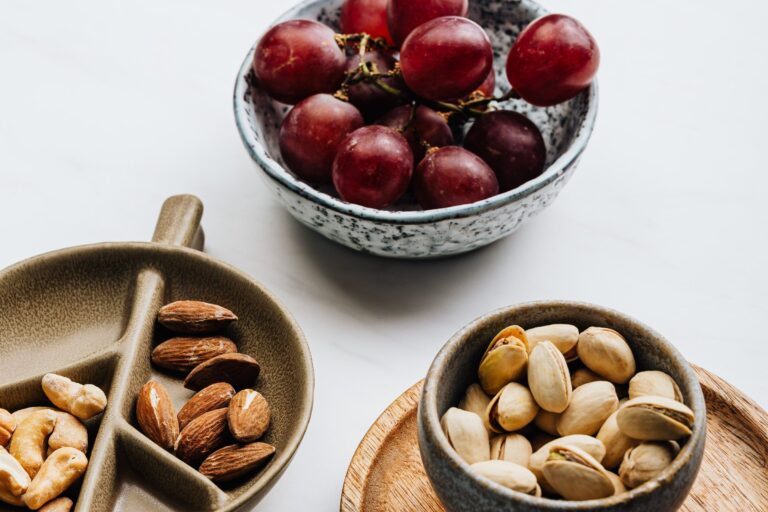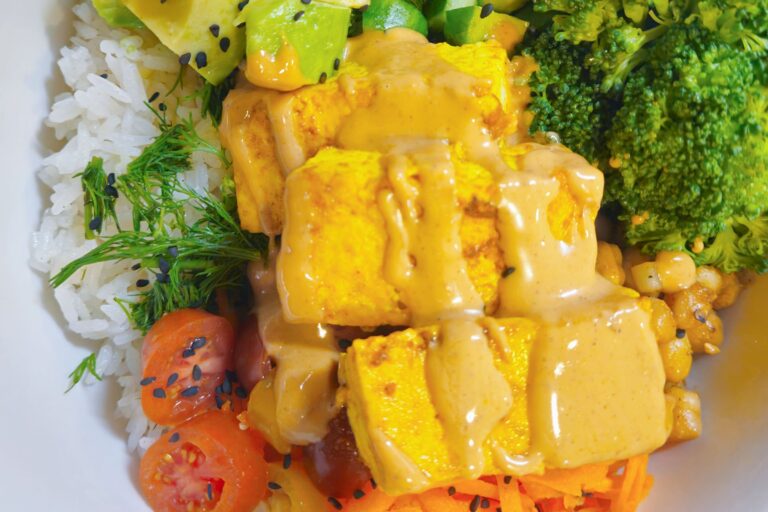

Looking for high protein lunch ideas that are actually easy? Here are 12 real lunches with about 20 to 40 g of protein each, grouped by how you eat lunch: bowls you make ahead, no-cook lunches for your desk, and vegetarian and vegan picks.
Quick answer: the top 3 by protein
Chicken quinoa bowl: 40 g protein, 304 cal
Beef and broccoli rice bowl: 39.5 g protein, 397 cal
Shrimp and edamame rice bowl: 39.1 g protein, 330 cal
Numbers are for the exact portions shown, from USDA data. Oils, dressings, and sauces aren’t included.
Every number on this page comes from USDA FoodData Central for the portion listed, so you can see exactly what’s behind the grams.[1] This is an idea list, not a meal plan, so mix and match whatever fits your week.
Takeaway: pick a lunch by how you eat, then check the portion. That’s where the protein lives.
How Much Protein Makes a High Protein Lunch?
There’s no official cutoff for what makes lunch high protein. Many lunch lists aim for roughly 20 to 35 g, and the ideas here land at about 20 to 40 g, with the biggest bowls near 40 g.
How much you personally need depends on your size, your activity, and your goals. MedlinePlus says the daily recommended intake of protein for healthy adults is 10% to 35% of your total calorie needs.[2] Rather than guess, use our guide on how to get 100 grams of protein a day to see how lunch fits a daily target, or set your own numbers with the macros for weight loss calculator.
If you have kidney disease or another health condition, check with your doctor before changing how much protein you eat.
Takeaway: about 20 to 40 g is a common lunch range. Your own target comes from your whole day.
High Protein Lunch Ideas at a Glance
Here are all 12 in one table. The protein per 100 cal column tells you how much protein you get for the calories, which is handy if you’re watching both.
| Lunch | Cal | Protein (g) | Protein / 100 cal | Best for |
|---|---|---|---|---|
| Chicken quinoa bowl | 304 | 40.0 | 13.1 | Make-ahead |
| Beef and broccoli rice bowl | 397 | 39.5 | 9.9 | Make-ahead |
| Shrimp and edamame rice bowl | 330 | 39.1 | 11.9 | Make-ahead |
| Cottage cheese protein plate | 248 | 34.7 | 14.0 | Desk |
| Greek yogurt chicken salad | 181 | 32.5 | 18.0 | Desk |
| Salmon quinoa plate | 351 | 29.9 | 8.5 | Make-ahead |
| Tuna salad lettuce wraps | 137 | 26.5 | 19.4 | Desk |
| Tofu broccoli stir-fry bowl | 333 | 26.4 | 7.9 | Make-ahead, vegan |
| Egg salad pita | 323 | 24.5 | 7.6 | Desk, vegetarian |
| Black bean burrito bowl | 466 | 24.5 | 5.3 | Vegetarian |
| Lentil and chickpea salad | 335 | 23.2 | 6.9 | Vegan |
| Turkey hummus wrap | 307 | 21.4 | 7.0 | Desk |
How to read it: numbers are the sum of the listed components only, from USDA FoodData Central.[1] Cooking oil, dressings, and sauces aren’t included, so add them when you count your lunch. A tablespoon of oil or a creamy dressing can change the calories noticeably while adding no protein.
Tuna salad and Greek yogurt chicken salad give the most protein per calorie. The bean and lentil lunches sit lower on that column but bring fiber along with the protein.
Takeaway: sort by protein if you want the biggest lunch, or by protein per 100 cal if you’re stretching a calorie budget.





Get Dishco on iPhone

Make-Ahead Bowls
These reheat well and pack neatly into containers, so you can cook once and have lunch handled for a few days. For a full prep routine, see our meal prep guide. For breakfast and dinner versions, try these protein bowls. For chicken-only batches with fridge and freezer calls, see our chicken meal prep ideas.
Chicken quinoa bowl (40 g protein, 304 cal)
Portions: 4 oz roasted chicken breast, 1/2 cup cooked quinoa, 1 cup raw spinach.
Roast a tray of chicken breasts and cook a pot of quinoa on the weekend. Slice the chicken, pile it over quinoa, and add the spinach right before eating so it stays crisp. Keep the spinach in a separate container if you’re packing ahead.
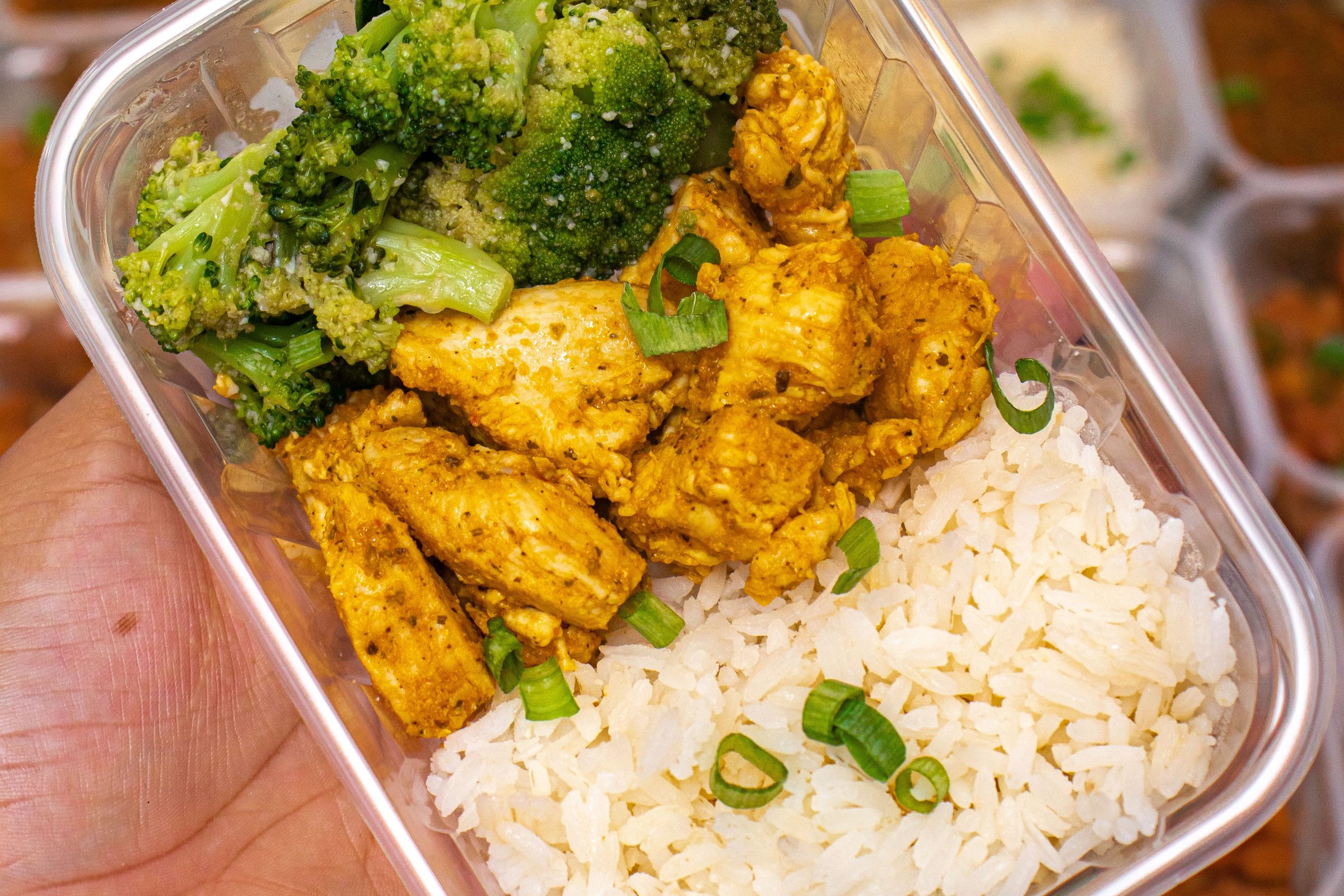
Beef and broccoli rice bowl (39.5 g protein, 397 cal)
Portions: 4 oz cooked 95% lean ground beef, 1 cup cooked broccoli, 1/2 cup cooked brown rice.
Brown the beef with garlic and a splash of soy sauce (count the sauce), steam the broccoli, and portion everything over rice. It reheats well, which makes it a good one to batch.
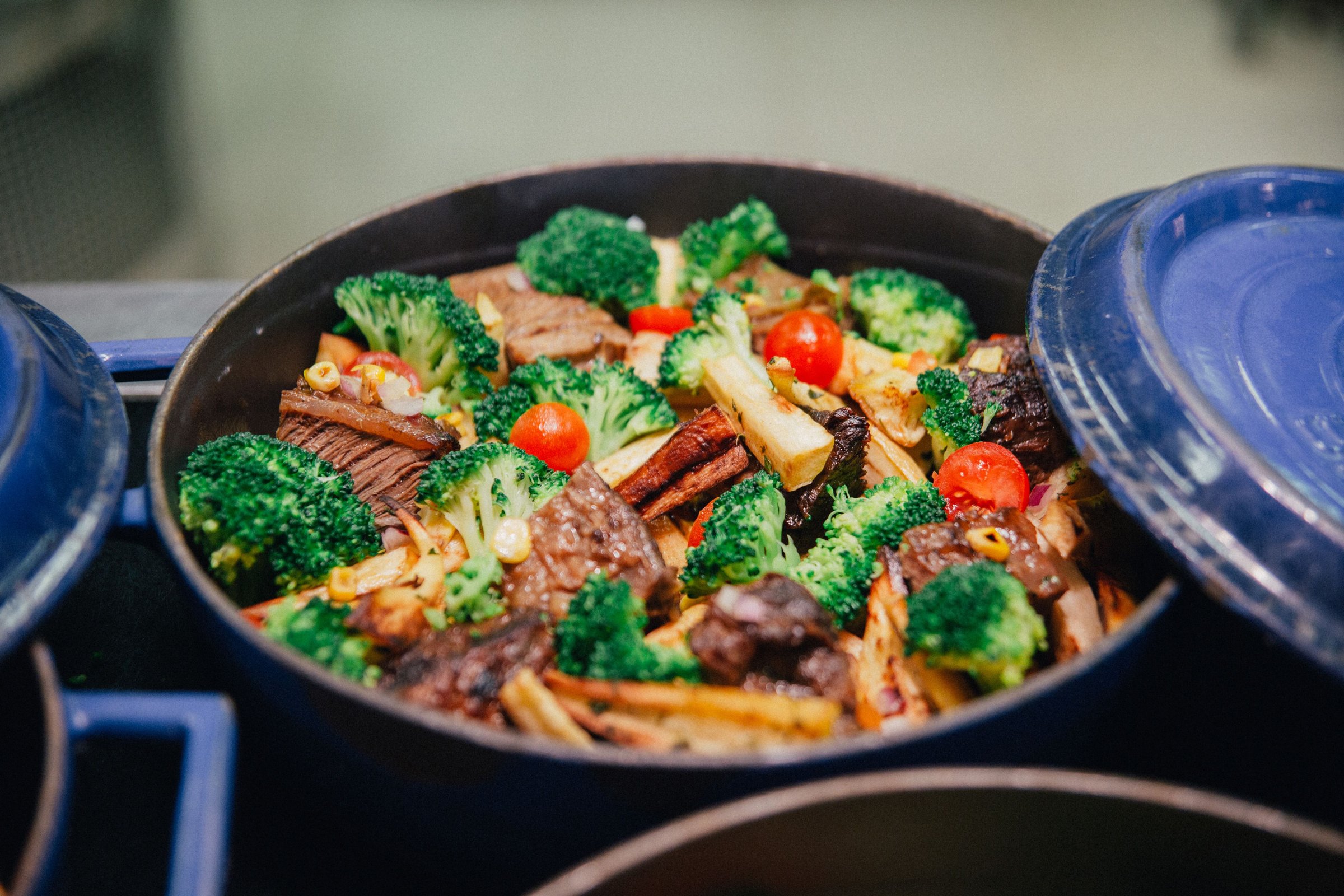
Shrimp and edamame rice bowl (39.1 g protein, 330 cal)
Portions: 4 oz cooked shrimp, 1/2 cup shelled edamame, 1/2 cup cooked brown rice.
Buy cooked shrimp and frozen shelled edamame to skip most of the work. Thaw, toss with rice, and finish with lime or a little chili sauce. It also works cold, if your office has no microwave.
Salmon quinoa plate (29.9 g protein, 351 cal)
Portions: 4 oz cooked salmon, 1/2 cup cooked quinoa, 1 cup spinach.
Bake a couple of salmon fillets with lemon and pepper, then pair with quinoa and spinach. It’s a little lower in protein than the chicken bowl, with more calories from salmon’s natural fat.
Tofu broccoli stir-fry bowl (26.4 g protein, 333 cal)
Portions: 1/2 cup firm tofu, 1/2 cup cooked broccoli, 1/2 cup cooked brown rice.
Press and cube the tofu, sear it until golden (count the oil), add broccoli and a stir-fry sauce, and serve over rice. More on plant lunches below.
Takeaway: cook the protein and grain once, then assemble each day so the greens stay fresh.
No-Cook Desk Lunches (High Protein Lunch Ideas for Work)
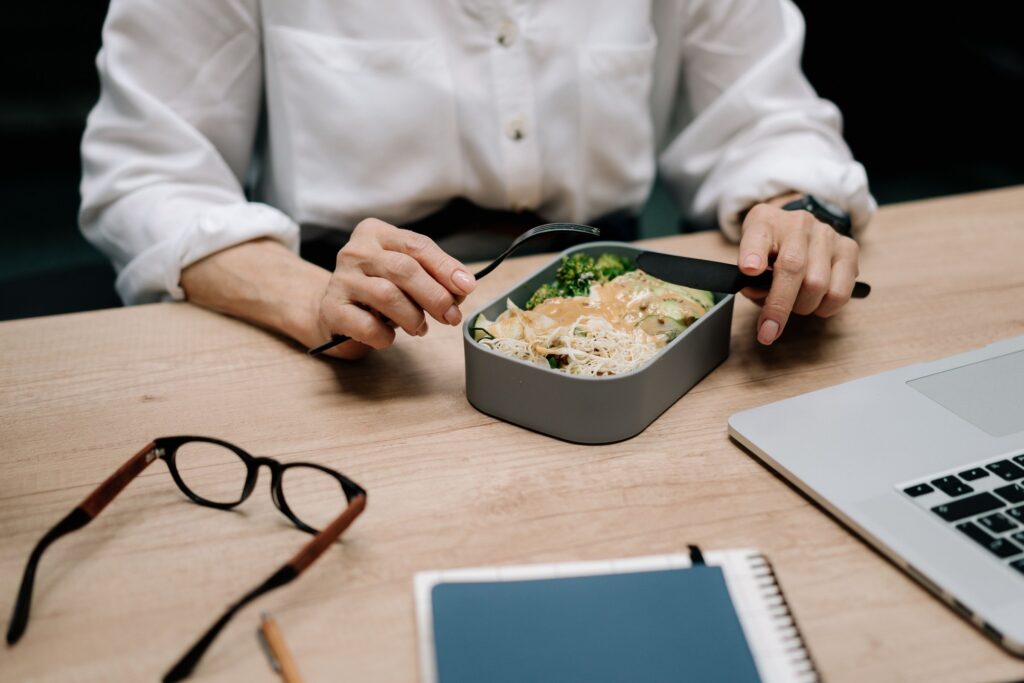
No microwave? No problem. These five are cold lunches you can pack in the morning. Eggs and chicken can be cooked ahead, but nothing needs heating at your desk.
Tuna salad lettuce wraps (26.5 g protein, 137 cal)
Portions: 1 can light tuna in water (drained), 1/4 cup nonfat Greek yogurt, 1 celery stalk.
Mix the tuna with Greek yogurt and chopped celery, add mustard or lemon, and spoon it into lettuce leaves. It has the most protein per calorie on the list, though it’s a lighter lunch overall, so pair it with a side if you get hungry.
Greek yogurt chicken salad (32.5 g protein, 181 cal)
Portions: 3 oz roasted chicken breast, 1/4 cup nonfat Greek yogurt, 1 celery stalk.
Same idea as the tuna, with leftover chicken. Chop, stir together, and season with salt, pepper, and a little dill. Eat it with crackers or veggies (count those), or on its own.
Cottage cheese protein plate (34.7 g protein, 248 cal)
Portions: 1 cup 1% cottage cheese, 1 large hard-boiled egg, 1/2 cup cucumber slices.
A snack plate that eats like lunch. Pack the cottage cheese in a small container, add a halved egg and cucumber, and season with everything bagel seasoning or pepper.
Turkey hummus wrap (21.4 g protein, 307 cal)
Portions: 6 slices turkey breast, 1 whole wheat tortilla, 2 tbsp hummus, 1 cup spinach.
Spread the hummus, layer the turkey and spinach, roll it tight, and wrap it in foil. Sliced turkey varies by brand, so check the label.
Egg salad pita (24.5 g protein, 323 cal)
Portions: 3 large hard-boiled eggs, 2 tbsp nonfat Greek yogurt, 1 small whole wheat pita.
Boil eggs ahead, mash them with yogurt, mustard, and pepper, and stuff the pita at lunchtime so it doesn’t get soggy.
Packing tips: use an insulated lunch bag with an ice pack, and put everything in the fridge when you get to work if you can. Keep wet fillings separate from bread and lettuce until you eat.
Takeaway: cook eggs or chicken ahead once, and your desk lunch takes five minutes to pack.
Get Dishco on iPhone
Vegetarian and Vegan Protein-Packed Lunches
Plant-based lunches can absolutely clear 20 g of protein. They usually take more calories to get there, but they bring fiber that meat lunches don’t.
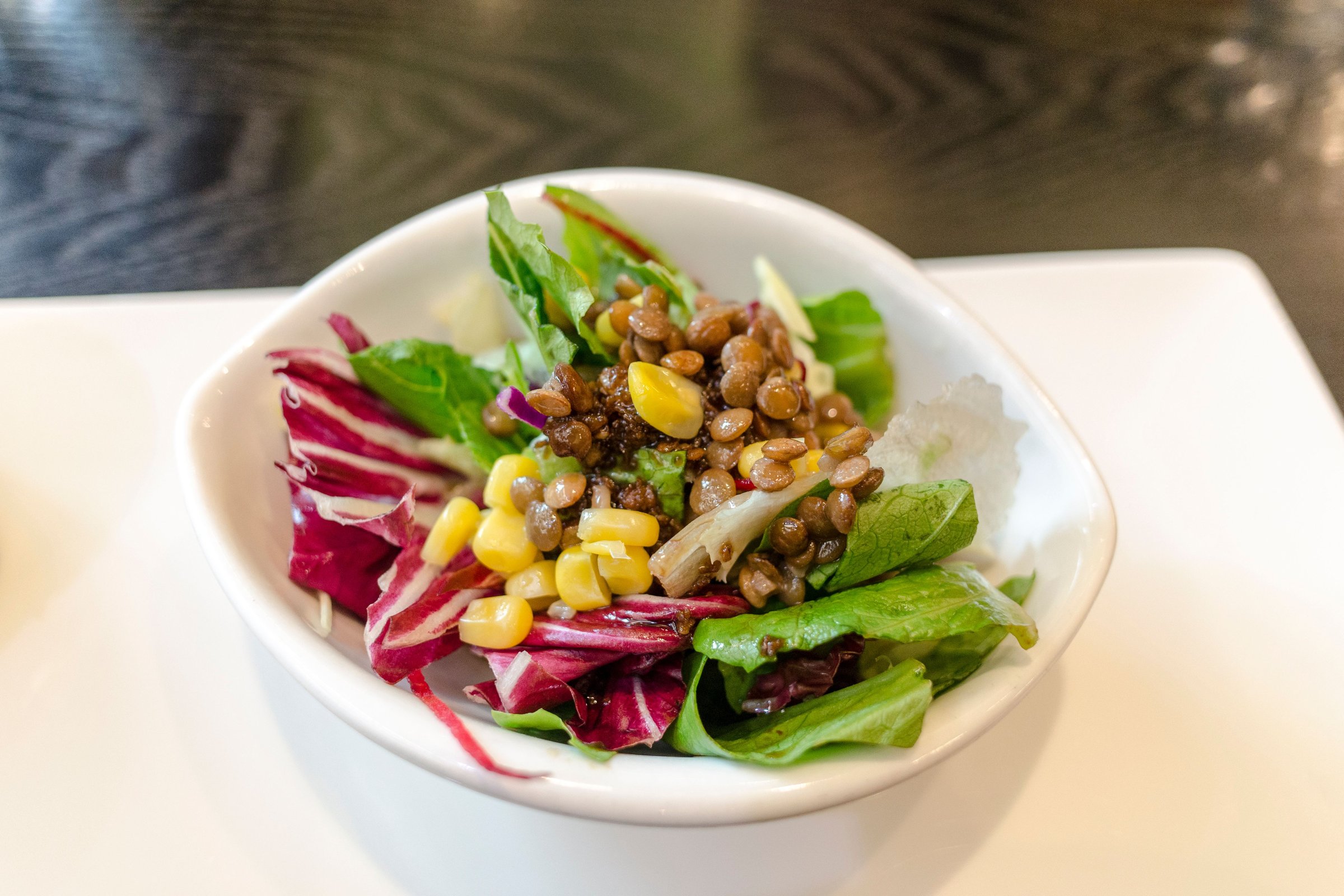
- Lentil and chickpea salad (vegan): 1 cup cooked lentils plus 1/2 cup rinsed canned chickpeas gives 23.2 g protein for 335 cal. Toss with lemon, herbs, chopped cucumber, and a little vinaigrette (count it). It keeps well for a few days.
- Black bean burrito bowl (vegetarian): 1 cup black beans, 1 oz cheddar, and 1/2 cup brown rice gives 24.5 g protein for 466 cal. Add salsa and lettuce. It’s the biggest bowl here by calories.
- Tofu broccoli stir-fry bowl (vegan): 26.4 g protein for 333 cal (see the make-ahead section).
- Egg salad pita (vegetarian): 24.5 g protein for 323 cal (see the desk lunches).
To be upfront, these sit lower on protein per 100 cal, from 5.3 to 7.9, compared with 7.0 to 19.4 for the poultry, fish, meat, and dairy lunches. If you want to push plant protein higher, our high protein low calorie foods guide has a plant-based section with more options, and our ranked list of vegetables high in protein shows which beans and greens carry the most per cup.
Takeaway: plant lunches get you there with more calories and more fiber. Both are fair trades.
Build Your Own Protein-Packed Lunch
Once you’ve tried a few, the pattern is easy to copy:
- One protein anchor. Chicken, tuna, shrimp, cottage cheese, eggs, tofu, or beans, in the portions from the table.
- A measured carb. About 1/2 cup cooked rice or quinoa, a small pita, or a tortilla.
- A big handful of veg. Spinach, cucumber, broccoli, or celery add crunch and volume.
- A sauce you count. Dressings, oils, and spreads are where calories sneak in, so measure them.
Making a homemade version with different amounts? Plug it into the recipe nutrition calculator to get your own numbers. And if lunch runs light, a protein snack in the afternoon can fill the gap. See these low calorie high protein snacks.
Takeaway: protein, carb, veg, counted sauce. That’s the whole formula.
Logging Lunch Without the Hassle
The easiest lunch to log is the one you’ve already measured. If you use Dishco on your iPhone, you can scan a barcode, type what you ate, say it with voice dictation, or snap an AI photo. If your lunch comes from a recipe online, you can import it by pasting the link.
Count the extras you add, like oil, dressing, or a spread, since they aren’t in the table numbers. And if a busy day means you skip logging, that’s fine. Miss a day? No shame.
Takeaway: log the extras, not just the protein. That’s what makes the numbers honest.
FAQ
What is a good high protein lunch?
A good one has a clear protein anchor, like chicken, tuna, cottage cheese, eggs, tofu, or beans, plus a measured carb and vegetables. The chicken quinoa bowl here has 40 g protein for 304 cal.
How much protein should be in lunch?
It depends on your daily target. Many lunch lists aim for roughly 20 to 35 g. Use the macros for weight loss calculator to find yours.
What are high protein lunch ideas for work with no microwave?
Tuna salad lettuce wraps, Greek yogurt chicken salad, a cottage cheese protein plate, a turkey hummus wrap, and an egg salad pita all eat cold. The shrimp and edamame bowl works cold too.
What are high protein lunch ideas for weight loss?
Look at the protein per 100 cal column. Tuna salad wraps (19.4) and Greek yogurt chicken salad (18.0) give the most protein for the calories. No single lunch causes weight loss; your whole day matters more.
What are good vegetarian lunches with lots of protein?
The lentil and chickpea salad, black bean burrito bowl, tofu broccoli bowl, and egg salad pita each have 23 g of protein or more.
Can I meal prep these lunches for the week?
Yes. The make-ahead bowls are built for it. Cook the protein and grain in a batch and keep greens separate until you eat. For 10 make-ahead lunches grouped by eat cold, reheat, or freeze, see our lunch meal prep ideas.
What high protein lunch foods should I keep stocked?
Canned tuna, eggs, cottage cheese, Greek yogurt, cooked chicken, frozen shrimp and edamame, tofu, and canned beans and lentils.
Pick Two for This Week
You don’t need 12 new lunches at once. Pick two high protein lunch ideas, one make-ahead bowl and one no-cook desk lunch, and see which fits your week. Remember that the numbers cover the listed portions only, so add your oils, dressings, and sauces.
If you want to go deeper on daily protein, our guide on how to get 100 grams of protein a day picks up from here. Want dinner covered too? See our high protein dinner ideas.
Takeaway: two good lunches you’ll actually make beat twelve you won’t.
Get Dishco on iPhone
Editorial Sources and Fact Checking
Dishco follows clear sourcing guidelines so you can trust what you read, outlined in our editorial policy. We use trustworthy sources, including peer-reviewed research, public health guidelines, and established health institutions.
Sources
- 1 FoodData Central. U.S. Department of Agriculture. 2026.
- 2 Protein in diet. MedlinePlus Medical Encyclopedia, U.S. National Library of Medicine. 2025.