
Looking for low sugar snacks that show the actual numbers, not a vague “healthy” list? Here are 15 easy ideas, from 0.2 g to 16.2 g of total sugar per serving, with added sugar, protein, fiber, and cal from USDA data.[1] Fourteen of the fifteen have 0 g added sugar.
Quick answer: where the list starts and ends
Lowest total sugar: air-popped popcorn, 0.2 g sugar, 93 cal
Most protein: tuna on cucumber rounds, 22.4 g protein, 1.7 g sugar, 114 cal
Sweetest with 0 g added sugar: apple with almond butter, 16.2 g natural sugar, 5.2 g fiber, 176 cal
Numbers are per serving, from USDA data. Added sugar follows FDA’s definition: sugars naturally in milk, fruit, and vegetables are not added.[2]
This is a snack list, not a meal plan. FDA has no “low sugar” definition, so the table is sorted by total sugar instead of an invented cutoff.[3]
Takeaway: most of these snacks have 0 g added sugar. Total sugar still varies, especially once fruit or dairy is in the bowl.
Low Sugar Snacks at a Glance
All 15 snacks, sorted by total sugar.
| Snack | Portion | Total sugar (g) | Added sugar (g) | %DV added | Protein (g) | Fiber (g) | Cal |
|---|---|---|---|---|---|---|---|
| Air-popped popcorn | 3 cups (24 g) | 0.2 | 0 | 0% | 3.1 | 3.5 | 93 |
| Roasted pumpkin seeds, unsalted | 1 oz | 0.4 | 0 | 0% | 8.3 | 1.8 | 161 |
| Hard-boiled eggs | 2 large | 1.1 | 0 | 0% | 12.6 | 0.0 | 155 |
| String cheese and almonds | 1 stick + 1/2 oz | 1.1 | 0 | 0% | 9.6 | 1.8 | 164 |
| Tuna on cucumber rounds | 3 oz tuna + 1 cup cucumber | 1.7 | 0 | 0% | 22.4 | 0.5 | 114 |
| Caprese bites | 1 oz fresh mozzarella + 1/2 cup cherry tomatoes | 2.0 | 0 | 0% | 6.9 | 0.9 | 97 |
| Pistachios, dry roasted, unsalted | 1 oz (about 49) | 2.2 | 0 | 0% | 5.9 | 2.9 | 160 |
| Chia pudding with raspberries | 2 tbsp chia + 1/2 cup unsweetened almond milk + 1/4 cup raspberries | 2.3* | 0 | 0% | 4.8 | 10.5 | 151 |
| Edamame, shelled | 3/4 cup | 2.5 | 0 | 0% | 13.8 | 6.0 | 140 |
| Roasted chickpeas | 1/2 cup canned, rinsed + 1 tsp olive oil | 3.0 | 0 | 0% | 5.4 | 4.8 | 145 |
| Dark chocolate and almonds | 10 g 70 to 85% chocolate + 1/2 oz almonds | 3.0 | 2.4** | 5% | 3.7 | 2.8 | 141 |
| Hummus with carrots and red pepper | 1/4 cup + 1/2 cup each | 6.6 | 0*** | 0% | 6.0 | 6.7 | 188 |
| Cottage cheese with blueberries | 1/2 cup 1% + 1/4 cup | 6.8 | 0 | 0% | 14.3 | 0.9 | 102 |
| Plain Greek yogurt with raspberries | 6 oz plain lowfat + 1/4 cup | 7.4 | 0 | 0% | 17.3 | 2.0 | 140 |
| Apple with almond butter | 1 small apple + 1 tbsp | 16.2 | 0*** | 0% | 3.7 | 5.2 | 176 |
* SR Legacy reports no sugar value for chia seeds; the 2.3 g shown is from the raspberries and almond milk. ** Estimate: all of the chocolate’s sugar is counted as added. FDA calls 5% DV or less a low source of added sugars.[2] *** Assumes unsweetened hummus and no-sugar-added almond butter. Check the label; some products add sugar.
Cal ranges from 93 to 188. Protein runs from 3.1 g (popcorn) to 22.4 g (tuna). Chia pudding leads for fiber at 10.5 g, then the hummus plate at 6.7 g and edamame at 6.0 g.
Takeaway: sort by the number, not the vibe. An apple can have more total sugar than chocolate and still have 0 g added.




Get Dishco on iPhone

Savory Low Sugar Snacks
These five are built on eggs, fish, cheese, or hummus, with 0 g added sugar.
Hard-Boiled Eggs (1.1 g sugar, 12.6 g protein, 155 cal)
Portion: 2 large eggs. The 1.1 g of sugar is naturally in the eggs, not added.
Tuna on Cucumber Rounds (1.7 g sugar, 22.4 g protein, 114 cal)
Portion: 3 oz light tuna in water, drained, plus 1 cup sliced cucumber. The sugar is all from the cucumber. This is the protein leader on the list.
String Cheese and Almonds (1.1 g sugar, 9.6 g protein, 164 cal)
Portion: 1 part-skim mozzarella stick plus 1/2 oz almonds (about 11 nuts). A little lactose in the cheese, plus a little natural sugar in the almonds.
Caprese Bites (2.0 g sugar, 6.9 g protein, 97 cal)
Portion: 1 oz fresh mozzarella plus 1/2 cup cherry tomatoes. The 2.0 g of sugar is from the tomatoes. Skip a sweet glaze if you want the number to stay where it is.
Hummus With Carrots and Red Pepper (6.6 g sugar, 6.0 g protein, 6.7 g fiber, 188 cal)
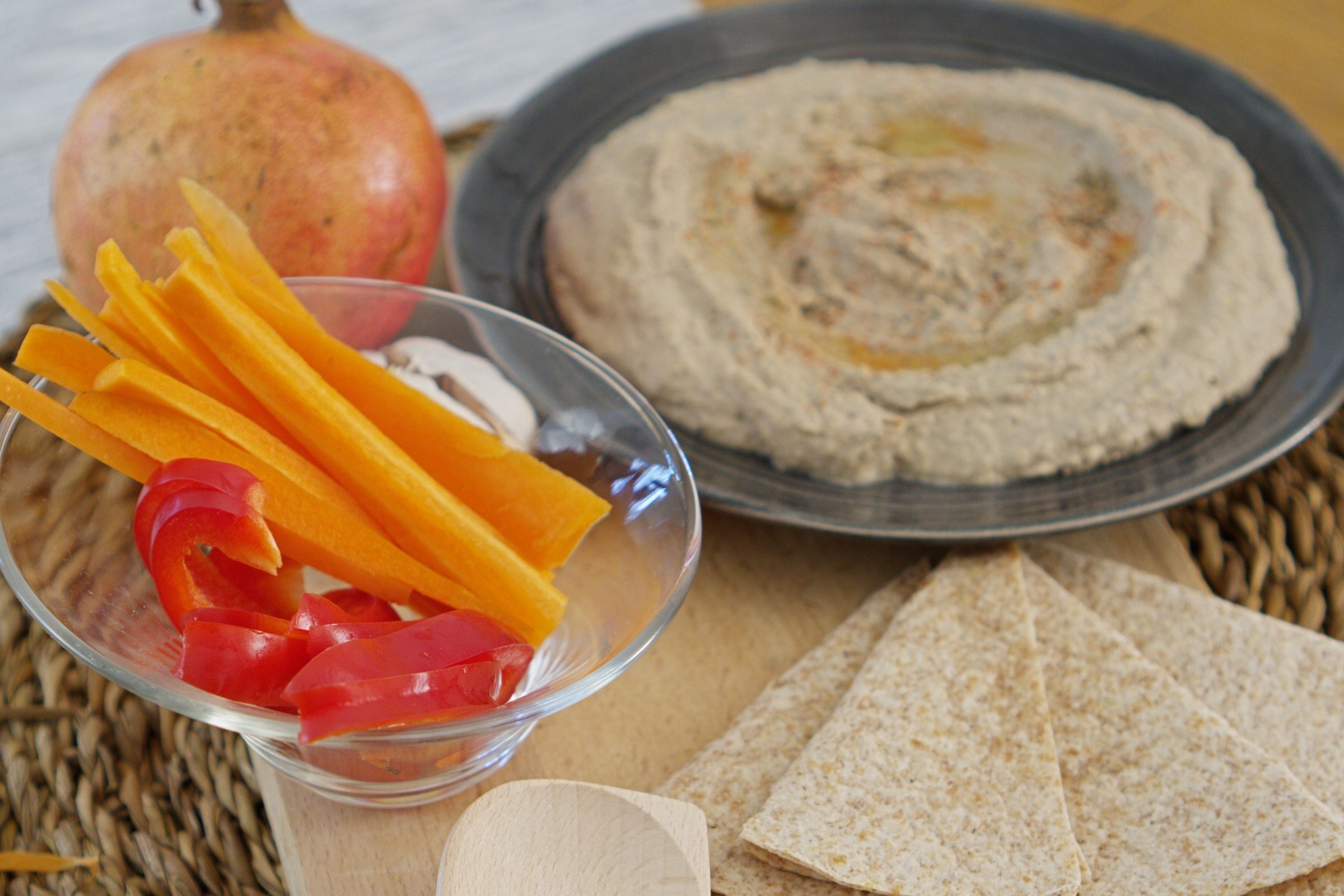
Portion: 1/4 cup hummus, 1/2 cup carrots, and 1/2 cup red bell pepper. Most of the sugar is in the vegetables, not the hummus (0.4 g in this portion, assuming unsweetened). This is the highest-cal snack on the list, and one of the highest in fiber.
Takeaway: savory snacks stay low in total sugar when the plate is eggs, tuna, cheese, or unsweetened hummus plus vegetables.
Crunchy Snacks With Almost No Sugar
Nuts, seeds, popcorn, chickpeas, and edamame do the crunchy work here.
Air-Popped Popcorn (0.2 g sugar, 3.1 g protein, 93 cal)
Portion: 3 cups (24 g). The lowest-sugar snack on the list, and the lightest at 93 cal. For more high-volume picks like popcorn and cucumber, see high volume low calorie foods.
Roasted Pumpkin Seeds, Unsalted (0.4 g sugar, 8.3 g protein, 161 cal)
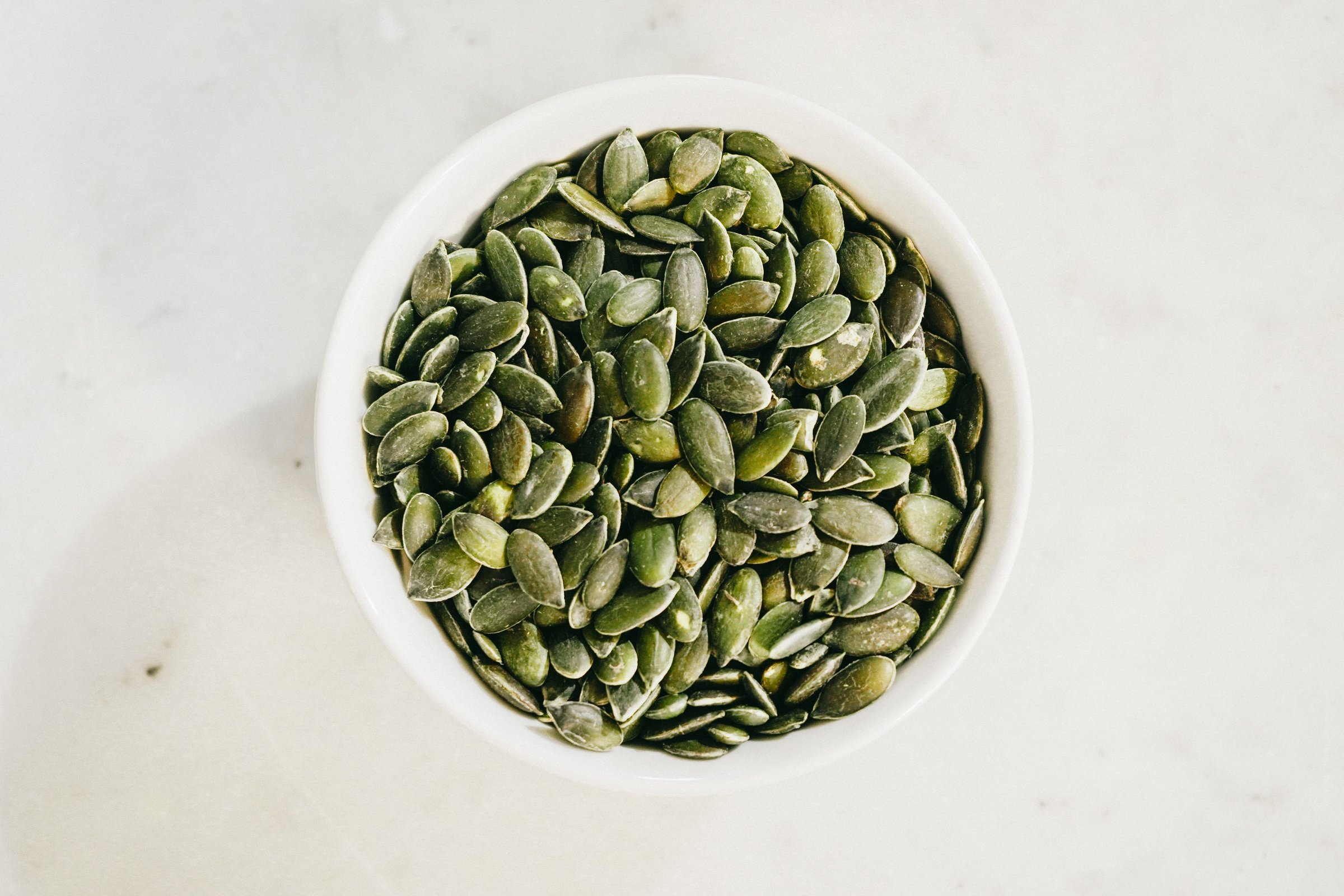
Portion: 1 oz. By the number, this one sits under 0.5 g of sugar, next to the popcorn.
Pistachios, Dry Roasted, Unsalted (2.2 g sugar, 5.9 g protein, 160 cal)
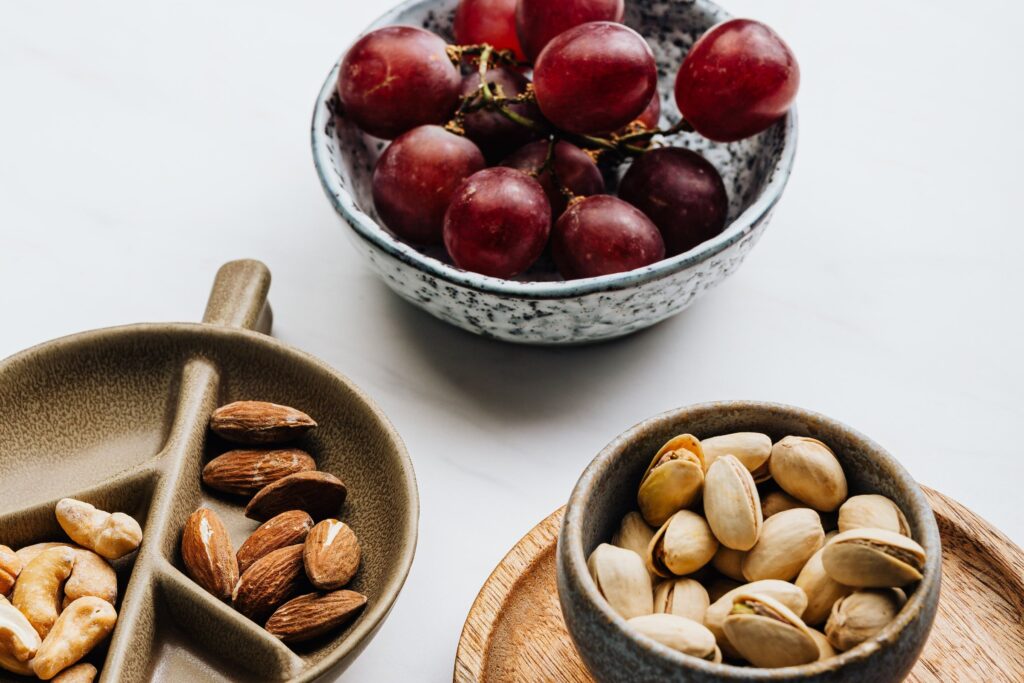
Portion: 1 oz, about 49 nuts. A little natural sugar, plus 2.9 g of fiber. The photo at the top of this page shows pistachios in the shell next to almonds, cashews, and red grapes; cashews and grapes aren’t on this list.
Roasted Chickpeas (3.0 g sugar, 5.4 g protein, 4.8 g fiber, 145 cal)
Portion: 1/2 cup canned chickpeas, rinsed, plus 1 tsp olive oil (40 cal, counted). To check a bigger homemade batch, use the recipe nutrition calculator.
Edamame, Shelled (2.5 g sugar, 13.8 g protein, 6.0 g fiber, 140 cal)
Portion: 3/4 cup prepared shelled edamame. One of the higher-protein crunchy options, with 6.0 g of fiber.
Takeaway: unsalted seeds, popcorn, and chickpeas keep total sugar low without a flavored coating.
Sweet Low Sugar Snacks With No Added Sugar
Fruit, plain dairy, and one small chocolate portion. Four of these have 0 g added sugar. The chocolate pair is the exception, flagged as an estimate.
Plain Greek Yogurt With Raspberries (7.4 g sugar, 17.3 g protein, 140 cal)
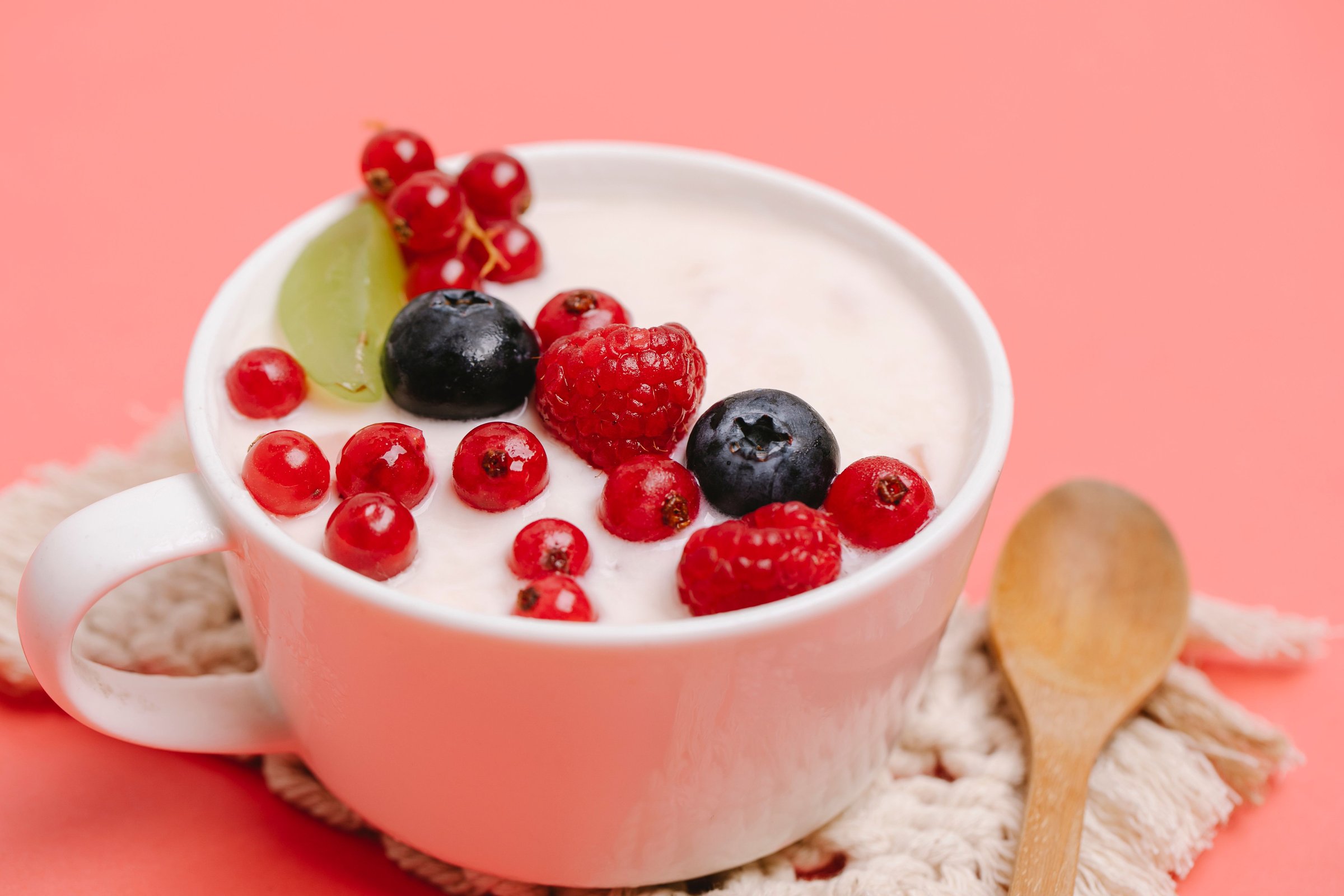
Portion: 6 oz plain lowfat Greek yogurt plus 1/4 cup raspberries. The yogurt itself carries 6.1 g of natural lactose before the berries. That’s dairy sugar, not added sugar.
Cottage Cheese With Blueberries (6.8 g sugar, 14.3 g protein, 102 cal)
Portion: 1/2 cup 1% cottage cheese plus 1/4 cup blueberries. The cottage cheese has 3.1 g of natural sugar; the rest is the fruit.
Chia Pudding With Raspberries (2.3 g sugar*, 4.8 g protein, 10.5 g fiber, 151 cal)
Portion: 2 tbsp chia seeds, 1/2 cup unsweetened almond milk, and 1/4 cup raspberries. Fiber leader on the list. The sugar shown is from the berries and almond milk; USDA lists no sugar value for chia. For another chia breakfast idea, see high fiber breakfast. To place the fiber in a full day, try the fiber calculator.
Apple With Almond Butter (16.2 g sugar, 3.7 g protein, 5.2 g fiber, 176 cal)
Portion: 1 small apple with skin plus 1 tbsp no-sugar-added almond butter. This is the highest-sugar snack on the list, and it still has 0 g added sugar, because fruit sugar is not added sugar under FDA’s definition.[2] Most of the 16.2 g is the apple (15.5 g). It also brings 5.2 g of fiber. Check the almond butter label; some jars add sugar.
Dark Chocolate and Almonds (3.0 g sugar, 2.4 g added**, 5% DV, 141 cal)
Portion: 10 g of 70 to 85% dark chocolate plus 1/2 oz almonds. The 2.4 g added sugar is an estimate: we counted all of the chocolate’s sugar as added. That’s 5% of the Daily Value, which FDA calls a low source of added sugars.[2]
Get Dishco on iPhone
Takeaway: fruit and plain dairy can raise total sugar and still have 0 g added. Chocolate is the one snack here with added sugar, and even that is a 5% DV estimate.
Sugar Free vs No Added Sugar vs Low Sugar
Searches for sugar free snacks, no sugar snacks, and zero sugar snacks treat those labels as the same thing. On a Nutrition Facts label, they aren’t.
FDA’s Daily Value for added sugars is 50 g per day on a 2,000 cal diet. Total sugars have no Daily Value.[2] The same page says 5% DV or less is a low source of added sugars, and 20% DV or more is a high source.[2] The Dietary Guidelines line quoted there is to limit added sugars to less than 10 percent of total calories, which is 50 g on that 2,000 cal diet.[2]
Sugar free, no sugar, zero sugar, and sugarless are grouped together in the federal labeling rule. They mean less than 0.5 g of sugars per serving.[3] On this list, only popcorn (0.2 g) and pumpkin seeds (0.4 g) sit under that number, which is the label rule, not a certification of a homemade bowl. The rule also requires a “not a low calorie food” line unless the food already qualifies as low or reduced calorie, which is why a sugar free cookie can still be a cookie.[3]
No added sugar and no sugar added mean nothing with sugar was added in processing. Natural sugar can still be there.[3] That’s the apple with almond butter in a sentence: 16.2 g total, 0 g added.
Reduced sugar or less sugar means at least 25% less than a reference food, not “almost none.”[3]
FDA does not define a “low sugar” claim.[3] Some lists use a 5 g cutoff of their own. This page sorts by the USDA numbers instead of inventing a rule.
Packaged sugar free snacks often use sugar alcohols or other sweeteners. Large amounts of sugar alcohols can upset some stomachs. That is a label-reading note, not a health rating of any sweetener.
Takeaway: “sugar free” is under 0.5 g per serving. “No added sugar” can still contain natural sugar. “Low sugar” is not an FDA term.
How to Read a Snack Label for Added Sugar
On the Nutrition Facts label, look for the line that says “Includes Xg Added Sugars” and the %DV next to it. FDA says 5% DV or less is a low source of added sugars, and 20% DV or more is a high source.[2] Also check the serving size, because a “one pouch” habit may be two servings on the label.
Added sugars include syrups, honey, and concentrated juices, and they do not include the sugars naturally in milk, fruit, and vegetables.[2] If the ingredient list has those syrups, the “Includes” line should show them.
A few common picks help show why the label matters. These rows report total sugar only; USDA doesn’t split added sugar for them, so use the package’s “Includes Xg Added Sugars” line.
| Common pick | Portion | Total sugar (g) | Protein (g) | Cal |
|---|---|---|---|---|
| Strawberry nonfat Greek yogurt | 6 oz | 19.2 | 13.7 | 139 |
| Vanilla nonfat Greek yogurt | 6 oz | 16.2 | 14.7 | 133 |
| Soft chocolate chip granola bar | 1 bar (28 g) | 8.1 | 1.6 | 117 |
| Beef jerky, chopped and formed | 1 oz | 2.5 | 9.3 | 115 |
The strawberry yogurt has more than 2.5 times the total sugar of our plain yogurt with raspberries (19.2 g vs 7.4 g). Jerky is low in total sugar, but many packages still list sugar in the ingredients, so check the label.
To build the rest of the cart around staples like eggs, popcorn kernels, canned tuna, and chickpeas, see the healthy grocery list and the cheap healthy grocery list.
Takeaway: use the “Includes Xg Added Sugars” line and the %DV, then confirm the ingredients.
Logging Snacks Without the Guesswork
Snack handfuls are easy to miss, especially when you eat them standing at the counter. Yogurt tubs, nut butter jars, canned tuna, and many cheeses have a barcode you can scan. If there is no barcode, type the snack, or say it with voice via dictation. A mixed plate, like hummus with carrots and peppers, is a good fit for an AI photo. When you roast a batch of chickpeas, paste a recipe link to import the recipe and split it by serving.
Takeaway: scan the package when you can. Describe the handful when you can’t.
Get Dishco on iPhone
FAQ
What are low sugar snacks?
On this page, they are snacks sorted by total sugar, with added sugar shown beside it. FDA has no “low sugar” term, so there is no official cutoff here.[3] The 15 ideas run from 0.2 g to 16.2 g of total sugar, and 14 of them have 0 g added.
What snacks have no sugar at all?
By the under-0.5 g labeling number, popcorn (0.2 g) and pumpkin seeds (0.4 g) are the closest on this list.[3] Eggs have 1.1 g. “Sugar free,” “no sugar,” and “zero sugar” on a package mean less than 0.5 g of sugars per serving.
Is fruit sugar the same as added sugar?
No. Under FDA’s definition, sugars naturally in fruit, milk, and vegetables are not added sugars.[2] The apple with almond butter has 16.2 g of total sugar and 0 g added.
How much added sugar is in a low sugar snack?
FDA calls 5% DV or less a low source of added sugars, which is 2.5 g or less of the 50 g Daily Value.[2] Fourteen snacks here have 0 g added. The chocolate and almonds pair is a 2.4 g estimate, or 5% DV.
Are sugar free snacks healthier?
Not automatically. The “sugar free” rule is about grams of sugar per serving, and those foods may still need a “not a low calorie food” line.[3] Packaged versions often use sugar alcohols, which can upset some stomachs in large amounts. For how those show up in carb counts, see net carbs vs total carbs.
What is a high protein low sugar snack?
If you want high protein low sugar snacks, tuna on cucumber (22.4 g protein, 1.7 g sugar), plain Greek yogurt with raspberries (17.3 g, 7.4 g), cottage cheese with blueberries (14.3 g, 6.8 g), and edamame (13.8 g, 2.5 g) lead this list. For more protein-first ideas, see low calorie high protein snacks.
Is there a low sugar breakfast idea?
Plain oats with unsweetened add-ins stay closer to this list than a flavored packet. See protein oatmeal for stovetop bowls with measured add-ins.
Stock Three This Week
You don’t need all 15 low sugar snacks in the kitchen at once. Stock three this week that you’ll actually reach for: popcorn for a nearly no-sugar crunch, tuna or plain Greek yogurt when you want protein, and an apple with almond butter when you want something sweet with 0 g added. Read the “Includes Xg Added Sugars” line on anything in a package, and keep fruit and plain dairy in the natural-sugar column, not the added one. The useful habit is noticing the number, not chasing a term the label never defined.
Editorial Sources and Fact Checking
Dishco follows clear sourcing guidelines so you can trust what you read, outlined in our editorial policy. We use trustworthy sources, including peer-reviewed research, public health guidelines, and established health institutions.
Sources
- 1 FoodData Central (SR Legacy). U.S. Department of Agriculture. 2026.
- 2 Added Sugars on the Nutrition Facts Label. U.S. Food and Drug Administration. 2026.
- 3 21 CFR 101.60: Nutrient content claims for the calorie content of foods. Electronic Code of Federal Regulations (eCFR). 2026.