
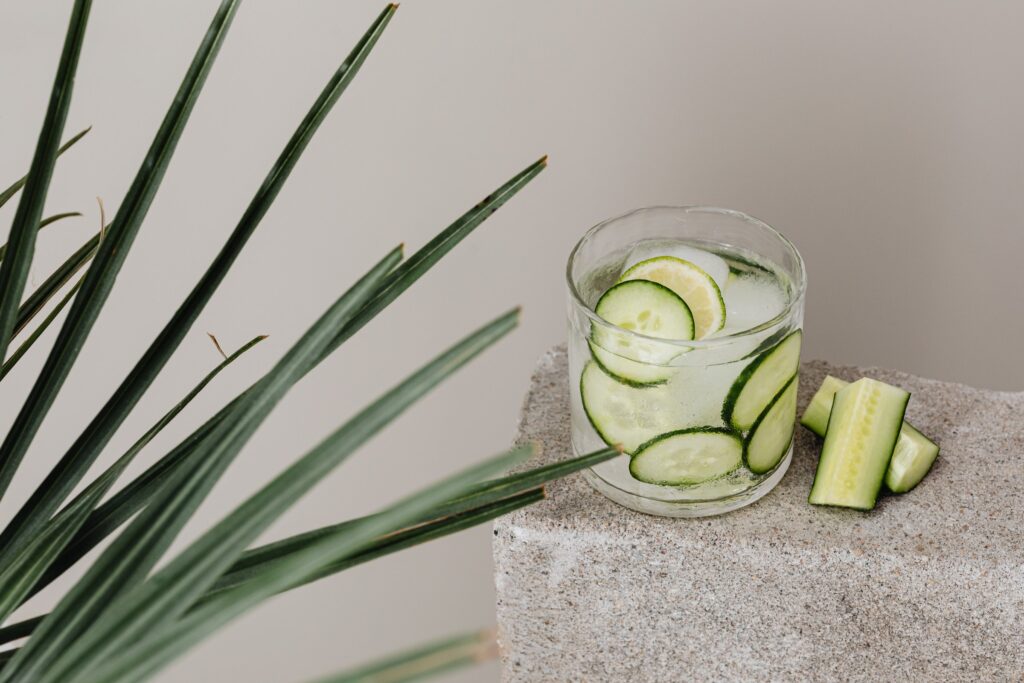
Only a handful of things are truly 0 calories. Here’s what is, what just rounds to 0 on the label, and what’s close enough that you’ll barely notice it.
Most zero calorie foods lists skip that difference. This one sorts everything into honest tiers, with USDA numbers per serving.
Quick answer: 0 calorie foods, sorted
Truly 0: water, plain sparkling water, black coffee, and plain tea (coffee and tea are about 2 cal a cup).
Reads 0: anything under 5 cal per serving can be labeled 0, so sweetener packets and cooking spray show 0 but aren’t.
Close to 0: green leaf lettuce (5 cal a cup), celery (6 cal a stalk), and cucumber (8 cal a half cup).
Building full, filling plates rather than hunting for zeros? That’s what our guide to high volume low calorie foods is for. This page is general information, not medical advice, so check with your doctor if you’re eating around a health condition.
Takeaway: “zero” comes in tiers, and knowing which tier a food sits in is the whole trick.
Are There Any Truly Zero Calorie Foods?
Barely. Calories come from carbs, protein, fat, and alcohol, so anything that contains even a little of one has some energy in it. That rules out nearly every solid food. What’s left at a true 0 is mostly water in different outfits.
So instead of one list, think in four tiers:
- Truly 0. Plain water and plain sparkling water, with black coffee and plain tea at about 2 cal a cup.[1]
- Rounds to 0 on the label. Foods with under 5 cal per serving can list 0 on the Nutrition Facts label.[2] The calories are small but real.
- Near zero. Watery produce and broth at about 5 to 30 cal per common serving.
- Low calorie. The FDA’s “low calorie” claim means 40 cal or less per reference amount.[3] Plenty of so-called zero calorie lists are really this tier.
None of this makes tier 3 or 4 foods worse. It just helps to call them what they are.
Zero Calorie Foods List: The Tiered Table
Here’s the 0 calorie foods list in one place, from true zero up to the near-zero produce that tops out under 30 cal a serving.
| Food | Portion | Cal | Tier |
|---|---|---|---|
| Tap water | 1 cup (8 fl oz) | 0 | Truly 0 |
| Club soda / plain sparkling water | 12 fl oz can | 0 | Truly 0 |
| Black coffee, brewed | 1 cup (8 fl oz) | 2 | Truly 0 (about) |
| Black, green, or chamomile tea, brewed | 1 cup | 2 | Truly 0 (about) |
| Sucralose sweetener packet | 1 packet (1 g) | 3 | Reads 0 |
| Cooking spray | 1/3-second spray | 2 | Reads 0 |
| Dill pickle | 1 small spear (35 g) | 4 | Reads 0 |
| Hot sauce | 1 tsp | 1 | Seasoning |
| Yellow mustard | 1 tsp | 3 | Seasoning |
| Cinnamon, ground | 1 tsp | 6 | Seasoning |
| Green leaf lettuce | 1 cup shredded | 5 | Near 0 |
| Celery | 1 medium stalk | 6 | Near 0 |
| Spinach, raw | 1 cup | 7 | Near 0 |
| Cucumber with peel | 1/2 cup slices | 8 | Near 0 |
| Radishes | 1/2 cup slices | 9 | Near 0 |
| Chicken broth | 1 cup | 15 | Near 0 |
| White mushrooms | 1 cup slices | 15 | Near 0 |
| Green bell pepper | 1 cup sliced | 18 | Near 0 |
| Tomato | 1 medium | 22 | Near 0 |
| Cauliflower | 1 cup chopped | 27 | Near 0 |
How to read it: the portion column matters as much as the calories. A sweetener packet “reads 0” because the label serving is one packet. Use three and you’re in different territory. Seasonings are near zero because you use a teaspoon, not a cup. And the near-zero produce stays low at normal servings, but a big salad bowl holds several cups.
Source note: calories are scaled from per-100 g values in USDA FoodData Central (SR Legacy) and rounded to whole cal.[1] FDC ids: water 173647, club soda 174842, coffee 171890, black tea 173227, green tea 171917, chamomile 174156, sweetener 170257, cooking spray 171430, dill pickle 168558, hot sauce 174527, mustard 172234, cinnamon 171320. Produce ids are under the near-zero table below.
Takeaway: true zero is water, coffee, and tea. Everything else is “under 5,” “near zero,” or “low,” so check the tier and the portion together.


Get Dishco on iPhone
Truly Zero Calorie Drinks
This is the one tier where zero mostly means zero.
Water and sparkling water
Tap water and plain club soda are 0 cal in FoodData Central.[1] Flavored sparkling water can be too, but only the plain, unsweetened kind counts here. If it has juice or sugar, check the label before you assume.
Black coffee
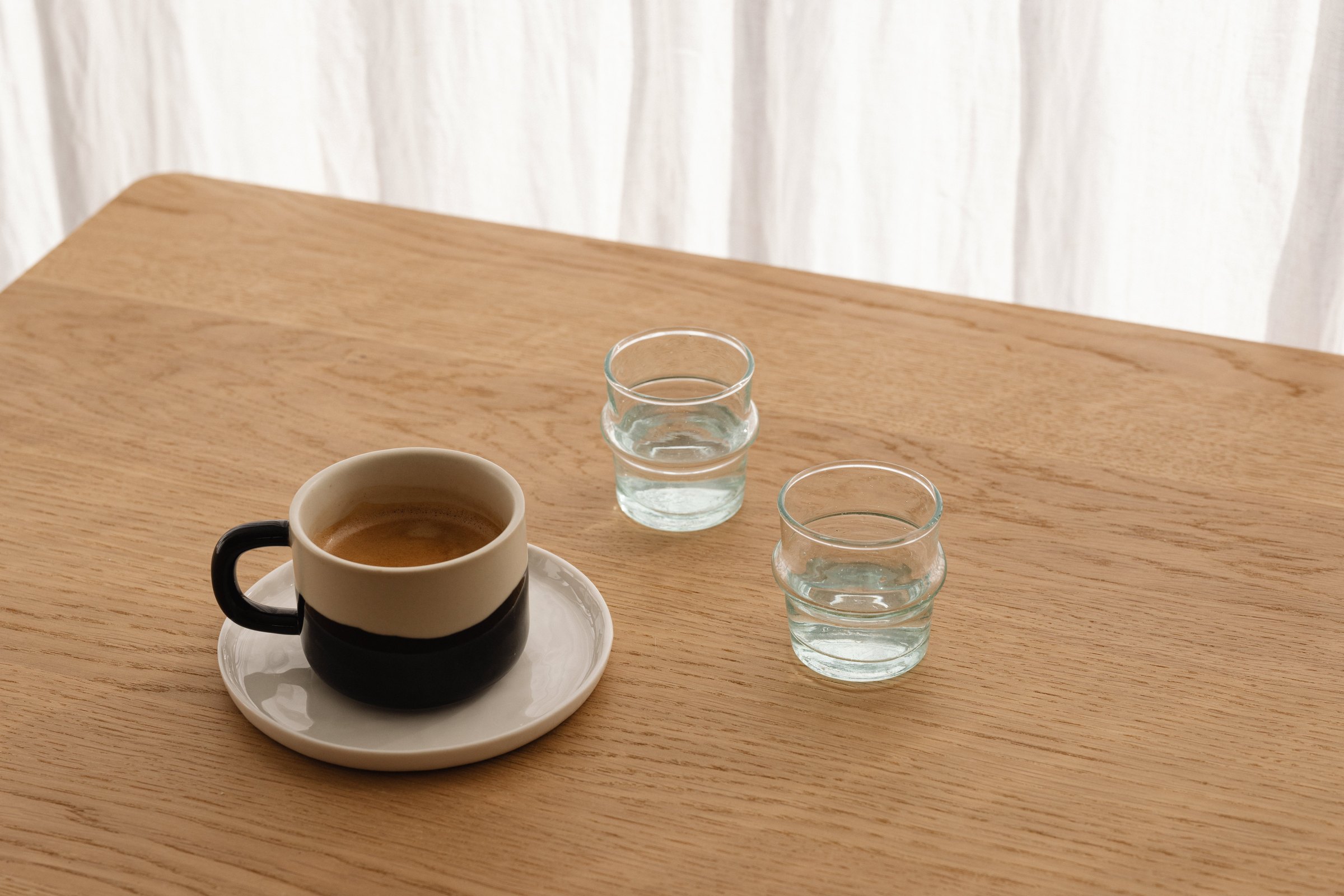
A cup of brewed black coffee is about 2 cal.[1] That’s close enough to zero that most people never think about it. What changes the math is what goes in: milk, cream, syrups, and sugar all bring real calories.
Plain tea (black, green, herbal)
Black, green, and chamomile tea each land at about 2 cal a cup.[1] Same rule as coffee. Plain tea is basically zero, and a sweetened bottled tea is a different drink entirely.
Diet soda and “zero sugar” drinks
Diet sodas are usually labeled 0 under the same under-5 rounding rule you’ll see below. Check the label. And “zero sugar” isn’t the same as zero calories, since some of those drinks can still carry calories from other ingredients.
Takeaway: water, sparkling water, black coffee, and plain tea are your true zeros. Add-ins are where the calories come from.
Why Labels Say 0 Calories (The Under-5 Rule)
Here’s the part that surprises people. Under FDA rules, the Calories line on a Nutrition Facts label may be expressed as zero when a serving has less than 5 calories.[2] A separate rule covers front-of-package claims: a food can be called “calorie free” or “zero calories” only if it has under 5 cal per reference amount and per labeled serving.[3]
So calorie free foods aren’t lying. They’re just reporting per serving, and the serving is small.
A few worked examples from FoodData Central:[1]
- Sweetener packet: one 1 g sucralose packet has about 3 cal and reads 0.
- Cooking spray: one 1/3-second spray is about 2 cal and reads 0.
- Dill pickle: one small spear is about 4 cal, under the 5 cal line.
When servings stack
The label is per serving, but your pan doesn’t know that. A 2-second spray is about six of those 1/3-second servings, which works out to roughly 12 to 15 cal. Three sweetener packets in a latte add about 10 cal. Neither is a big deal on its own, and that’s the point: they’re small, not zero.
Takeaway: “0” on a label means “under 5 per serving.” If you use more than one serving, multiply.
Get Dishco on iPhone
Flavor Without the Calories: Spices, Vinegar, Mustard, Hot Sauce
Seasonings are where food gets interesting without the calorie count moving much. In real portions, here’s what they cost:[1]
- Hot sauce: about 1 cal per tsp
- Black pepper: about 1 cal per 1/4 tsp
- Lemon juice: about 1 cal per wedge
- Distilled or apple cider vinegar: about 3 cal per tbsp
- Yellow mustard: about 3 cal per tsp
- Ground cinnamon: about 6 cal per tsp
That last one is the sneaky one. Cinnamon is about 6 cal a teaspoon, so it isn’t zero. Dried spices are actually calorie-dense by weight (cinnamon is 247 cal per 100 g). They stay near zero only because you use a pinch or a spoonful, not a bowl.
Fresh herbs like parsley and basil are another easy way to add flavor to a plate.
If you like swaps, mustard can stand in for mayo, and vinegar or lemon can replace a creamy dressing. They’re options, not rules.
Takeaway: seasonings are near zero in normal amounts. Cinnamon by the spoonful is the one to notice.
Near-Zero Vegetables (and Other Foods Close to 0)
There are no true zero calorie vegetables, but some come impressively close. These are per common serving, with calories per 100 g and water content so you can see why.
| Food | Portion | Cal | Cal / 100 g | Water % |
|---|---|---|---|---|
| Green leaf lettuce | 1 cup shredded (36 g) | 5 | 15 | 95.0 |
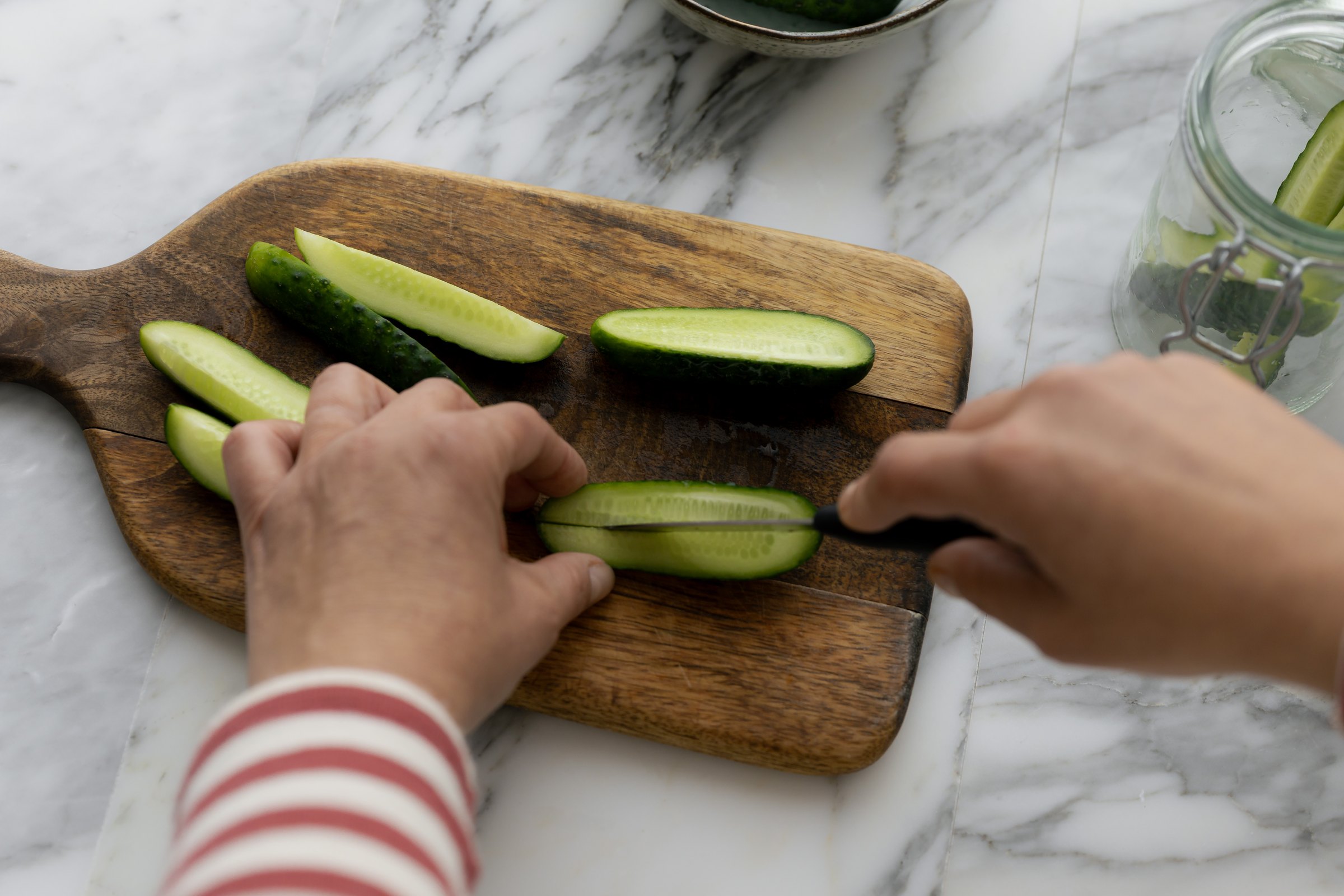
| Celery | 1 medium stalk (40 g) | 6 | 14 | 95.4 |
| Spinach, raw | 1 cup (30 g) | 7 | 23 | 91.4 |
| Kale, raw | 1 cup (21 g) | 7 | 35 | 89.6 |
| Cucumber with peel | 1/2 cup slices (52 g) | 8 | 15 | 95.2 |
| Romaine lettuce | 1 cup shredded (47 g) | 8 | 17 | 94.6 |
| Radishes | 1/2 cup slices (58 g) | 9 | 16 | 95.3 |
| Iceberg lettuce | 1 cup shredded (72 g) | 10 | 14 | 95.6 |
| Chicken broth, ready-to-serve | 1 cup (249 g) | 15 | 6 | 97.8 |
| White mushrooms | 1 cup slices (70 g) | 15 | 22 | 92.4 |
| Cabbage | 1 cup shredded (70 g) | 18 | 25 | 92.2 |
| Green bell pepper | 1 cup sliced (92 g) | 18 | 20 | 93.9 |
| Zucchini | 1 cup sliced (113 g) | 19 | 17 | 94.8 |
| Tomato | 1 medium (123 g) | 22 | 18 | 94.5 |
| Cauliflower | 1 cup chopped (107 g) | 27 | 25 | 92.1 |
| Asparagus | 1 cup (134 g) | 27 | 20 | 93.2 |
Source note: USDA FoodData Central SR Legacy.[1] FDC ids, in table order: 169249, 169988, 168462, 168421, 168409, 169247, 169276, 169248, 174536, 169251, 169975, 170427, 169291, 170457, 169986, 168389.
Why so low? Most of these are about 90% water or more, and their high water content plus a little fiber means a full cup weighs a lot but carries very few calories. Leafy greens are the lightest per cup simply because a cup of shredded leaves doesn’t weigh much.
Just past this tier, things are low but not near zero. Broccoli is 31 cal a cup chopped, watermelon 46 cal a cup diced, and strawberries 53 cal a cup sliced.[1] Still great foods, just a different tier.
Fiber varies a lot here too. Kale has 4.1 g of fiber per 100 g and cucumber 0.5 g.[1] If you’re curious where your day lands, the fiber calculator gives you a target.
Takeaway: near-zero produce is mostly water. It’s close to zero per serving, not literally zero.
The Negative Calorie Myth
You’ve probably heard it: chewing and digesting celery burns more calories than celery contains, so some foods are “negative calorie” and eating them puts you further behind. It’s a fun idea. It doesn’t hold up.
Your body does spend energy digesting food. That’s called the thermic effect of food, and in human studies it usually runs about 7 to 13% of what you eat.[4] For a negative calorie food, it would have to top 100%.
Two small studies looked at this directly:
- The celery study (people). In a small 2012 study of 15 women, 100 g of celery provided about 16 cal by the values the researchers used (current FoodData Central lists 14 cal per 100 g). Digesting it cost about 14 cal, or 86%.[5] That’s a high share, and a later paper notes it’s far above the 7 to 13% usually seen in people.[4] Even so, it wasn’t negative.
- The lizard study (bearded dragons). A 2020 study fed celery to bearded dragons and measured everything that came out the other end. After digestion and losses, the lizards kept about 23% of celery’s energy, a net gain.[4] The same paper modeled 10 so-called negative calorie foods, including celery, cucumber, lettuce, and tomato, and estimated that roughly 58 to 69% of their energy is retained.[4]
Yes, one of those studies is in lizards, so treat it as a model rather than the final word. But both point the same way: there’s no negative calorie foods list, only very low calorie foods.
What actually moves the needle is your whole day. The macros for weight loss calculator can help you set a target, and if you want to spend energy, a stroll does far more than chewing celery. The walking calorie calculator shows how much.
Takeaway: no food has negative calories. Celery is just very low, which is useful enough.
0 Calorie Foods That Fill You Up
Here’s the honest catch. Near-zero foods add volume and crunch, but on their own they don’t keep you full for long. A cup of cucumber is mostly water and very little else.
They work best as the sidekick. Pair them with protein and a little fiber, and the same light foods suddenly turn into a snack or meal that sticks:
- Cucumber slices with cottage cheese
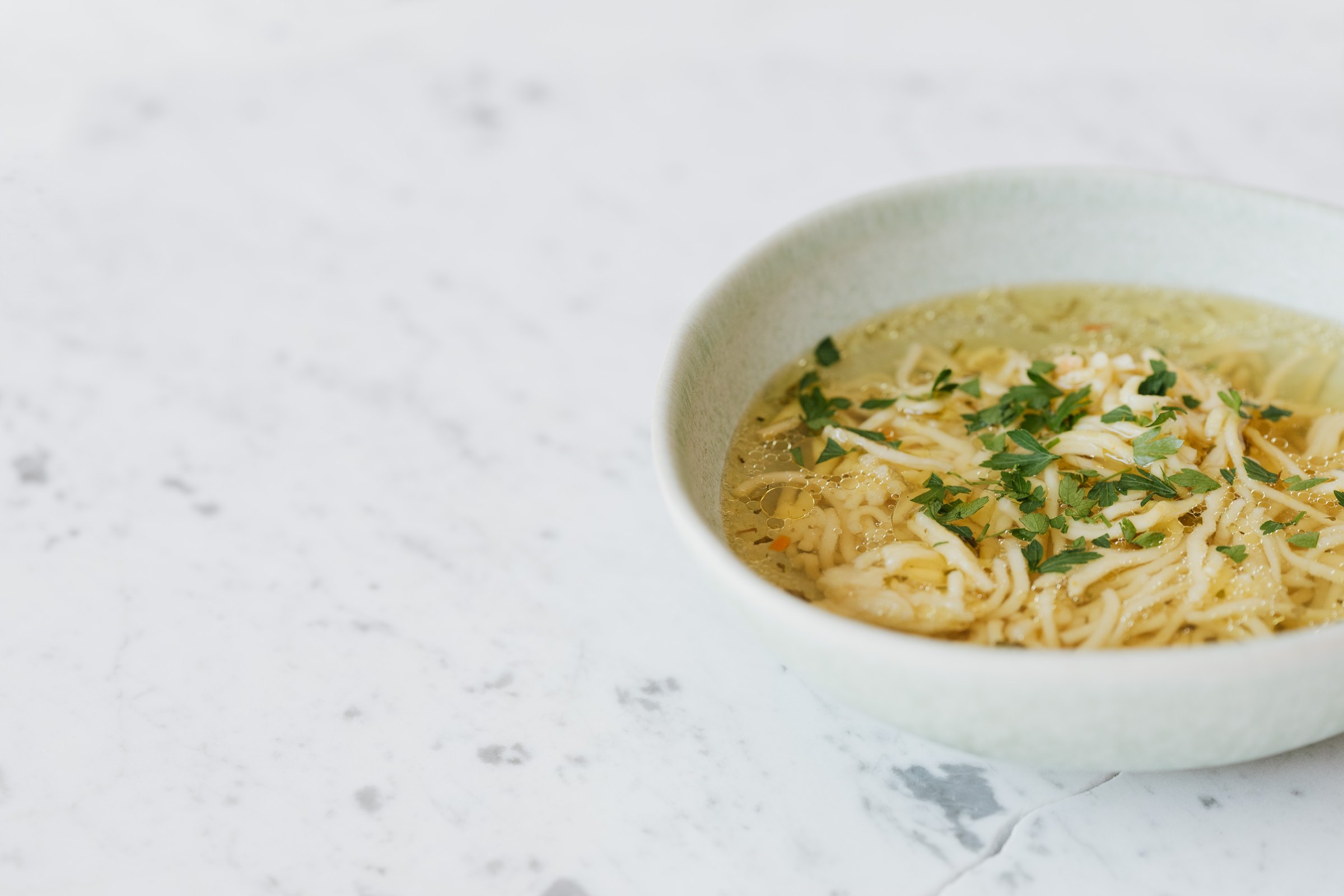
- Chicken broth with shredded chicken
- A big lettuce salad with tuna
For more pairings built around protein, see these low calorie high protein snacks. If you like the idea of eating big portions for fewer calories, volume eating explains how that approach works, and our high volume low calorie foods guide shows how to build full plates.
One gentle note: eating only near-zero foods isn’t a plan. Your body still needs real calories, protein, and fat to run well. Think of these as a way to make meals bigger, not a way to replace them.
Takeaway: near-zero foods fill the plate. Protein and fiber are what keep you full.
Logging the “Free” Stuff Without Obsessing
You don’t have to log every glass of water or plain cup of coffee. They won’t change your day in any way you’d notice. The things worth logging are the ones that stack: sprays, packets, splashes of milk, dressings, and the extra tablespoon of anything.
If you use Dishco on your iPhone, you can log by scanning a barcode, typing it, saying it with voice dictation, or snapping an AI photo. You can also import a recipe by pasting its link, which helps when a “light” recipe hides three servings of oil. Badges and XP keep it from feeling like homework, and if you skip a day, that’s fine. Miss a day? No shame.
Takeaway: skip logging the true zeros if you want. Log the stuff that only reads zero.
FAQ
Are there any zero calorie foods?
Only a few. Plain water and plain sparkling water are 0 cal, and black coffee and plain tea are about 2 cal a cup.[1] Almost every solid food has at least a few calories.
What foods have 0 calories?
True 0 calorie foods are really drinks: water, sparkling water, black coffee, and plain tea. Sweetener packets and cooking spray read 0 on the label because they’re under 5 cal per serving, and near-zero produce like lettuce, celery, and cucumber is 5 to 8 cal a serving.
Why does the label say 0 calories if the food has some?
FDA rules let the label show 0 when a serving has under 5 cal.[2] The number is accurate per serving. It only adds up when you use several servings.
Does black coffee have calories?
A little. Brewed black coffee is about 2 cal per cup in USDA FoodData Central.[1] Milk, cream, and syrups are where the real calories come in.
Are negative calorie foods real?
No. Digesting food uses some energy, but small studies on celery found you still keep most of its calories, even though the total is tiny.[5][4]
What zero calorie foods fill you up?
On their own, not many, since they’re mostly water. Pair near-zero foods like cucumber, lettuce, or broth with protein such as cottage cheese, tuna, or chicken to make them more filling.
Can I have zero calorie foods while fasting?
It depends on the fasting approach you follow. Plain water, black coffee, and plain tea are what most fasting plans allow. If you’re fasting for a medical reason, ask your clinician first. The water fasting calculator covers the water-only version.
Are there zero calorie, zero carb foods?
Yes, in the drink tier: water, sparkling water, and plain coffee and tea. For how carbs are counted on labels, see net carbs vs total carbs.
Keep the Zeros Simple
The honest version of zero calorie foods is a short list. Water, sparkling water, black coffee, and plain tea are your true zeros. Packets, sprays, and pickles read 0 because they’re under 5 cal a serving, and watery produce like lettuce, celery, and cucumber sits close to zero.
None of that is a reason to stress. Enjoy the near-zero foods for crunch and volume, pair them with protein so they keep you full, and keep an eye on the “free” stuff that stacks. When you’re ready to build full plates, the volume eating and high volume low calorie foods guides linked above pick up from here.
Takeaway: know the tier, watch the portion, and let the rest of your day do the heavy lifting.
Get Dishco on iPhone
Editorial Sources and Fact Checking
Dishco follows clear sourcing guidelines so you can trust what you read, outlined in our editorial policy. We use trustworthy sources, including peer-reviewed research, public health guidelines, and established health institutions.
Sources
- 1 FoodData Central (SR Legacy). U.S. Department of Agriculture. 2026.
- 2 21 CFR 101.9 Nutrition labeling of food, (c)(1) Calories. Electronic Code of Federal Regulations. 2026.
- 3 21 CFR 101.60 Nutrient content claims for the calorie content of foods. Electronic Code of Federal Regulations. 2026.
- 4 Testing the validity of "negative-calorie" foods with a reptile model. Integrative Food, Nutrition and Metabolism (Buddemeyer KM, Alexander AE, Secor SM). 2020.
- 5 Exploring the myth: Does eating celery result in a negative energy balance?. Proceedings of the Nutrition Society (Clegg ME, Cooper C). 2012.